DSM-5 Psychiatric/General Medical Interface Study Group

DSM-5 Psychiatric/General Medical Interface Study Group and  Somatic Symptom Disorders Work Group  

Post #19 Shortlink: http://wp.me/pKrrB-zC

On 10 February, when the American Psychiatric Association (APA) published draft proposals for DSM-5 categories, it launched new DSM-5 Development web pages. Links on this site posted prior to 10 February will link to the old APA DSM-V pages. This will be attended to as soon as possible.

This new DSM-5 Development website page Somatic Symptom Disorders Work Group links to biosketches and COI disclosure information for each Somatic Symptom Disorders Work Group member. Under the chairmanship of Joel E Dimsdale, MD, the nine Work Group members are:  

Somatic Symptom Disorders Work Group

Dimsdale, Joel E., M.D.
Barsky III, Arthur J., M.D. *
Creed, Francis, M.D. *
Frasure-Smith, Nancy, Ph.D.
Irwin, Michael R., M.D.
Keefe, Francis J., Ph.D.
Lee, Sing, M.D.
Levenson, James L., M.D. *
Sharpe, Michael, M.D . *
Wulsin, Lawson R., M.D. 

*Four members of the Somatic Symptom Disorders Work Group, Arthur Barsky, MD, Francis Creed, MD, James Levinson, MD and Michael Sharpe, MD, had been members of the Conceptual Issues in Somatoform and Similar Disorders (CISSD) Project workgroup.  Professor Michael Sharpe had served as the CISSD Project’s UK Chair.  

**The CISSD Project was an unofficial project undertaken between 2003 and 2007, initiated and co-ordinated by Dr Richard Sykes, PhD, former Director of Westcare UK (engulfed by Action for M.E. in mid 2002). Action for M.E. acted as Principal Administrators for the project. The Principal Collaborator was Professor Rachel Jenkins, WHO Collaborating Centre, Institute of Psychiatry, London.

The 2007 paper: Kroenke K: Somatoform disorders and recent diagnostic controversies. Psychiatr Clin North Am 2007 Dec;30(4):593-619. http://www.ncbi.nlm.nih.gov/pubmed/17938036

contains the caveat:

“Although the CISSD is an ad hoc group that includes many international experts on somatoform disorders, it was neither appointed nor sanctioned by the APA or WHO, the organizations authorized to approve revisions of DSM and ICD, respectively. As such, the CISSD recommendations should be considered advisory rather than official. Also, there were some suggestions for which the CISSD achieved near consensus but other issues where opinions diverged considerably.”

**The Dx Revision Watch pages for the CISSD Project are under construction. 

Study Groups 

According the APA:

“As development on DSM-5 progressed, the importance of addressing cross-cutting issues relevant to all of the disorder work groups became increasingly evident. As a result, six DSM-5 Study Groups were formed to address these universal topic areas.”

Psychiatric/General Medical Interface Study Group  

“The Psychiatric/General Medical Interface Study Group is chaired by Lawson R. Wulsin, M.D. The study group is examining the link between general medical disorders and psychiatric disorders. Given that most patients with mental illnesses are seen by primary care physicians, the study group aims to ensure that DSM-5 meets the needs of general medical practitioners and not just specialty mental health clinicians. The group is also developing revision strategies for the forthcoming DSM-5-PC, which is intended to be used in primary care settings. The members of the Psychiatric/General Medical Interface Study Group are listed below.” 

Psychiatric/General Medical Interface Study Group Members 

Wulsin, Lawson R., M.D. [Member, Somatic Symptoms Disorders Work Group]
Dahl, Ronald E., M.D.
Dimsdale, Joel E., M.D. [Chair, Somatic Symptoms Disorders Work Group]
Escobar, Javier I., M.D. [Member, DSM-5 Task Force and Liaison to SSD Work Group]
Jeste, Dilip V., M.D.
Kaufmann, Walter E., M.D.
Kreipe, Richard E., M.D.
Petersen, Ronald, Ph.D., M.D.
Reynolds, Charles F., M.D.
Segraves, Taylor R., M.D., Ph.D.
Walsh, Timothy B., M.D. 

Javier Escobar, MD, Director of the University of Medicine and Dentistry of New Jersey (UMDNJ) – Robert Wood Johnson Medical School (RWJMS) Medically Unexplained Physical Symptoms (MUPS) Research Center, which has been supported with over $4M in funding by the US National Institute of Mental Health (NIMH), had also been a member of the CISSD Project workgroup. 

Dr Escobar is a member of the DSM-5 Task Force, serves as Task Force liaison to the DSM-5 Somatic Symptom Disorders Work Group and according to the Task Force, works closely with this work group.  

APA publishes proposed revisions and draft criteria for DSM-5 categories

APA publishes proposed revisions and draft criteria for DSM-5 (DSM-V) categories

Post #16 Shortlink: http://wp.me/pKrrB-xG

Today, 10 February, the American Psychiatric Association (APA) released draft proposals for revisions to DSM-IV and draft criteria for DSM-5.

American Psychiatric Association DSM-5 Development

Proposed Draft Revisions to DSM Disorders and Criteria are published here on the APA’s relaunched DSM-5 website  

http://www.dsm5.org/Pages/Default.aspx

Selected material for revision of “Somatoform Disorders” on this DSM-5 Watch page

Draft proposals DSM-5

The comment period runs from 10 February to 20 April.

Open APA News Release here in PDF format: Diag Criteria General FINAL 2.05

or text below

http://www.dsm5.org/Newsroom/Documents/Diag%20%20Criteria%20General%20FINAL%202.05.pdf

APA News Release: 

Public release date: 10-Feb-2010

Contact: Jaime Valora
jvalora@psych.org
703-907-8562
American Psychiatric Association

APA announces draft diagnostic criteria for DSM-5

New proposed changes posted for leading manual of mental disorders

ARLINGTON, Va. (Feb. 10, 2010) – The American Psychiatric Association today released the proposed draft diagnostic criteria for the fifth edition of Diagnostic and Statistical Manual of Mental Disorders (DSM). The draft criteria represent content changes under consideration for DSM, which is the standard classification of mental disorders used by mental health and other health professionals, and is used for diagnostic and research purposes.

“These draft criteria represent a decade of work by the APA in reviewing and revising DSM,” said APA President Alan Schatzberg, M.D. “But it is important to note that DSM-5 is still very much a work in progress – and these proposed revisions are by no means final.” The proposed diagnostic criteria will be available for public comment until April 20, and will be reviewed and refined over the next two years. During this time, the APA will conduct three phases of field trials to test some of the proposed diagnostic criteria in real-world clinical settings.

Proposed revisions

Members of 13 work groups, representing different categories of psychiatric diagnoses, have reviewed a wide body of scientific research in the field and consulted with a number of expert advisors to arrive at their proposed revisions to DSM. Among the draft revisions are the following:

• The recommendation of new categories for learning disorders and a single diagnostic category, “autism spectrum disorders” that will incorporate the current diagnoses of autistic disorder, Asperger’s disorder, childhood disintegrative disorder and pervasive developmental disorder (not otherwise specified). Work group members have also recommended that the diagnostic term “mental retardation” be changed to “intellectual disability,” bringing the DSM criteria into alignment with terminology used by other disciplines.

• Eliminating the current categories substance abuse and dependence, replacing them with the new category “addiction and related disorders.” This will include substance use disorders, with each drug identified in its own category.

• Eliminating the category of dependence will better differentiate between the compulsive drug-seeking behavior of addiction and normal responses of tolerance and withdrawal that some patients experience when using prescribed medications that affect the central nervous system.

• Creating a new category of “behavioral addictions,” in which gambling will be the sole disorder. Internet addiction was considered for this category, but work group members decided there was insufficient research data to do so, so they recommended it be included in the manual’s appendix instead, with a goal of encouraging additional study.

• New suicide scales for adults and adolescents to help clinicians identify those individuals most at risk, with a goal of enhancing interventions across a broad range of mental disorders; the scales include research-based criteria such as impulsive behavior and heavy drinking in teens.

• Consideration of a new “risk syndromes” category, with information to help clinicians identify earlier stages of some serious mental disorders, such as neurocognitive disorder (dementia) and psychosis.

• A proposed new diagnostic category, temper dysregulation with dysphoria (TDD), within the Mood Disorders section of the manual. The new criteria are based on a decade of research on severe mood dysregulation, and may help clinicians better differentiate children with these symptoms from those with bipolar disorder or oppositional defiant disorder.

• New recognition of binge eating disorder and improved criteria for anorexia nervosa and bulimia nervosa, as well as recommended changes in the definitions of some eating disorders now described as beginning in infancy and childhood to emphasize that they may also develop in older individuals.

The APA has prepared detailed press releases on each of these topics, which are available on the DSM-5 Web site.

Dimensional Assessments

In addition to proposed changes to specific diagnostic criteria, the APA is proposing that “dimensional assessments” be added to diagnostic evaluations of mental disorders. These would permit clinicians to evaluate the severity of symptoms, as well as take into account “cross-cutting” symptoms that exist across a number of different diagnoses (such as insomnia or anxiety).

“We know that anxiety is often associated with depression, for example, but the current DSM doesn’t have a good system for capturing symptoms that don’t fit neatly into a single diagnosis, said David Kupfer, M.D., chair of the DSM-5 Task Force. “Dimensional assessments represent an important benefit for clinicians evaluating and treating patients with mental illness. It may help them better evaluate how a patient is improving with treatment, help them address symptoms that affect a patient’s quality of life and better assess patients whose symptoms may not yet be severe – leading to earlier effective treatment.”

Careful Consideration of Gender, Race and Ethnicity

The process for developing the proposed diagnostic criteria for DSM-5 has included careful consideration of how gender, race and ethnicity may affect the diagnosis of mental illness. The team has sought significant involvement of women, members of diverse racial and ethnic groups, and international researchers and clinicians. The APA also designated a specific study group to review and research these issues, and ensure they were taken into account in the development of diagnostic criteria.

The Gender and Cross-Cultural Study Group reviewed epidemiological data sets from the United States and other countries to determine if there were significant differences in incidence of mental illness among different subgroups (e.g., gender, race and ethnicity) that might indicate a bias in currently-used diagnostic criteria, including conducting meta-analyses (additional analyses combining data from different studies). Group members reviewed the literature from a broad range of international researchers who have explored issues of gender, ethnic and racial differences for specific diagnostic categories of mental illness. The study group also considered whether there was widespread cultural bias in criteria for specific diagnoses.

As a result of this process, the study group has tried to determine whether the diagnostic categories of mental illness in DSM need changes in order to be sensitive to the various ways in which gender, race and culture affect the expression of symptoms.

Public Review of Proposed Revisions

The resulting recommendations for revisions to the current DSM are being posted on the APA’s Web site for the manual, www.DSM5.org, for public review and written comment. These comments will be reviewed and considered by the relevant DSM-5 Work Groups.

“The process for developing DSM-5 continues to be deliberative, thoughtful and inclusive,” explained Dr. Kupfer. “It is our job to review and consider the significant advances that have been made in neuroscience and behavioral science over the past two decades. The APA is committed to developing a manual that is both based on the best science available and useful to clinicians and researchers.”

Overview of DSM-5 Development Process

The last edition of DSM was published in 1994. Beginning in 2000, during the initial phase of revising DSM, the APA engaged almost 400 international research investigators in 13 NIH supported conferences. In order to invite comments from the wider research, clinical and consumer communities, the APA launched a DSM-5 Prelude Web site in 2004 to garner questions, comments, and research findings during the revision process.

Starting in 2007, the DSM-5 Task Force and Work Groups, made up of over 160 world-renowned clinicians and researchers, were tasked with building on the previous seven years of scientific reviews, conducting additional focused reviews, and garnering input from a wide range of advisors as the basis for proposing draft criteria. In addition to the work groups in diagnostic categories, there were study groups assigned to review gender, age and cross-cultural issues.

Based on the upcoming comments to the draft criteria and findings of the field trials, the work groups will propose final revisions to the diagnostic criteria in 2012. The final draft of DSM-5 will be submitted to the APA’s Assembly and Board of Trustees for their review and approval. A release of the final, approved DSM-5 is expected in May 2013.

###
The American Psychiatric Association is a national medical specialty society whose physician members specialize in the diagnosis, treatment, prevention and research of mental illnesses, including substance use disorders. Visit the APA at www.psych.org  and www.healthyminds.org .

DSM-5 Draft Criteria Available for Public Comment through April 20

DSM-5 Draft Criteria Available for Public Comment through April 20

Post #13 Shortlink: http://wp.me/pKrrB-x2

Source: Student Doctor

The American Psychiatric Association is seeking your comments on proposed criteria for the fifth edition of Diagnostic and Statistical Manual of Mental Disorders (DSM), the standard classification of mental disorders used by mental health and other health professionals for diagnostic and research purposes.

Proposed DSM-5 draft criteria will be available for review and comment at http://www.DSM5.org from February 10 to April 20, 2010. Health professionals, mental health consumers and family members are invited to visit the site to review and comment on the draft criteria.

DSM-5 remains a work in progress: following the public comment period, the DSM-5 Task Force and Work Groups will spend two years reviewing and refining proposed criteria based on public comments and the results of field trials, which will be conducted in three phases to test some of the proposed diagnostic criteria in real-world clinical settings.

The release of the final DSM-5 is expected in May 2013.

For more information, visit http://www.DSM5.org

APM Workshop: DSM-V for Psychosomatic Medicine: Current Progress and Controversies

APM 2009 Annual Meeting Workshop: DSM-V for Psychosomatic Medicine: Current Progress and Controversies

Post #8 Shortlink: http://wp.me/pKrrB-hc

In November, last year, The Academy of Psychosomatic Medicine, Bethesda, Maryland, held its drug company sponsored 56th Annual Meeting in Las Vegas, Nevada.

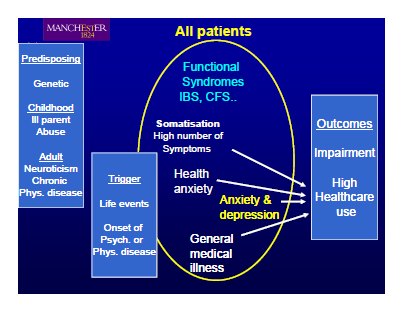
Three DSM-V Work Group members, Francis Creed, Lawson Wulsin and Joel Dimsdale (Chair, Somatic Symptom Disorders Work Group) gave presentations around “Medically Unexplained Symptoms” (MUS) and DSM-V, and DSM-V proposals and progress. Slides are available, below, for the first two presentations, with text for the third.

This material represents the most recent information around the deliberations of the DSM-V Work Group that is revising the categories currently under DSM-IV “Somatoform Disorders”.

See this Dx Revision Watch page for previous updates from this Work Group.

The APA anticipates publishing draft proposals for DSM-V diagnostic categories on 20 January. (Since rescheduled for 10 February 2010.)

The Academy of Psychosomatic Medicine

Bethesda, Maryland, US
The Organization for Consultation and Liaison Psychiatry
Publishers of Psychosomatics

2009 ANNUAL MEETING in LAS VEGAS
November 11–14, 2009

56th Annual Meeting

“The Academy of Psychosomatic Medicine recognizes and appreciates the significant financial support provided by the following companies for the 56th Annual Meeting.

“AstraZeneca Pharmaceuticals
Bristol-Myers Squibb and Otsuka Pharmaceutical, Inc.
Eli Lilly and Company
Ortho-McNeil Janssen Scientific Affairs, LLC”

PRESENTERS’ SLIDES

Award Lectures

Hackett Award — Friday, 12:45pm – 1:45pm

Francis Creed, MD, FRCP: Can We Now Explain Medically Unexplained Symptoms? [1]

      Creed Presentation Slides

       Creed References

[No transcript available]

Workshops

Workshop 15 — Saturday, 1:45 – 2:45pm

DSM-V for Psychosomatic Medicine: Current Progress and Controversies

Lawson Wulsin, MD, FAPM: DSM V for Psychosomatic Medicine: Current Progress and Controversies [2]

     Wulsin Presentation Slides

[No transcript available]

Joel Dimsdale, MD, FAPM: Update on DSM V Somatic Symptoms Workgroup [3]

       Dimsdale text

[Text version of slides]

Update on DSM V Somatic Symptoms Workgroup

Workshop #15, APM Annual Meeting, 11-14-09
DSM-V for Psychosomatic Medicine: Current Progress and Controversies

The Somatic Symptoms Workgroup was charged with reviewing most somatoform disorders, psychological factors affecting medical condition, and factitious disorders. There is considerable confusion regarding the diagnostic terminology and a reluctance to use these diagnostic labels. In addition to relying on expert opinion and the research literature, the Workgroup has also been conducting studies in an effort to learn how physicians actually use these diagnostic labels.

These diagnoses are rarely coded. In a study of >1,000,000 Virginia Anthem Blue Cross policy holders, Levenson [4] found that there were fewer than 600 patients with such disorders. Of these 600 patients, the largest group of patients were diagnosed with Psychological Factors Affecting Medical Condition.

Four focus groups were held in San Diego and Edinburgh. Psychiatrists from very different practice settings attended these groups (child psychiatrists, forensic psychiatrists, psychopharmacologists, consultation psychiatrists, psychotherapists). Nonpsychiatrist attendees included neurologists, pediatricians, and gastroenterologists. Using themes identified from the focus groups, an anonymous internet poll was designed. Using mailing lists from a variety of professional organizations, physicians were invited to respond to an anonymous poll.

Three hundred thirty-two physicians responded to the poll. Two thirds were psychiatrists; two-thirds were from the United States. While in general, physicians reported that somatoform patients were relatively rare in their practices (i.e. 0-2%), some physicians reported high prevalence of these patients. Over 30% of the physicians regarded the diagnostic guidelines for pain disorder and somatoform disorder not otherwise specified as “unclear.” Similar numbers of doctors regarded these particular disorders as “not useful.” Physicians were uniform in their opinion that patients disapproved of such diagnostic labels. Respondents also felt that there was a great deal of overlap between somatization disorder, pain disorder, hypochondriasis, and somatoform disorder not otherwise specified. In addition, they felt that that there was overlap between the somatoform disorders and anxiety and depressive disorders.

The Somatic Symptoms Workgroup has been struck by the fact that “medically unexplained symptoms” (MUS) comprise the crucial intellectual underpinning of the large group of somatoform disorders; yet MUS designations are perilous. They foster mind-body dualism; they confuse “undiagnosed” with “unexplained”; they contribute to doctor-patient antagonism; and they base a diagnosis on a negative, rather than positive criteria.

The Workgroup is proposing a series of changes to these disorders. First off, such disorders would be grouped together under one rubric entitled “Somatic Symptom Disorders”, which would include somatoform disorders, factitious disorders, and psychological factors affecting medical condition. Second, because of their many common features, the group is proposing that hypochondriasis, pain disorder, somatization disorder, and undifferentiated somatoform disorder be grouped together as “Complex Somatic Symptom Disorder”, with optional specifyers to designate when the predominant presentation is, for instance, hypochondriasis, etc. MUS is de-emphasized for this diagnosis, which would require both prominent somatic symptoms causing distress or dysfunction, as well as positive psychological criteria (behavior, cognition, perception).

A draft description of these and other disorders will be published on the APA’s DSM V website in January, 2010.

In addition, a paper describing the thinking of the workgroup and providing a slightly earlier version of the diagnostic guidelines may be found at:

Dimsdale J , Creed F, and on behalf of the DSM-V Workgroup on Somatic Symptom Disorders. The proposed diagnosis of somatic symptom disorders in DSM-V to replace somatoform disorders in DSM-IV—a preliminary report, J Psychosom Res, 66 (2009) 473–476

[Ed: Free full text here: http://www.jpsychores.com/article/S0022-3999(09)00088-9/fulltext ]

The workgroup welcomes comments from colleagues about the proposed changes. Are the proposed changes on the right track? Does this proposal represent, all in all, a step forward? Are there major adverse unintended consequences? Workgroup members include: Arthur Barsky, Francis Creed, Javier Escobar, Nancy Frasure-Smith, Michael Irwin, Frank Keefe, Sing Lee, James Levenson, Michael Sharpe [5], Lawson Wulsin, Joel Dimsdale (chair).

Please send comments to Joel Dimsdale via email jdimsdale@ucsd.edu .

[Ends]

[1] Francis Creed, MD, is a member of the DSM-V Somatic Symptom Disorders Work Group (aka Somatic Distress Disorders Work Group) and was a member of the international CISSD Project, co-ordinated by Dr Richard Sykes, PhD. He is a co-editor of the Journal of Psychosomatic Research.

[2] Lawson R. Wulsin, MD, is a member of the DSM-V Somatic Symptom Disorders Work Group.

[3] Joel E Dimsdale, MD, chairs the DSM-V Somatic Symptom Disorders Work Group, is a member of the DSM-V Task Force and was a member of the CISSD Project.

[4] James L Levinson, MD, is a member of the DSM-V Somatic Symptom Disorders Work Group and was a member of the CISSD Project.

[5] Michael Sharpe, MD, Director, University of Edinburgh Psychological Medicine Research Group, is a member of the Somatic Symptom Disorders Work Group, a co-PI of the UK MRC funded PACE Trial and was a member of the CISSD Project.


Related information:

The current use of the diagnosis “Psychological Factors Affecting Medical Condition” in DSM-IV is set out here

Francis Creed is currently working with EACLPP colleagues, Henningsen and Fink, on a draft white paper for the EACLPP MUS Study Group called: “Patients with medically unexplained symptoms and somatisation – a challenge for European health care systems”. A copy of the MUS Study Group working draft can be downloaded from the EACLPP site.

The January 2010, Editorial “Is there a better term than “Medically unexplained symptoms?” Creed F, Guthrie E, Fink P, Henningsen P, Rief W, Sharpe M, White P. J Psychoso Res: Volume 68, Issue 1, Pages 5-8, discusses the deliberations of the EACLPP study group. The Editorial also includes references to the DSM and ICD revision processes.

Javier Escobar, MD, Director of the University of Medicine and Dentistry of New Jersey (UMDNJ) – Robert Wood Johnson Medical School (RWJMS) Medically Unexplained Physical Symptoms (MUPS) Research Center, which has been supported with over $4M in funding by the US National Institute of Mental Health (NIMH), is a member of the DSM-V Task Force. Dr Escobar serves as a Task Force liaison to the Somatic Symptom Disorders Work Group and is said to work closely with this group.

In a 2008 Special Report by Marin and Escobar: “Unexplained Physical Symptoms What’s a Psychiatrist to Do?” Psychiatric Times. Vol. 25 No. 9, August 1, 2008, the authors write:

“…Perhaps as a corollary of turf issues, general medicine and medical specialties started carving these syndromes with their own tools. The resulting list of ‘medicalized’, specialty-driven labels that continues to expand includes fibromyalgia, chronic fatigue syndome, multiple chemical sensitivity, and many others.

“…These labels fall under the general category of functional somatic syndromes and seem more acceptable to patients because they may be perceived as less stigmatizing than psychiatric ones. However, using DSM criteria, virtually all these functional syndromes would fall into the somatoform disorders category given their phenomenology, unknown physical causes, absence of reliable markers, and the frequent coexistence of somatic and psychiatric symptoms.”

In Table 1, under the heading “Functional Somatic Syndromes (FSS)” Escobar and Marin list:

“Irritable bowel syndrome, Chronic fatigue syndrome, Fibromyalgia, Multiple chemical sensitivity, Nonspecific chest pain, Premenstrual disorder, Non-ulcer dyspepsia, Repetitive strain injury, Tension headache, Temporomandibular joint disorder, Atypical facial pain, Hyperventilation syndrome, Globus syndrome, Sick building syndrome, Chronic pelvic pain, Chronic whiplash syndrome, Chronic Lyme disease, Silicone breast implant effects, Candidiasis hypersensivity, Food allergy, Gulf War syndrome, Mitral valve prolapse, Hypoglycemia, Chronic low back pain, Dizziness, Interstitial cystitis, Tinnitus, Pseudoseizures, Insomnia, Systemic yeast infection, Total allergy syndrome”

Marin and Escobar August 2008 Special Report here on Psychiatric Times site.

Monitoring the progress of the DSM and ICD revision processes

Dx Revision Watch: Monitoring the progress of the DSM and ICD revision processes

Post #2 Shortlink: http://wp.me/pKrrB-5U

Before using this site please read the Disclaimer Notes

Dx Revision Watch | Monitoring the development of DSM-5, ICD-11, ICD-10-CM

Why another site?

The concept for this site developed out of research and awareness raising undertaken throughout 2009 around the forthcoming revisions of two important international disease classification systems:

The American Psychiatric Association’s Diagnostic and Statistical Manual of Mental Disorders (DSM)

The World Health Organization’s International Statistical Classification of Diseases and Related Health Problems (ICD)

How will this site work?

The site will distil information and commentary already published on a companion site around the two revision processes and present this material in a more accessible format. Key information and resources will be added to the Tab Pages as more information becomes available. Updates and new material will be posted on the “Main Page”, which displays the ten most recent postings. Previous posts can be accessed from the monthly archives or from the Post index.


Two new international classification systems by 2015

The next edition of the APA’s Diagnostic and Statistical Manual of Mental Disorders will be DSM-V (DSM-5). The revision of the current version, DSM-IV, began in 1999. DSM-5 is now expected to be published in May 2013 – a year later than had previously been planned.

The revision of the current version of the WHO’s International Statistical Classification of Diseases, ICD-10, and the development of the structure for ICD-11 began in 2007. The WHO anticipates that ICD-11 will be completed by 2015 although targets for population of content for the Alpha Draft have slipped.

Assuming the timelines stay on target, DSM-5 will be published at least two years in advance of ICD-11.

Diagnostic and Statistical Manual of Mental Disorders (DSM)

Commonly referred to as the “Psychiatrist’s Bible”, DSM is used by clinicians in the mental health field for diagnosing mental disorders. It is used by medical insurance companies for reimbursement, in medical practices, clinics and hospitals, by social services agencies, governments, policy makers, courts, forensics, prisons, drug regulation agencies, pharmaceutical companies and researchers.

Diagnostic criteria defined within DSM determine what is considered a mental health disorder and what is not, what medical treatments individuals receive and which treatments health insurers will authorise funding for. The inclusion of a disorder within DSM has revenue implications for pharmaceutical companies seeking licences for new drugs or to expand markets and applications for existing products.

DSM is the primary diagnostic system in the US and is used to a varying extent in other countries. In the UK and some European countries, Chapter V, the Mental and Behavioural Disorders chapter of ICD-10, is also used for diagnosing mental health disorders.

The next edition of DSM will shape international research and influence literature in the fields of psychiatry and psychosomatics for many years to come.

The revision of DSM-IV is being undertaken by a 27 member Task Force and 16 Work Groups. These groups also draw on external advisors who are not being identified. It’s been a controversial process. Some of the most vocal critics have been those who served on Task Force committees for previous revisions, publishing criticism around lack of transparency, potential conflicts of interest from Task Force and Work Group members’ financial links with pharmaceutical companies, lack of dialogue with stakeholder groups, lack of diversity in the make up of the Work Groups, the sketchy and infrequent reports issued by the various Work Groups on their progress.

International Statistical Classification of Diseases (ICD)

The International Statistical Classification of Diseases (ICD) is the international standard diagnostic classification of diseases for use in epidemiology, health management and clinical practice. It is used to classify diseases and other health problems recorded on many types of health and other records, including death certificates and insurance. These records also provide the basis for the compilation of national mortality and morbidity statistics by WHO Member States.

ICD-11 is being revised through a Steering Group and a number of Topic Advisory Groups (TAGs), under Managing Editors, with responsibility for recruiting external peer reviewers and experts for reviewing proposals and advising on content. The WHO is promoting the development of ICD-11 as an open and transparent process.

Drafting is being carried out via a collaborative authoring platform – the iCAT, with a second, publicly viewable platform known as the Alpha Browser. Key documentation, style guides, models for the population of content and information on the structure of ICD-11 is being posted on a dedicated, public domain website.

According to the ICD-11 Timeline, the Beta draft is currently scheduled for release in May 2012.

When are the first drafts of DSM-5 and ICD-11 due?

The APA published its first draft proposals for DSM-5 diagnostic categories on a new website, on February 10, 2010.

APA webpages for DSM-5 development: DSM-5 Development

Information on DSM-5 draft criteria for the Somatic Symptom Disorders as they stood at February 2010 was published on this page:

DSM-5 draft and stakeholder feedback process

The first public review ran from February 10 to April, 20, 2010

The second public review ran from May 4 to July 15, 2011

The third public review is expected to be released in May 2012, at the latest

The ICD-11 Alpha Draft is currently timelined for May 2010.

The “harmonization” of DSM-5 and ICD-11

The APA participates with the WHO in the International Advisory Group for the Revision of ICD-10 Mental and Behavioural Disorders and the DSM-ICD Harmonization Coordination Group.

There is already a degree of correspondence between DSM-IV categories and Chapter V of ICD-10. For the next editions, the APA and the WHO have committed as far as possible:

To facilitate the achievement of the highest possible extent of uniformity and harmonization between ICD-11 mental and behavioural disorders and DSM-V disorders and their diagnostic criteria.

with the objective that

The WHO and APA should make all attempts to ensure that in their core versions, the category names, glossary descriptions and criteria are identical for ICD and DSM.

The WHO acknowledges that there may be areas where congruency may not be achievable.

Will ICD-11 be implemented worldwide from 2015?

No. Several countries have developed their own “Clinical Modifications (CM)” of ICD. Canada, for example, uses an adaptation called ICD-10-CA, with a version published for 2009. Germany uses a version called ICD-10-GM. Australia and Thailand also use country specific adaptations of ICD-10.

The US currently uses a CM version of ICD-9 (long since retired by the WHO and replaced with ICD-10). But instead of moving onto ICD-11, once this is completed, the US will be implementing a Clinical Modification of ICD-10 called ICD-10-CM, on October 1, 2013.

There are disparities between some of the proposed codings for the forthcoming US Clinical Modification, ICD-10-CM and those in ICD-10: for example, chapter placement and codings for Postviral fatigue syndrome, (Benign) myalgic encephalomyelitis and Chronic fatigue syndrome in ICD-10 differs from the current proposals for ICD-10-CM.

Are the two revisions on schedule?

The original dissemination date for ICD-11 had been 2012, with the timelines for revision of both systems running more or less in parallel. The dissemination date for ICD-11 was later extended to 2014, then 2015, but work on the Alpha Draft is behind schedule.

The timeline for DSM-5 has also slipped. APA originally planned to publish DSM-5 in May 2012. But in a press release issued on 10 December 2009, APA announced that it was postponing publication for a further year, until May 2013, “to allow more time for public review, field trials and revisions.”

The press release also stated:

The extension will also permit the DSM-5 to better link with the U.S. implementation of the ICD-10-CM codes for all Medicare/Medicaid claims reporting, scheduled for October 1, 2013.

The ICD-10-CM includes disorder names, logical groupings of disorders and code numbers but not explicit diagnostic criteria. The APA has already worked with CMS and CDC to develop a common structure for the currently in-use DSM-IV and the mental disorders section of the ICD-10-CM.

APA will continue to work with the WHO to harmonize the DSM-5 with the mental and behavioral disorders section of the ICD-11. Given the timing of the release of both DSM-5 and ICD-11 in relation to the ICD-10-CM, the APA will also work with the CDC and CMS to propose a structure for the U.S. ICD-10 CM that is reflective of the DSM-5 and ICD-11 harmonization efforts. This will be done prior to the time when the ICD-10-CM revisions are “frozen” for CMS and insurance companies to prepare for the October 1, 2013, adoption.

With the three systems: DSM-5 (ETA now May 2013), ICD-10-CM (subject to a partial code freeze on October 1, 2010 until 2014), with an ETA for implementation on October 1, 2013) and ICD-11 (dissemination in 2015+ but Alpha behind schedule) set to become more closely aligned, the proposed structure of ICD-11 may have implications for US patient populations, even though the US might not anticipate moving on to ICD-11 (or a CM of ICD-11) for many years (one source estimates 2018+).

What will be the focus for this site?

Monitoring the progress of the revision of ICD-10 Chapter VI: Diseases of the nervous system (the Neurological chapter) with specific reference to the classifications coded in ICD-10 Volume 1: The Tabular list at G93.3: Postviral fatigue syndrome; (Benign) myalgic encephalomyelitis, and indexed in Volume 3: The Alphabetical Index at G93.3: Chronic fatigue syndrome.

Monitoring the population of content to be included in ICD-11 for these three entities.

Monitoring the progress of the revision of the DSM category section currently called Somatoform Disorders being undertaken by the DSM-5 Somatic Symptom Disorders Work Group.

Monitoring the progress of the revision of the corresponding Somatoform Disorders section in ICD-10 Chapter 5 (Mental and Behavioural Disorders) with specific reference to the categories currently classified under Somatoform Disorders at F45 – F48.0.

Monitoring any “harmonization” of the corresponding category sections in DSM-5 and ICD-11 currently called Somatoform Disorders.


Issues for ICD-11

Content in ICD-11 will be populated for thirteen parameters, in accordance with the ICD-11 Content Model Style Guide. There is the potential for considerably more content to be included for diseases, disorders and syndromes in ICD-11 than appears in ICD-10, including Definition, Inclusions and Causal Mechanisms.

It is not known how much additional information might be included in ICD-11 for the three terms currently classified at, or indexed to, G93.3. Content will need to be monitored, as it is generated, as will any changes to the hierarchy between these three terms, as will specification of the relationships between the three terms.

Issues for DSM-5

Chronic fatigue syndrome is not categorized within DSM-IV and neither is Neurasthenia. In ICD-10, Neurasthenia is classified in Chapter V at F48.0 (for the forthcoming ICD-10-CM, in Chapter 5 at F48.8).

Professionals in the field, interest groups and the media have been voicing concerns for several years that the introduction of new disorders and the lowering of thresholds for existing criteria for some categories would bring many more patients under a mental health diagnosis.

But if the most recently published proposals by the Somatic Symptom Disorders Work Group were to be approved there may be medical, social and economic implications to the detriment of all patient populations – but especially those bundled by many psychiatrists under the so-called Functional Somatic Syndromes (FSS) and Medically Unexplained Syndromes (MUS) umbrellas, under which they include ME, CFS, FM, IBS, CI, CS, chronic Lyme disease, GWS and some others disorders and conditions.

In a presentation to The Academy of Psychosomatic Medicine, in November 2009, Somatic Symptom Disorders Work Group Chair, Joel E Dimsdale, reported that the group was considering a proposal for a new category (then, tentatively entitled, “Somatic Symptom Disorder”) to replace the DSM-IV Somatoform and related disorders which would include somatoform disorders (somatization disorder, hypochondriasis, pain disorder, and undifferentiated somatoform disorder), factitious disorders, and psychological factors affecting medical condition. The group was exploring the potential for de-emphasizing “medically unexplained symptoms”, as the term was considered “divisive”, fostered “mind-body dualism” and contributed to “doctor-patient antagonism.”

See Post #8, January 12, 2010: APM 2009 Annual Meeting Workshop: DSM-V for Psychosomatic Medicine: Current Progress and Controversies

Image source: Academy of Psychosomatic Medicine, Nevada, November ‘09 Annual Meeting slide presentation, Francis Creed, MD, FRCP: Can We Now Explain Medically Unexplained Symptoms?

In the June 2009 Journal of Psychosomatic Research Editorial “The proposed diagnosis of somatic symptom disorders in DSM-V to replace somatoform disorders in DSM-IV – a preliminary report”, which expanded on the brief April 2009 Work Group progress report published on the APA’s website, Work Group Chair, Joel E Dimsdale, and fellow Work Group member, Francis Creed, reported that by doing away with the “controversial concept of medically unexplained”, their proposed classification might diminish the “dichotomy, inherent in the ‘Somatoform’ section of DSM-IV, between disorders based on medically unexplained symptoms and patients with organic disease.”

The conceptual framework the Work Group were proposing, at that point:

“…will allow a diagnosis of somatic symptom disorder in addition to a general medical condition, whether the latter is a well-recognized organic disease or a functional somatic syndrome such as irritable bowel syndrome or chronic fatigue syndrome.”

The most recent version of the Somatic Symptom Disorders Disorders description proposals document states:

“These disorders typically present first in non-psychiatric settings and somatic symptom disorders can accompany diverse general medical as well as psychiatric diagnoses. Having somatic symptoms of unclear etiology is not in itself sufficient to make this diagnosis. Some patients, for instance with irritable bowel syndrome or fibromyalgia would not necessarily qualify for a somatic symptom disorder diagnosis. Conversely, having somatic symptoms of an established disorder (e.g. diabetes) does not exclude these diagnoses if the criteria are otherwise met.

Javier Escobar, MD, Director of the University of Medicine and Dentistry of New Jersey (UMDNJ) – Robert Wood Johnson Medical School (RWJMS) Medically Unexplained Physical Symptoms (MUPS) Research Center, which has been supported with over $4M in funding by the US National Institute of Mental Health (NIMH), is a member of the DSM-5 Task Force. Dr Escobar serves as a Task Force liaison to the Somatic Symptom Disorders Work Group and is said to work closely with this group.

In the August 2008 Special Report for Psychiatric Times: Unexplained Physical Symptoms What’s a Psychiatrist to Do?” co-authors, Escobar and Marin wrote:

“…Perhaps as a corollary of turf issues, general medicine and medical specialties started carving these syndromes with their own tools. The resulting list of ‘medicalized’, specialty-driven labels that continues to expand includes fibromyalgia, chronic fatigue syndome, multiple chemical sensitivity, and many others.

“…These labels fall under the general category of functional somatic syndromes and seem more acceptable to patients because they may be perceived as less stigmatizing than psychiatric ones. However, using DSM criteria, virtually all these functional syndromes would fall into the somatoform disorders category given their phenomenology, unknown physical causes, absence of reliable markers, and the frequent coexistence of somatic and psychiatric symptoms.”

In Table 1, under the heading “Functional Somatic Syndromes (FSS)” Escobar and Marin list:

Irritable bowel syndrome, Chronic fatigue syndrome, Fibromyalgia, Multiple chemical sensitivity, Nonspecific chest pain, Premenstrual disorder, Non-ulcer dyspepsia, Repetitive strain injury, Tension headache, Temporomandibular joint disorder, Atypical facial pain, Hyperventilation syndrome, Globus syndrome, Sick building syndrome, Chronic pelvic pain, Chronic whiplash syndrome, Chronic Lyme disease, Silicone breast implant effects, Candidiasis hypersensivity, Food allergy, Gulf War syndrome, Mitral valve prolapse, Hypoglycemia, Chronic low back pain, Dizziness, Interstitial cystitis, Tinnitus, Pseudoseizures, Insomnia, Systemic yeast infection, Total allergy syndrome

The Somatic Symptom Disorders Work Group proposes redefining the categories in the Somatoform Disorders section of DSM-IV to legitimize the application of an additional “bolt-on” diagnosis of a “somatic symptom disorder” for all medical diseases, whether “established general medical conditions or disorders”, like diabetes or angina, or conditions presenting with “somatic symptoms of unclear etiology”, if the criteria are otherwise met.

The criteria as they currently stand are vague, highly subjective and difficult to measure. ME, CFS, FM, IBS, CI, CS, chronic Lyme disease and Gulf War illness may be particularly vulnerable to being caught by these criteria.

These radical proposals for rebranding the Somatoform Disorders categories as Somatic Symptom Disorders and combining a number of existing, little-used categories under the proposed portmanteau term, Complex Somatic Symptom Disorder (CSSD), and the more recently proposed, Simple Somatic Symptom Disorder (SSSD), have the potential for bringing many thousands more patients under a mental health banner.

The potential for expanding markets for psychiatric services, antidepressants and behavioural therapies, like CBT, for the “modification of dysfunctional and maladaptive beliefs about symptoms and disease, and behavioral techniques to alter illness and sick role behaviors” for all patients with somatic symptoms, if the clinician considers that the patient’s response (or in the case of a child, a parent’s response) to bodily symptoms and concerns about health are “excessive”, or the perception of their level of disability “disproportionate”, or their coping styles, “maladaptive.”

Application of these vague, highly subjective and difficult to measure criteria may have considerable implications for the diagnoses assigned to patients, the provision of social care, the payment of employment, medical and disability insurance and the length of time for which insurers are prepared to pay out.

The misapplication of a diagnosis of Complex Somatic Symptom Disorder (CSSD), may limit the types of treatment, medical investigations and testing that clinicians are prepared to consider and for which insurers are prepared to fund.

These proposals could potentially result in misdiagnosis of a mental health disorder, misapplication of an additional “bolt-on” diagnosis of a mental health disorder, missed diagnoses through failure to investigate new or worsening symptoms, or in iatrogenic disease from psychotropic drugs.

Families caring for children and young people with any long-term illness may be at increased risk of wrongful accusation of “over-involvement” or “excessive” concern for a child’s symptomatology or of encouraging maintenance of “sick role behaviour” in an ill child or adolescent.

Acording to Task Force Chair, Dr. David Kupfer, MD, the specific diagnostic categories that received the most feedback during the second public review and feedback exercise were sexual and gender identity disorders, followed closely by somatic symptom disorders and anxiety disorders.

image credit | belgianchocolate | creative commons

Dx Revision Watch is maintained by Suzy Chapman. To contact please use the Contact page.

A version of this posting is also published on the About Page