APA publishes proposed revisions and draft criteria for DSM-5 categories

APA publishes proposed revisions and draft criteria for DSM-5 (DSM-V) categories

Post #16 Shortlink: http://wp.me/pKrrB-xG

Today, 10 February, the American Psychiatric Association (APA) released draft proposals for revisions to DSM-IV and draft criteria for DSM-5.

American Psychiatric Association DSM-5 Development

Proposed Draft Revisions to DSM Disorders and Criteria are published here on the APA’s relaunched DSM-5 website  

http://www.dsm5.org/Pages/Default.aspx

Selected material for revision of “Somatoform Disorders” on this DSM-5 Watch page

Draft proposals DSM-5

The comment period runs from 10 February to 20 April.

Open APA News Release here in PDF format: Diag Criteria General FINAL 2.05

or text below

http://www.dsm5.org/Newsroom/Documents/Diag%20%20Criteria%20General%20FINAL%202.05.pdf

APA News Release: 

Public release date: 10-Feb-2010

Contact: Jaime Valora
jvalora@psych.org
703-907-8562
American Psychiatric Association

APA announces draft diagnostic criteria for DSM-5

New proposed changes posted for leading manual of mental disorders

ARLINGTON, Va. (Feb. 10, 2010) – The American Psychiatric Association today released the proposed draft diagnostic criteria for the fifth edition of Diagnostic and Statistical Manual of Mental Disorders (DSM). The draft criteria represent content changes under consideration for DSM, which is the standard classification of mental disorders used by mental health and other health professionals, and is used for diagnostic and research purposes.

“These draft criteria represent a decade of work by the APA in reviewing and revising DSM,” said APA President Alan Schatzberg, M.D. “But it is important to note that DSM-5 is still very much a work in progress – and these proposed revisions are by no means final.” The proposed diagnostic criteria will be available for public comment until April 20, and will be reviewed and refined over the next two years. During this time, the APA will conduct three phases of field trials to test some of the proposed diagnostic criteria in real-world clinical settings.

Proposed revisions

Members of 13 work groups, representing different categories of psychiatric diagnoses, have reviewed a wide body of scientific research in the field and consulted with a number of expert advisors to arrive at their proposed revisions to DSM. Among the draft revisions are the following:

• The recommendation of new categories for learning disorders and a single diagnostic category, “autism spectrum disorders” that will incorporate the current diagnoses of autistic disorder, Asperger’s disorder, childhood disintegrative disorder and pervasive developmental disorder (not otherwise specified). Work group members have also recommended that the diagnostic term “mental retardation” be changed to “intellectual disability,” bringing the DSM criteria into alignment with terminology used by other disciplines.

• Eliminating the current categories substance abuse and dependence, replacing them with the new category “addiction and related disorders.” This will include substance use disorders, with each drug identified in its own category.

• Eliminating the category of dependence will better differentiate between the compulsive drug-seeking behavior of addiction and normal responses of tolerance and withdrawal that some patients experience when using prescribed medications that affect the central nervous system.

• Creating a new category of “behavioral addictions,” in which gambling will be the sole disorder. Internet addiction was considered for this category, but work group members decided there was insufficient research data to do so, so they recommended it be included in the manual’s appendix instead, with a goal of encouraging additional study.

• New suicide scales for adults and adolescents to help clinicians identify those individuals most at risk, with a goal of enhancing interventions across a broad range of mental disorders; the scales include research-based criteria such as impulsive behavior and heavy drinking in teens.

• Consideration of a new “risk syndromes” category, with information to help clinicians identify earlier stages of some serious mental disorders, such as neurocognitive disorder (dementia) and psychosis.

• A proposed new diagnostic category, temper dysregulation with dysphoria (TDD), within the Mood Disorders section of the manual. The new criteria are based on a decade of research on severe mood dysregulation, and may help clinicians better differentiate children with these symptoms from those with bipolar disorder or oppositional defiant disorder.

• New recognition of binge eating disorder and improved criteria for anorexia nervosa and bulimia nervosa, as well as recommended changes in the definitions of some eating disorders now described as beginning in infancy and childhood to emphasize that they may also develop in older individuals.

The APA has prepared detailed press releases on each of these topics, which are available on the DSM-5 Web site.

Dimensional Assessments

In addition to proposed changes to specific diagnostic criteria, the APA is proposing that “dimensional assessments” be added to diagnostic evaluations of mental disorders. These would permit clinicians to evaluate the severity of symptoms, as well as take into account “cross-cutting” symptoms that exist across a number of different diagnoses (such as insomnia or anxiety).

“We know that anxiety is often associated with depression, for example, but the current DSM doesn’t have a good system for capturing symptoms that don’t fit neatly into a single diagnosis, said David Kupfer, M.D., chair of the DSM-5 Task Force. “Dimensional assessments represent an important benefit for clinicians evaluating and treating patients with mental illness. It may help them better evaluate how a patient is improving with treatment, help them address symptoms that affect a patient’s quality of life and better assess patients whose symptoms may not yet be severe – leading to earlier effective treatment.”

Careful Consideration of Gender, Race and Ethnicity

The process for developing the proposed diagnostic criteria for DSM-5 has included careful consideration of how gender, race and ethnicity may affect the diagnosis of mental illness. The team has sought significant involvement of women, members of diverse racial and ethnic groups, and international researchers and clinicians. The APA also designated a specific study group to review and research these issues, and ensure they were taken into account in the development of diagnostic criteria.

The Gender and Cross-Cultural Study Group reviewed epidemiological data sets from the United States and other countries to determine if there were significant differences in incidence of mental illness among different subgroups (e.g., gender, race and ethnicity) that might indicate a bias in currently-used diagnostic criteria, including conducting meta-analyses (additional analyses combining data from different studies). Group members reviewed the literature from a broad range of international researchers who have explored issues of gender, ethnic and racial differences for specific diagnostic categories of mental illness. The study group also considered whether there was widespread cultural bias in criteria for specific diagnoses.

As a result of this process, the study group has tried to determine whether the diagnostic categories of mental illness in DSM need changes in order to be sensitive to the various ways in which gender, race and culture affect the expression of symptoms.

Public Review of Proposed Revisions

The resulting recommendations for revisions to the current DSM are being posted on the APA’s Web site for the manual, www.DSM5.org, for public review and written comment. These comments will be reviewed and considered by the relevant DSM-5 Work Groups.

“The process for developing DSM-5 continues to be deliberative, thoughtful and inclusive,” explained Dr. Kupfer. “It is our job to review and consider the significant advances that have been made in neuroscience and behavioral science over the past two decades. The APA is committed to developing a manual that is both based on the best science available and useful to clinicians and researchers.”

Overview of DSM-5 Development Process

The last edition of DSM was published in 1994. Beginning in 2000, during the initial phase of revising DSM, the APA engaged almost 400 international research investigators in 13 NIH supported conferences. In order to invite comments from the wider research, clinical and consumer communities, the APA launched a DSM-5 Prelude Web site in 2004 to garner questions, comments, and research findings during the revision process.

Starting in 2007, the DSM-5 Task Force and Work Groups, made up of over 160 world-renowned clinicians and researchers, were tasked with building on the previous seven years of scientific reviews, conducting additional focused reviews, and garnering input from a wide range of advisors as the basis for proposing draft criteria. In addition to the work groups in diagnostic categories, there were study groups assigned to review gender, age and cross-cultural issues.

Based on the upcoming comments to the draft criteria and findings of the field trials, the work groups will propose final revisions to the diagnostic criteria in 2012. The final draft of DSM-5 will be submitted to the APA’s Assembly and Board of Trustees for their review and approval. A release of the final, approved DSM-5 is expected in May 2013.

###
The American Psychiatric Association is a national medical specialty society whose physician members specialize in the diagnosis, treatment, prevention and research of mental illnesses, including substance use disorders. Visit the APA at www.psych.org  and www.healthyminds.org .

DSM-5 in the media and reminder

DSM-5 in the media and a reminder

Post #15 Shortlink: http://wp.me/pKrrB-xv

Draft proposals for the revision of DSM-IV diagnostic categories are scheduled for publication on 10 February with a comment period expected to be open until 20 April.

Information around proposed revisions and draft criteria for DSM-5 categories currently classified under “Somatoform Disorders” will be published on this DSM-5 and ICD-11 Watch page:

DSM-5 draft and comment process

Psychiatric Times  |  Steven A. King, MD, MS  | 07 February 2010

DSM-V and Pain

Dr King is in the private practice of pain medicine in New York and he is also clinical professor of psychiatry at the New York University School of Medicine. 

The Economist  Print edition  |  04 January 2010

Psychiatric diagnosis

That way, madness lies

A new manual for diagnosing diseases of the psyche is about to be unveiled

ON FEBRUARY 10th the world of psychiatry will be asked, metaphorically, to lie on the couch and answer questions about the state it thinks it is in. For that is the day the American Psychiatric Association (APA) plans to release a draft of the fifth version of its Diagnostic and Statistical Manual of Mental Disorders (DSM-V). Mental illness carrying the stigma that it does, and the brain being as little-understood as it is, revising the DSM is always a controversial undertaking. This time, however, some of the questions asked of the process are likely to be particularly probing…

Read on here

Psychiatric Times  |  03 February 2010

CAUTION! Who Should Be the DSM-V Diagnostician?

By H. Steven Moffic, MD

…Much has been written about DSM-V, especially in Psychiatric Times, including concerns about transparency, diagnostic criteria, timing, and the influence of Pharma. The developmental group is now entering the stage of inviting comments from psychiatrists at large. Up until now, I believe virtually nothing has been discussed about who should use it. If we gradually obtain neuroimaging and/or genetic markers to improve diagnosing, it would seem that the diagnostic process will become even more of a medical one, most suitable for psychiatrists…

Read full article here

Authorstream Slide Presentation  |  Dr. Atiqul Haq Mazumder Post Graduate Student Department of Psychiatry BSMMU, Dhaka

Upcoming Changes in DSM-V: Upcoming Changes in DSM-V A Critical Review

Includes transcript of PowerPoint slide text

DSM-5 Draft Criteria Available for Public Comment through April 20

DSM-5 Draft Criteria Available for Public Comment through April 20

Post #13 Shortlink: http://wp.me/pKrrB-x2

Source: Student Doctor

The American Psychiatric Association is seeking your comments on proposed criteria for the fifth edition of Diagnostic and Statistical Manual of Mental Disorders (DSM), the standard classification of mental disorders used by mental health and other health professionals for diagnostic and research purposes.

Proposed DSM-5 draft criteria will be available for review and comment at http://www.DSM5.org from February 10 to April 20, 2010. Health professionals, mental health consumers and family members are invited to visit the site to review and comment on the draft criteria.

DSM-5 remains a work in progress: following the public comment period, the DSM-5 Task Force and Work Groups will spend two years reviewing and refining proposed criteria based on public comments and the results of field trials, which will be conducted in three phases to test some of the proposed diagnostic criteria in real-world clinical settings.

The release of the final DSM-5 is expected in May 2013.

For more information, visit http://www.DSM5.org

ICD-11 and DSM-V focussed editorials and articles in Advances in Psychiatric Treatment, Jan 10

ICD-11 and DSM-V (DSM-5) focussed editorials and articles in January 2010 edition of Advances in Psychiatric Treatment

Post #11 Shortlink: http://wp.me/pKrrB-up

In the January 2010, Volume 16, Issue 1 edition of Advances in Psychiatric Treatment there are two editorials and an article around ICD-11 and DSM-V (DSM-5) revision classificatory issues.

The Bouch editorial commentary, the Sartorius editorial and the Thornicroft et al article all include brief references to “chronic fatigue syndrome”.

[Subscription or payment required for access to full editorials and articles.]

Adv. Psychiatr. Treat., Jan 2010; 16: 1.

FROM THE EDITOR

Joe Bouch: Classification

[No abstract available]

“….Nevertheless, as diagnosis is intended to be one of the strongest assets of a psychiatrist (Tyrer 2009), clinicians need to think about and be involved in the forthcoming revisions and harmonisation of the two major classifications ICD and DSM. Sartorius (pp. 2-9) gives a behind-the-scenes view of the revision process. There are many vested interests: not just clinicians, but governments and NGOs, lawyers, researchers, public health practitioners, Big Pharma and patient groups. Vast sums are at stake – everything from welfare benefits and compensation claims to research budgets. Concerns include the use of national classifications to facilitate political abuse and of diagnostic labels that are seen as stigmatising or are used to stigmatise. Like Sartorius, Thornicroft (pp. 53-59) singles out chronic fatigue syndrome, bitterly contested in terms of its status as a physical, psychiatric or psychosomatic condition and viewed by healthcare staff as a less deserving category.

“Should the classifications use categories or dimensions? A dimensional approach seems impractical, although dimensions could be used to augment categorical definitions, as with severity of depression…”

Advances in Psychiatric Treatment (2010) 16: 2-9. doi:10.1192/apt.bp.109.007138

Revision of the classification of mental disorders in ICD-11 and DSM-V: work in progress

Editorial: Norman Sartorius

“…In ICD-10 (World Health Organization 1992a), the chapter dealing with mental disorders contains several categories that appear in other chapters as well. Thus, dementia can be found in the chapter of mental disorders, because of its predominantly psychiatric symptoms, and in the chapter of neurological diseases, because it is a brain disease that can be the cause of death. A number of the psychiatric syndromes that occur in the course of other diseases are listed in the chapter of mental disorders as well as in chapters describing other conditions. For example, general paresis is listed in the chapter of mental disorders and in the chapter dealing with syphilis and other contagious diseases. Some of the categories that one would expect to find in a chapter devoted to mental disorders have been placed elsewhere, mainly because of pressures exerted by those who did not want to be labelled by any particular psychiatric diagnosis. Thus, for example, chronic fatigue syndrome, which was listed together with neurasthenia for a long time, is now in the chapter containing infectious diseases which are supposed to be causing it*, and premenstrual dysphoric states are in the chapter dealing with gynaecological disorders…”

*Ed:It’s unclear what Sartorius means, here:

Chronic fatigue syndrome is indexed in Volume 3: The Alphabetical Index to G93.3: Chapter VI: Diseases of the nervous system (G00-G99) > Other disorders of the nervous system (G90-99) > G93 Other disorders of brain > G93.3: Postviral fatigue syndrome; Benign myalgic encephalomyelitis.

Abstract:

Revision of the classification of mental disorders in ICD-11 and DSM-V: work in progress

Norman Sartorius

Norman Sartorius is President of the Association for the Improvement of Mental Health Programmes and holds professorial appointments at the Universities of London, Prague and Zagreb and at several other universities in the USA and China. Dr Sartorius was a member of the WHO’s Topic Advisory Group for ICD-11 and a consultant to the American Psychiatric Research Institute, which supports the work on the DSM-V. He has also served as Director of the Division of Mental Health of the WHO and was the principal investigator of several major international studies on schizophrenia, on depression and on health service delivery. He is a past President of the World Psychiatric Association and of the Association of European Psychiatrists.

Correspondence: Correspondence Professor N. Sartorius, 14, chemin Colladon, 1209 Geneva, Switzerland. Email: sartorius@normansartorius.com

This editorial summarises the work done to prepare ICD-11 and DSM-V (which should be published in 2015 and 2013 respectively). It gives a brief description of the structures that have been put in place by the World Health Organization and by the American Psychiatric Association and lists the issues and challenges that face the two organisations on their road to the revisions of the classifications. These include dilemmas about the ways of presentation of the revisions (e.g. whether dimensions should be added to categories or even replace them), about different versions of the classifications (e.g. the primary care and research versions), about ways to ensure that the best of evidence as well as experience are taken into account in drafting the revision and many other issues that will have to be resolved in the immediate future.

Advances in Psychiatric Treatment (2010) 16: 14-19. doi:10.1192/apt.bp.109.007120

The classification of mental disorder: a simpler system for DSM-V and ICD-11

David Goldberg

Sir David Goldberg is Professor Emeritus and a Fellow of King’s College London. He has devoted his professional life to improving the teaching of psychological skills to doctors of all kinds, and to improving the quality of services for people with severe mental illness. After completing his psychiatric training at the Maudsley Hospital, he went to Manchester, where for 24 years he was Head of the Department of Psychiatry and Behavioural Science. In 1993 he returned to the Maudsley as Professor of Psychiatry and Director of Research and Development.

Correspondence: Correspondence Professor Sir David Goldberg, Institute of Psychiatry, King’s College London, De Crespigny Park, London SE5 8AF, UK. Email: David.Goldberg@iop.kcl.ac.uk

This article proposes a simplification to the chapter structure of current classifications of mental disorder, which cause unnecessary estimates of ‘comorbidity’ and pay major attention to symptom similarity as a criterion for deciding on groupings. A simpler system, taking account of recent developments in aetiology, is proposed. There is at present no simple solution to the problems posed by the structure of our classification, but the advantages as well as the shortcomings of changing our approach to diagnosis are discussed.

Related material in APT:

Advances in Psychiatric Treatment (2010) 16: 53-59. doi:10.1192/apt.bp.107.004481

Discrimination against people with mental illness: what can psychiatrists do?

Graham Thornicroft, Diana Rose and Nisha Mehta

“…Other diagnostic groups also appear to be less popular with healthcare staff. Chronic fatigue syndrome is bitterly contested in terms of its status as a physical, psychiatric or psychosomatic condition and arouses controversy about its causation and treatment. People who have been given or assumed this diagnosis often describe experiences of rejection by both general and mental health staff Davidson 2005)…”

Discrimination against people with mental illness: what can psychiatrists do?

Graham Thornicroft, Diana Rose and Nisha Mehta

Graham Thornicroft is Professor of Community Psychiatry at the Institute of Psychiatry, King’s College London, and a consultant psychiatrist and Director of Research and Development at the South London and Maudsley NHS Foundation Trust. Diana Rose is a senior lecturer and Co-Director of the Service User Research Enterprise, Institute of Psychiatry, which conducts service-user led research in the field of mental health. Professor Thornicroft and Dr Rose are also members of the National Institute for Health Research Biomedical Research Centre at the South London and Maudsley NHS Foundation Trust/ Institute of Psychiatry, and are supported by the NIHR Sapphire Applied Research Programme. Nisha Mehta is a medical student at the School of Medicine, King’s College London, and is undertaking research related to stigma, discrimination and mental health.

Correspondence: Correspondence Professor Graham Thornicroft, Health Service and Population Research Department, Institute of Psychiatry, King’s College London, De Crespigny Park, London SE5 8AF, UK. Email: graham.thornicroft@kcl.ac.uk

This article discusses the evidence that experiences of stigmatisation and discrimination among people with mental illnesses are common and may be severe. Furthermore, there are growing concerns that people with mental illness receive second-class physical healthcare. Beyond this, some aspects of psychiatric practice are reported as being insensitive, disrespectful or even disabling. We consider whether such claims are justified and what psychiatrists can do, directly and indirectly, to reduce stigma and discrimination and improve our practice.

Notes:

1] The APA now plans to publish draft proposals for changes to diagnostic criteria on 10 February. The Alpha Draft for ICD-11 is currently timelined for May 2010.

2] DSM-V Somatic Symptom Disorders Work Group proposals so far can be found at: DSM-5 and ICD-11 Watch at: http://wp.me/PKrrB-hT

3] The Academy of Psychosomatic Medicine November ’09 Annual Meeting slide presentations here:

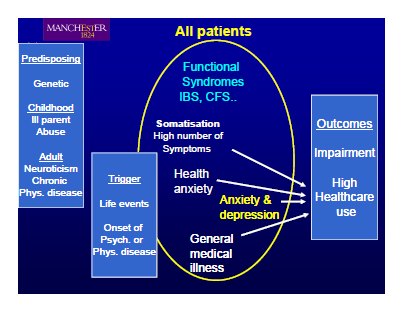
Francis Creed, MD, FRCP: Can We Now Explain Medically Unexplained Symptoms?


PDF Creed Presentation Slides (No transcript)

      Creed Presentation Slides

       Creed References

(A lengthy but important slide presentation by DSM-V Somatic Symptom Disorders Work Group member, Francis Creed. No transcript available but please view the slides – there are many references to “Chronic fatigue syndrome”, chronic fatigue and IBS and to the so called “Functional Somatic Syndromes”.)

Lawson Wulsin, MD, FAPM, DSM V for Psychosomatic Medicine: Current Progress and Controversies

      Wulsin Presentation Slides

[No transcript available]

Joel Dimsdale, MD, FAPM, Update on DSM V Somatic Symptoms Workgroup

       Dimsdale text 

[Text version of slides]

4] For detailed information on the proposed structure of ICD-11, the Content Model and operation of iCAT, the collaborative authoring platform through which the WHO will be revising ICD-10, please scrutinise key documents on the ICD11 Revision Google site:

https://sites.google.com/site/icd11revision/
https://sites.google.com/site/icd11revision/home/documents

APA reschedules publication of DSM-5 draft proposals for diagnostic criteria

APA reschedules publication of DSM-5 draft proposals for diagnostic criteria

Post #9 Shortlink: http://wp.me/pKrrB-ns

Update: Some information here on Dr Todd Finnerty’s blog around the launch of the new DSM-5 website and publication of draft criteria: DSM-5 / DSM-V proposals will be ready, the website just needs to be tested

Draft proposals for the revision of DSM-5 diagnostic criteria are not now expected to be published until Wednesday 10 February.

In an announcement yesterday, 15 January, the APA noted on its website that “The new DSM5.org Web site, which will include proposed revisions and draft diagnostic criteria, has been rescheduled for launch on Wednesday, February 10, 2010.”

In Psychiatric News on 1 January 2010, Alan F. Schatzberg, MD, President of the American Psychiatric Association, had written that draft guidelines for diagnostic criteria would be posted on the Web on January 20 with a comment period of “two to three months” and that field trials would commence in July.

In a news release on 10 December, the APA announced that the timeline for the publication of DSM-5 (DSM-V) was being extended from May 2012 to May 2013.

WHO ICD Revision has its Alpha Draft for ICD-11 timelined for 10 May 2010 but has yet to announce a launch date for the iCAT – the wiki-like, collaborative authoring platform through which ICD-10 is being revised.

Read the APA’s 10 December News Release here 

Related material

Psychiatric News January 1, 2010
Volume 45 Number 1 Page 2
ASSOCIATION NEWS
by Jun Yan 

DSM-5 Postponed Until 2013; Field Trials Scheduled for Summer 

FROM THE PRESIDENT
Volume 45 Number 1 Page 3
by Alan F. Schatzberg, MD

Why is DSM-5 Being Delayed?


Previously on DSM-5 Watch

APA announces revised timeline for publication of DSM-5  3 January 2010

DSM-5: Revision controversies in New Scientist 3 January 2010

Christopher Lane on DSM revision and New Scientist article 4 January 2010

APM Workshop: DSM-V for Psychosomatic Medicine: Current Progress and Controversies

APM 2009 Annual Meeting Workshop: DSM-V for Psychosomatic Medicine: Current Progress and Controversies

Post #8 Shortlink: http://wp.me/pKrrB-hc

In November, last year, The Academy of Psychosomatic Medicine, Bethesda, Maryland, held its drug company sponsored 56th Annual Meeting in Las Vegas, Nevada.

Three DSM-V Work Group members, Francis Creed, Lawson Wulsin and Joel Dimsdale (Chair, Somatic Symptom Disorders Work Group) gave presentations around “Medically Unexplained Symptoms” (MUS) and DSM-V, and DSM-V proposals and progress. Slides are available, below, for the first two presentations, with text for the third.

This material represents the most recent information around the deliberations of the DSM-V Work Group that is revising the categories currently under DSM-IV “Somatoform Disorders”.

See this Dx Revision Watch page for previous updates from this Work Group.

The APA anticipates publishing draft proposals for DSM-V diagnostic categories on 20 January. (Since rescheduled for 10 February 2010.)

The Academy of Psychosomatic Medicine

Bethesda, Maryland, US
The Organization for Consultation and Liaison Psychiatry
Publishers of Psychosomatics

2009 ANNUAL MEETING in LAS VEGAS
November 11–14, 2009

56th Annual Meeting

“The Academy of Psychosomatic Medicine recognizes and appreciates the significant financial support provided by the following companies for the 56th Annual Meeting.

“AstraZeneca Pharmaceuticals
Bristol-Myers Squibb and Otsuka Pharmaceutical, Inc.
Eli Lilly and Company
Ortho-McNeil Janssen Scientific Affairs, LLC”

PRESENTERS’ SLIDES

Award Lectures

Hackett Award — Friday, 12:45pm – 1:45pm

Francis Creed, MD, FRCP: Can We Now Explain Medically Unexplained Symptoms? [1]

      Creed Presentation Slides

       Creed References

[No transcript available]

Workshops

Workshop 15 — Saturday, 1:45 – 2:45pm

DSM-V for Psychosomatic Medicine: Current Progress and Controversies

Lawson Wulsin, MD, FAPM: DSM V for Psychosomatic Medicine: Current Progress and Controversies [2]

     Wulsin Presentation Slides

[No transcript available]

Joel Dimsdale, MD, FAPM: Update on DSM V Somatic Symptoms Workgroup [3]

       Dimsdale text

[Text version of slides]

Update on DSM V Somatic Symptoms Workgroup

Workshop #15, APM Annual Meeting, 11-14-09
DSM-V for Psychosomatic Medicine: Current Progress and Controversies

The Somatic Symptoms Workgroup was charged with reviewing most somatoform disorders, psychological factors affecting medical condition, and factitious disorders. There is considerable confusion regarding the diagnostic terminology and a reluctance to use these diagnostic labels. In addition to relying on expert opinion and the research literature, the Workgroup has also been conducting studies in an effort to learn how physicians actually use these diagnostic labels.

These diagnoses are rarely coded. In a study of >1,000,000 Virginia Anthem Blue Cross policy holders, Levenson [4] found that there were fewer than 600 patients with such disorders. Of these 600 patients, the largest group of patients were diagnosed with Psychological Factors Affecting Medical Condition.

Four focus groups were held in San Diego and Edinburgh. Psychiatrists from very different practice settings attended these groups (child psychiatrists, forensic psychiatrists, psychopharmacologists, consultation psychiatrists, psychotherapists). Nonpsychiatrist attendees included neurologists, pediatricians, and gastroenterologists. Using themes identified from the focus groups, an anonymous internet poll was designed. Using mailing lists from a variety of professional organizations, physicians were invited to respond to an anonymous poll.

Three hundred thirty-two physicians responded to the poll. Two thirds were psychiatrists; two-thirds were from the United States. While in general, physicians reported that somatoform patients were relatively rare in their practices (i.e. 0-2%), some physicians reported high prevalence of these patients. Over 30% of the physicians regarded the diagnostic guidelines for pain disorder and somatoform disorder not otherwise specified as “unclear.” Similar numbers of doctors regarded these particular disorders as “not useful.” Physicians were uniform in their opinion that patients disapproved of such diagnostic labels. Respondents also felt that there was a great deal of overlap between somatization disorder, pain disorder, hypochondriasis, and somatoform disorder not otherwise specified. In addition, they felt that that there was overlap between the somatoform disorders and anxiety and depressive disorders.

The Somatic Symptoms Workgroup has been struck by the fact that “medically unexplained symptoms” (MUS) comprise the crucial intellectual underpinning of the large group of somatoform disorders; yet MUS designations are perilous. They foster mind-body dualism; they confuse “undiagnosed” with “unexplained”; they contribute to doctor-patient antagonism; and they base a diagnosis on a negative, rather than positive criteria.

The Workgroup is proposing a series of changes to these disorders. First off, such disorders would be grouped together under one rubric entitled “Somatic Symptom Disorders”, which would include somatoform disorders, factitious disorders, and psychological factors affecting medical condition. Second, because of their many common features, the group is proposing that hypochondriasis, pain disorder, somatization disorder, and undifferentiated somatoform disorder be grouped together as “Complex Somatic Symptom Disorder”, with optional specifyers to designate when the predominant presentation is, for instance, hypochondriasis, etc. MUS is de-emphasized for this diagnosis, which would require both prominent somatic symptoms causing distress or dysfunction, as well as positive psychological criteria (behavior, cognition, perception).

A draft description of these and other disorders will be published on the APA’s DSM V website in January, 2010.

In addition, a paper describing the thinking of the workgroup and providing a slightly earlier version of the diagnostic guidelines may be found at:

Dimsdale J , Creed F, and on behalf of the DSM-V Workgroup on Somatic Symptom Disorders. The proposed diagnosis of somatic symptom disorders in DSM-V to replace somatoform disorders in DSM-IV—a preliminary report, J Psychosom Res, 66 (2009) 473–476

[Ed: Free full text here: http://www.jpsychores.com/article/S0022-3999(09)00088-9/fulltext ]

The workgroup welcomes comments from colleagues about the proposed changes. Are the proposed changes on the right track? Does this proposal represent, all in all, a step forward? Are there major adverse unintended consequences? Workgroup members include: Arthur Barsky, Francis Creed, Javier Escobar, Nancy Frasure-Smith, Michael Irwin, Frank Keefe, Sing Lee, James Levenson, Michael Sharpe [5], Lawson Wulsin, Joel Dimsdale (chair).

Please send comments to Joel Dimsdale via email jdimsdale@ucsd.edu .

[Ends]

[1] Francis Creed, MD, is a member of the DSM-V Somatic Symptom Disorders Work Group (aka Somatic Distress Disorders Work Group) and was a member of the international CISSD Project, co-ordinated by Dr Richard Sykes, PhD. He is a co-editor of the Journal of Psychosomatic Research.

[2] Lawson R. Wulsin, MD, is a member of the DSM-V Somatic Symptom Disorders Work Group.

[3] Joel E Dimsdale, MD, chairs the DSM-V Somatic Symptom Disorders Work Group, is a member of the DSM-V Task Force and was a member of the CISSD Project.

[4] James L Levinson, MD, is a member of the DSM-V Somatic Symptom Disorders Work Group and was a member of the CISSD Project.

[5] Michael Sharpe, MD, Director, University of Edinburgh Psychological Medicine Research Group, is a member of the Somatic Symptom Disorders Work Group, a co-PI of the UK MRC funded PACE Trial and was a member of the CISSD Project.


Related information:

The current use of the diagnosis “Psychological Factors Affecting Medical Condition” in DSM-IV is set out here

Francis Creed is currently working with EACLPP colleagues, Henningsen and Fink, on a draft white paper for the EACLPP MUS Study Group called: “Patients with medically unexplained symptoms and somatisation – a challenge for European health care systems”. A copy of the MUS Study Group working draft can be downloaded from the EACLPP site.

The January 2010, Editorial “Is there a better term than “Medically unexplained symptoms?” Creed F, Guthrie E, Fink P, Henningsen P, Rief W, Sharpe M, White P. J Psychoso Res: Volume 68, Issue 1, Pages 5-8, discusses the deliberations of the EACLPP study group. The Editorial also includes references to the DSM and ICD revision processes.

Javier Escobar, MD, Director of the University of Medicine and Dentistry of New Jersey (UMDNJ) – Robert Wood Johnson Medical School (RWJMS) Medically Unexplained Physical Symptoms (MUPS) Research Center, which has been supported with over $4M in funding by the US National Institute of Mental Health (NIMH), is a member of the DSM-V Task Force. Dr Escobar serves as a Task Force liaison to the Somatic Symptom Disorders Work Group and is said to work closely with this group.

In a 2008 Special Report by Marin and Escobar: “Unexplained Physical Symptoms What’s a Psychiatrist to Do?” Psychiatric Times. Vol. 25 No. 9, August 1, 2008, the authors write:

“…Perhaps as a corollary of turf issues, general medicine and medical specialties started carving these syndromes with their own tools. The resulting list of ‘medicalized’, specialty-driven labels that continues to expand includes fibromyalgia, chronic fatigue syndome, multiple chemical sensitivity, and many others.

“…These labels fall under the general category of functional somatic syndromes and seem more acceptable to patients because they may be perceived as less stigmatizing than psychiatric ones. However, using DSM criteria, virtually all these functional syndromes would fall into the somatoform disorders category given their phenomenology, unknown physical causes, absence of reliable markers, and the frequent coexistence of somatic and psychiatric symptoms.”

In Table 1, under the heading “Functional Somatic Syndromes (FSS)” Escobar and Marin list:

“Irritable bowel syndrome, Chronic fatigue syndrome, Fibromyalgia, Multiple chemical sensitivity, Nonspecific chest pain, Premenstrual disorder, Non-ulcer dyspepsia, Repetitive strain injury, Tension headache, Temporomandibular joint disorder, Atypical facial pain, Hyperventilation syndrome, Globus syndrome, Sick building syndrome, Chronic pelvic pain, Chronic whiplash syndrome, Chronic Lyme disease, Silicone breast implant effects, Candidiasis hypersensivity, Food allergy, Gulf War syndrome, Mitral valve prolapse, Hypoglycemia, Chronic low back pain, Dizziness, Interstitial cystitis, Tinnitus, Pseudoseizures, Insomnia, Systemic yeast infection, Total allergy syndrome”

Marin and Escobar August 2008 Special Report here on Psychiatric Times site.