APA News Release 4 May 2011: New Framework Proposed for Manual of Mental Disorders

APA News Release 4 May 2011: New Framework Proposed for Manual of Mental Disorders

Post #74 Shortlink: http://wp.me/pKrrB-12x

http://tinyurl.com/APAnewsrelease4may11

APA News Release 4 May 2011

American Psychiatric Association

News Release

For Information Contact:                                                            Release No. 11-27
Eve Herold 703-907-8640
press@psych.org

Erin Connors 703-907-8562
econnors@psych.org

FOR IMMEDIATE RELEASE

New Framework Proposed for Manual of Mental Disorders
APA Revisions a Key Step in Development of DSM-5

ARLINGTON, Va. (May 4, 2011) The American Psychiatric Association today released the organizational framework proposed for the fifth edition of the Diagnostic and Statistical Manual of Mental Disorders (DSM). This restructuring of the DSMs chapters and categories of disorders signals the latest scientific thinking about how various conditions relate to each other and may influence care. The APA is again inviting comment from the public and mental health and other professionals who use the manual for both diagnostic and research purposes.

The revisions reflect the knowledge we have gained since the last DSM was published in 1994, said David Kupfer, M.D., chair of the DSM-5 Task Force. They should facilitate more comprehensive diagnosis and treatment approaches for patients and encourage research across diagnostic criteria.

The changes re-order the existing manuals 16 chapters based on underlying vulnerabilities as well as symptom characteristics, which currently result in many patients being diagnosed with multiple disorders within and across disorder groups. The chapters are arranged by general categories such as neurodevelopmental, emotional and somatic to reflect the potential commonalities in etiology within larger disorder groups.

The sequence of chapters builds on what we have learned about the brain, behavior and genetics over the past two decades, noted Steven Hyman, M.D., former director of the National Institute of Mental Health and a member of the DSM-5 Task Force.

Public comment is invited through June 15 on the draft framework and the latest proposed revisions to diagnostic criteria, both available on http://www.dsm5.org. During an initial public review and comment period last year an unprecedented occurrence in both the field of psychiatry and in medicine the APA received more than 8,000 written responses from clinicians, researchers and family and patient advocates. All of the responses were considered as part of the manuals reorganization.

Todays release marks another stage in the development of DSM-5. Rigorous scientific scrutiny is shaping this 14-year project, with the involvement of nearly 500 experts from the United States and abroad. Publication is scheduled for 2013.

The manuals new organization combines certain disorders under more comprehensive chapter headings while breaking others out from their previous categories. One example is obsessive-compulsive disorder (OCD), long considered to be an anxiety-driven disorder. Recent studies have shown that OCD and several related disorders involve distinct neurocircuits, and so they are now listed as a separate grouping a move that could advance understanding of their root causes.

There are other notable changes. Disorders previously listed under a single rubric of infancy, childhood and adolescence have been integrated into other chapters, in line with the goal of making DSM more developmentally focused. In addition, research findings linking schizophrenia and schizotypal personality disorder into a schizophrenia spectrum will be reflected in this next edition.

The schizophrenia spectrum designation is supported by studies showing how these disorders tend to aggregate within families, said Darrel Regier, M.D., M.P.H., vice chair of the DSM-5 Task Force and executive director of the American Psychiatric Institute for Research and Education. It will help clinicians to correctly diagnose patients by making clear the common features that fall within the spectrum.

To date, reports on the deliberations and progress of the task force and 13 work groups have been presented at international conferences, through more than 100 papers and via the DSM-5 website. After last years public comment period, the work groups continued to amend and refine some categories of disorders.

The first round of field trials is now testing the new diagnostic criteria in real-world settings, including at nearly a dozen larger academic and clinical centers; almost 3,900 mental health professionals in individual practice and smaller settings also will participate before the trials conclude. Another public comment period on the criteria will then follow.

The DSM-5 framework and diagnostic criteria will be determined by 2012 and submitted to the APAs Board of Trustees for review and approval.

At every stage, said Kupfer, DSM-5 is benefiting from a depth of research and a breadth of expertise and diverse opinions that will immeasurably strengthen the final document.

The American Psychiatric Association is a national medical specialty society whose more than 36,000 physician members specialize in the diagnosis, treatment, prevention and research of mental illnesses, including substance use disorders. Visit the APA at www.psych.org and www.healthyminds.org.


Media coverage, APA’s 4 May DSM-5 announcement

MedPage Today

CNN Blog


Related information:

Post: 05.05.11 American Psychiatric Association (APA) announces second public review of DSM-5 draft criteria and structure

APA announces second public review of DSM-5 draft criteria and structure

American Psychiatric Association (APA) announces second public review of DSM-5 draft criteria and structure

Post #73 Shortlink: http://wp.me/pKrrB-12k

Second public stakeholder review and feedback period now 4 May to 15 June

APA News Release No: 11-27 PDF: http://tinyurl.com/APAnewsrelease4may11 

or open PDF on this site here: New Framework Proposed for Manual of Mental Disorders

Online posting of draft disorders and criteria proposed by the 13 DSM-5 Work Groups for new and existing mental disorders had originally been scheduled for May-June, this year. According to a revised Timeline on the APA’s DSM-5 Development site, in March, this second public review exercise had been rescheduled for August-September:

“August-September 2011: Online Posting of Revised Criteria. Following the internal review, revised draft diagnostic criteria will be posted online for approximately one month to allow the public to provide feedback. This site will be closed for feedback by midnight on September 30, 2011.”

But yesterday, 4 May, the APA announced that the second public review period is now open and will run from May to 15 June.

The DSM-5 site was updated yesterday with announcements and revised proposals (dated May 4, 2011) across all categories. The current review period closes on 15th June – just six weeks away.

Note that this is a public and stakeholder review and feedback exercise and is not restricted to professionals or members of the American Psychiatric Association.

There is a Task Force announcement here: http://www.dsm5.org/Pages/Default.aspx

[Extracts]

What Specifically Has Changed on This Site?

“You will notice several changes to this Web site since we first launched in February 2010. Numerous disorders contain updated criteria…

” ...Is There Opportunity to Provide Further Comments?

“At this time, we are asking visitors to review and comment on the proposed DSM-5 organizational structure and criteria changes. Please note that the current commenting period will end on June 15, 2011. It is important to remember that the proposed structure featured here is only a draft. These proposed headings were reviewed by the DSM-5 Task Force in November 2010…

“…The content on this site will stay in its current form until after completion of the DSM-5 Field Trials, scheduled to conclude later this year. Following analysis of field trial results, we will revise the proposed criteria as needed and, after appropriate review and approval, we will post these changes on this Web site. At that time, we will again open the site to a third round of comments from visitors, which will be systematically reviewed by each of the work groups for consideration of additional changes. Thus, the current commenting period is not the final opportunity for you to submit feedback, and subsequent revisions to DSM-5 proposals will be jointly informed by field trial findings as well as public commentary.

“We look forward to receiving your feedback during the coming weeks and appreciate your participation in this important process.”      [Source: http://www.dsm5.org/Pages/Default.aspx]

There are brief notes on the proposed DSM-5 Organizational Structure here:

http://www.dsm5.org/proposedrevision/Pages/proposed-dsm5-organizational-structure.aspx

The “Recent updates” page for “DSM changes” and “Disorder-specific changes” is here:

http://www.dsm5.org/Pages/RecentUpdates.aspx


Registration for submitting feedback

Last year, registration was required in order to submit comment via the DSM-5 Development website. You can register to submit feedback on the DSM-5 Development site home page or on the individual pages for specific category proposals (right hand side under “Participate”).

The revised Timeline can be read here: http://www.dsm5.org/about/Pages/Timeline.aspx

According to the Timeline, a third review and feedback is currently scheduled for January-February 2012, for two months.


Latest revisions for “Somatic Symptom Disorders”

http://www.dsm5.org/ProposedRevision/Pages/SomaticSymptomDisorders.aspx

I will post  information in the next posting specific to the proposals of the DSM-5  Work Group for “Somatic Symptom Disorders”


Media coverage of APA’s 4 May DSM-5 announcement

MedPage Today

CNN Blog

ICD Revision Process Alpha Evaluation Meeting presentations

ICD Revision Process Alpha Evaluation Meeting documents and PowerPoint slide presentations

Post #71 Shortlink: http://wp.me/pKrrB-10i

The information in this mailing relates only to ICD-11, the forthcoming revision of ICD-10 that is scheduled for completion and pilot implementation in 2014/15. It does not apply to the forthcoming US specific Clinical Modification of ICD-10, known as ICD-10-CM.

ICD Revision Process Alpha Evaluation Meeting

An ICD Revision Process Alpha Evaluation Meeting was held, last week, in Geneva. See this post on DSM-5 and ICD-11 Watch site for more information and commentary: http://wp.me/pKrrB-ZN

The Agenda for the meeting can be read here: ICD11 April 2011 Meeting Agenda Word .docx

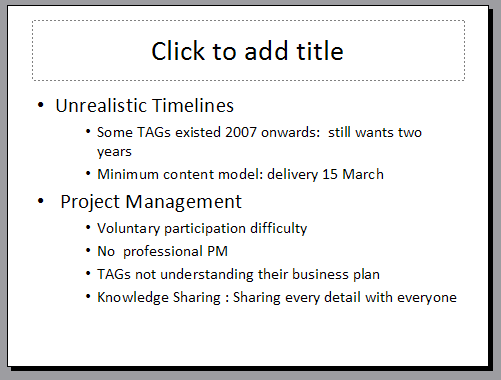
Following this meeting, it is anticipated that ICD Revision Steering Group may make a public announcement within the next few weeks of how it intends to proceed in light of the fact that the timeline for transition from the Alpha to Beta drafting phases has slipped.

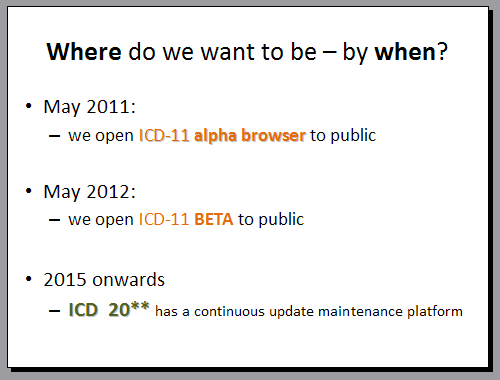
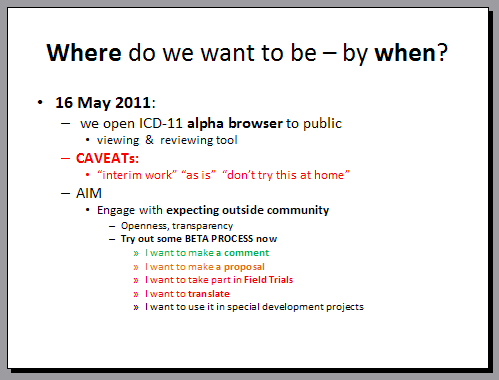
The meeting Agenda and PowerPoint slides suggest that ICD Revision is working towards making a version of the drafting platform publicly available around 16 May, this year, but that this may be a compromise on previous plans and possibly a “hybrid” between the Alpha and Beta drafting phases.

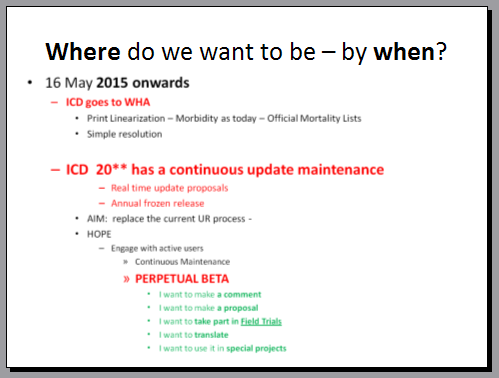
Earlier timelines had approval by World Health Assembly (WHA) slated for May 2014, with pilot implementation of ICD-11 in March 2014. One presentation slide now suggests approval by WHA in 2015.

It’s unconfirmed, but if this is the case, WHO may have already decided to shift WHA endorsement and dissemination of ICD-11 by 12 months, to 2015. This would mean that DSM-5 would have been put to bed and published two years prior to ICD-11 implementation.

From the meeting Agenda:

“Future Phases:

a. iCAT continued alpha development and evaluation ( 2010-11)

b. iCAT beta phase ( 2012-2015)

c. iCAT continuous maintenance phase ( 2015+)”

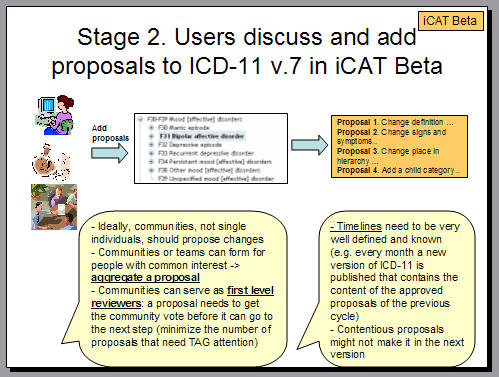
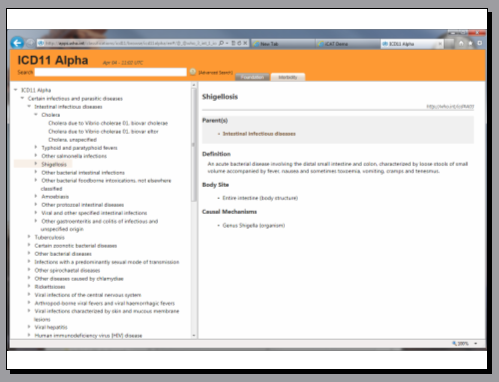
In November, last year, the iCAT collaborative authoring platform through which ICD-11 is being drafted was taken out of the public domain. A revised version of the software on which the platform runs is currently sitting on a Standford server, behind a password, accessible only to ICD Revision. This, or a similar version, may be made publicly accessible (or accessible to those who register for access) from mid May.

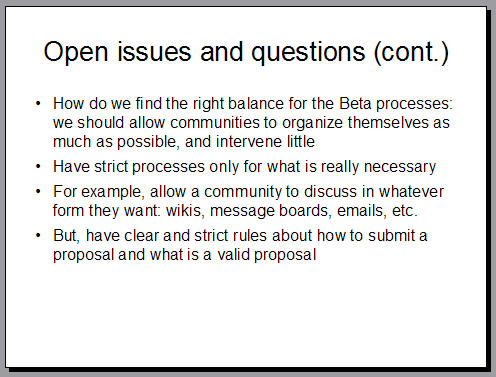
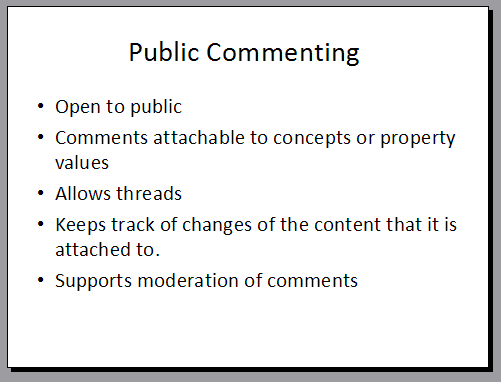
There has been discussion is earlier ICD Revision documents of a hierarchy of stakeholder input – but there is nothing much on this in the meeting presentations, for which ICD Revision has published only slides – not transcripts.

Coming up on DSM-5 and ICD-11 Watch:

ICD-11 proposals for PVFS, ME and Chronic fatigue syndrome

Until some form of Alpha/Beta transition drafting platform is back in the public domain, it won’t be evident how much further forward the population of content for Chapter 6 Diseases of the nervous system has progressed since last November. As more information becomes available, I will update, and I will be posting a summary of how things stood in the iCAT last November, in Post #72.

ICD Revision Process Alpha Evaluation Meeting presentations

There are five presentations published for this meeting: the following three may be of interest to those following the development of ICD-11:

(The 2007 MS PowerPoint viewer is required to view PowerPoint presentations which have been created in .pptx format. A MS .pptx viewer can be downloaded for free from the Microsoft site.)

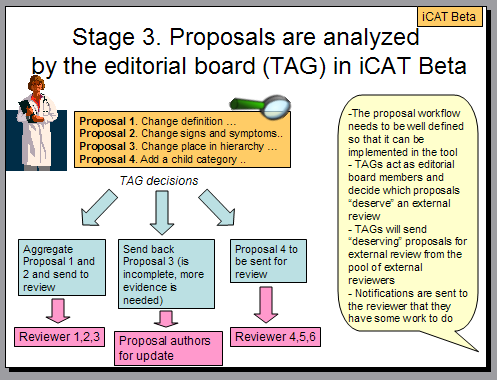
Open full PowerPoint Presentation:”The Way Forward Questions Options” [.ppt]: TheWayForwardPP

Selected slides from “The Way Forward Questions Options”

Slide 2

Slide 3

Slide 5

Slide 6

Slide 12

Slide 17

Open full PowerPoint Presentation:”The Way Forward Questions Options” [.pptx]: TheWayForwardPP

——————

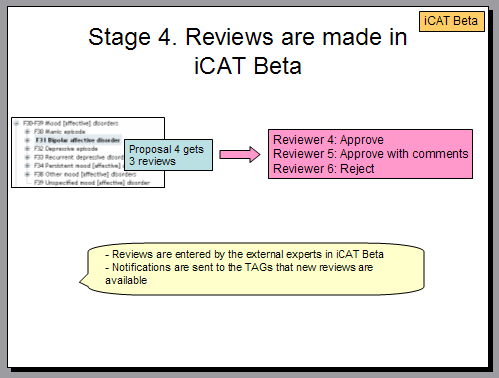
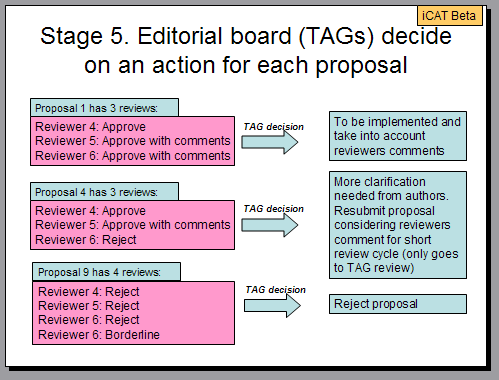
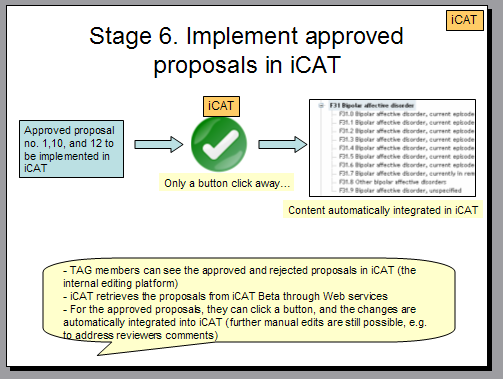
Open full PowerPoint Presentation: Proposal for the ICD Beta Platform, Stanford team” [.ppt]: iCATBetaStanford[1]

Selected slides from “Proposal for the ICD Beta Platform, Stanford team”

Slide 5

Slide 11

Slide 12

Slide 41

Slide 42

Slide 43

Slide 44

Slide 45

Slide 46

Slide 51

Open full PowerPoint Presentation: Proposal for the ICD Beta Platform, Stanford team” [.ppt]: iCATBetaStanford[1]

——————

Open full Can Celik PowerPoint Presentation: “Public Tooling” [.pptx]: Ppt0000069 CanCelic 

Selected slides from Can Celik’s PowerPoint Presentation: “Public Tooling”

Slide 4

Slide 7

Slide 10

Slide 11

Slide 12

Slide 13

Slide 14

Slide 15

Open full Can Celik PowerPoint Presentation: “Public Tooling” [.pptx]: Ppt0000069 CanCelic 
 

Key documents and references:

1] ICD Revision Process Alpha Evaluation Meeting Agenda and background documents

2] Report, WHO FIC Council conference call, 16 February 2011, PDF format

3] Key document: ICD Revision Project Plan version 2.1 9 July 2010

4] Key document: Content Model Reference Guide version January 2011

5] PVFS, ME, CFS: the ICD-11 Alpha Draft and iCAT Collaborative Authoring Platform (DSM-5 and ICD-11 Watch report with screenshots from the iCAT): http://wp.me/pKrrB-KK

Next meeting of Chronic Fatigue Syndrome Advisory Committee (CFSAC) (US)

Next meeting of the Chronic Fatigue Syndrome Advisory Committee (CFSAC) (US)

Post #66 Shortlink: http://wp.me/pKrrB-YY

The next meeting of the Chronic Fatigue Syndrome Advisory Committee (CFSAC) takes place on Tuesday and Wednesday, 10 and 11 May 2011. A copy of the Agenda for this meeting will be posted as soon as it becomes available.

“Members of the public will have the opportunity to provide oral testimony at the May 10-11, 2011, meeting if pre- registered.”

Chronic Fatigue Syndrome Advisory Committee (CFSAC)

The Chronic Fatigue Syndrome Advisory Committee (CFSAC) provides advice and recommendations to the Secretary of Health and Human Services via the Assistant Secretary for Health of the U.S. Department of Health and Human Services on issues related to chronic fatigue syndrome (CFS). These include:

factors affecting access and care for persons with CFS;

the science and definition of CFS; and

broader public health, clinical, research and educational issues related to CFS.

Administrative and management support for CFSAC activities is provided by the Office of the Assistant Secretary for Health (OASH). However, staffing will continue to be provided primarily from the Office on Women’s Health, which is part of OASH.

Dr. Wanda K. Jones, Principal Deputy Assistant Secretary for Health in OASH, will continue in her role as the Designated Federal Officer for CFSAC.

CFSAC Notices

http://www.hhs.gov/advcomcfs/notices/index.html

CFSAC Roster

http://www.hhs.gov/advcomcfs/roster/index.html

CFSAC Meetings

Agenda; Minutes; Presentations; Recommendations

http://www.hhs.gov/advcomcfs/meetings/index.html

Recommendations to the Secretary of Health and Human Services

http://www.hhs.gov/advcomcfs/recommendations/index.html


May 10-11, 2011 CFSAC Meeting

PDF: http://edocket.access.gpo.gov/2011/pdf/2011-6702.pdf

Html: http://edocket.access.gpo.gov/2011/2011-6702.htm

[Federal Register: March 22, 2011 (Volume 76, Number 55)]
[Notices]
[Page 15982]
From the Federal Register Online via GPO Access [wais.access.gpo.gov]
[DOCID:fr22mr11-88]

DEPARTMENT OF HEALTH AND HUMAN SERVICES

Meeting of the Chronic Fatigue Syndrome Advisory Committee
———————————————————-

AGENCY: Department of Health and Human Services, Office of the Secretary, Office of the Assistant Secretary for Health.

ACTION: Notice.

SUMMARY: As stipulated by the Federal Advisory Committee Act, the U.S. Department of Health and Human Services is hereby giving notice that the Chronic Fatigue Syndrome Advisory Committee (CFSAC) will hold a meeting. The meeting will be open to the public.

DATES: The meeting will be held on Tuesday and Wednesday, May 10 and 11, 2011. The meeting will be held from 9 a.m. until 5 p.m. on May 10, 2011, and 9 a.m. until 4:30 p.m. on May 11, 2011.

ADDRESSES: Department of Health and Human Services; Room 800, Hubert H. Humphrey Building; 200 Independence Avenue, SW., Washington, DC 20201. For a map and directions to the Hubert H. Humphrey building, please visit http://www.hhs.gov/about/hhhmap.html .

FOR FURTHER INFORMATION CONTACT: Wanda K. Jones, DrPH; Executive Secretary, Chronic Fatigue Syndrome Advisory Committee, Department of Health and Human Services; 200 Independence Avenue, SW., Hubert Humphrey Building, Room 712E; Washington, DC 20201. Please direct all inquiries to cfsac@hhs.gov .

SUPPLEMENTARY INFORMATION: CFSAC was established on September 5, 2002.
The Committee shall advise and make recommendations to the Secretary, through the Assistant Secretary for Health, on a broad range of topics including (1) the current state of knowledge and research and the relevant gaps in knowledge and research about the epidemiology, etiologies, biomarkers and risk factors relating to CFS, and identifying potential opportunities in these areas; (2) impact and implications of current and proposed diagnosis and treatment methods for CFS; (3) development and implementation of programs to inform the public, health care professionals, and the biomedical academic and research communities about CFS advances; and (4) partnering to improve the quality of life of CFS patients.

The agenda for this meeting is being developed. The agenda will be posted on the CFSAC Web site,
http://www.hhs.gov/advcomcfs when it is finalized. The meeting will be broadcast over the Internet as a real-time streaming video. It also will be recorded and archived for on demand viewing through the CFSAC Web site.

[Ed: the real-time streaming also has real-time auto transcription.]

Public attendance at the meeting is limited to space available.

Individuals must provide a government-issued photo ID for entry into the building where the meeting is scheduled to be held. Those attending the meeting will need to sign-in prior to entering the meeting room.

Individuals who plan to attend and need special assistance, such as sign language interpretation or other reasonable accommodations, should notify the designated contact person at cfsac@hhs.gov in advance.

Members of the public will have the opportunity to provide oral testimony at the May 10-11, 2011, meeting if pre- registered.

Individuals who wish to address the Committee during the public comment session must pre-register by Monday, April 18, 2011, via e-mail to cfsac@hhs.gov . Time slots for public comment will be available on a first-come, first- served basis and will be limited to five minutes per speaker; no exceptions will be made. Individuals registering for public comment should submit a copy of their oral testimony in advance to cfsac@hhs.govprior to the close of business on Monday, April 18, 2011.

If you do not submit your written testimony by the close of business Monday, April 18, 2011, you may bring a copy to the meeting and present it to a CFSAC Support Team staff member. Your testimony will be included in a notebook available for viewing by the public on a table at the back of the meeting room.

Members of the public not providing public comment at the meeting who wish to have printed material distributed to CFSAC members for review should submit, at a minimum, one copy of the material to the Executive Secretary, at cfsac@hhs.gov prior to close of business on Monday, April 18, 2011. Submissions are limited to five typewritten pages. If you wish to remain anonymous, please notify the CFSAC support team upon submission of your materials to cfsac@hhs.gov

All testimony and printed material submitted for the meeting are part of the official meeting record and will be uploaded to the CFSAC Web site and made available for public inspection. Testimony and materials submitted should not include any sensitive personal information, such as a person’s social security number; date of birth; driver’s license number, State identification number or foreign country equivalent; passport number; financial account number; or credit or debit card number. Sensitive health information, such as medical records or other individually identifiable health information, or any non-public corporate or trade association information, such as trade secrets or other proprietary information also should be excluded from any materials submitted.

Dated: March 18, 2011.
Wanda K. Jones,
Executive Secretary, Chronic Fatigue Syndrome Advisory Committee.
[FR Doc. 2011-6702 Filed 3-21-11; 8:45 am]
BILLING CODE 4150-42-P

Previous two meetings:

May 10, 2010 Meeting

Agenda

Minutes

Presentations

Recommendations

Videocast    [RealPlayer is required to view]

CFSAC Recommendations – May 10, 2010

http://www.hhs.gov/advcomcfs/recommendations/05102010.html

The Secretary should ask the blood community to defer indefinitely from donating any blood components, any person with a history of chronic fatigue syndrome.

The Secretary should recognize the special challenges of ensuring that CFS is part of any efforts to train or educate health care providers under health reform.

The Secretary should direct CMS, AHRQ, and HRSA to collaborate on developing a demonstration project focused on better value and more efficient and effective care for persons with CFS. This can be a public-private effort, and monitoring outcomes and costs should be part of the overall evaluation.

The Secretary should ask the Designated Federal Officer to explore adding a web-based meeting to conduct CFSAC business.

CFSAC rejects proposals to classify CFS as a psychiatric condition in U.S. disease classification systems. CFS is a multi-system disease and should be retained in its current classification structure, which is within the “Signs and Symptoms” chapter of the International Classification of Diseases 9-Clinical Modification (ICD 9-CM).*

*DFO Note: The ICD 10-CM is scheduled for implementation on October 1, 2013. In that classification, two mutually exclusive codes exist for chronic fatigue [sic]:

post-viral fatigue syndrome (in the nervous system chapter), and
chronic fatigue syndrome, unspecified (in the signs and symptoms chapter).

HHS has no plans at this time to change this classification in the ICD 10-CM.

October 12, 2010 Science Day
October 13-14, 2010

Agenda

Minutes

Presentations

Recommendations

Videocast     [RealPlayer is required to view]

CFSAC Recommendations – October 13-14, 2010

http://www.hhs.gov/advcomcfs/recommendations/1012-142010.html

The specific recommendations articulated by the Committee are:

Develop a national research and clinical network for ME/CFS (myalgic encephalomyelitis/CFS) using regional hubs to link multidisciplinary resources in expert patient care, disability assessment, educational initiatives, research and clinical trials. The network would be a resource for experts for health care policy related to ME/CFS.

Engage the expertise of CFSAC as HHS moves forward to advance policy and agency responses to the health crisis that is ME/CFS.

Adopt the term “ME/CFS” across HHS programs.

Memo from Secretary Sebelius to Christopher Snell, CFSAC Chair, on the October 2010 Meeting

http://www.hhs.gov/advcomcfs/sebelius_memo.pdf

APA postpones release of revised proposals for draft criteria for DSM-5 by three months

APA postpones release of revised proposals for draft criteria for DSM-5 by three months

Post #64 Shortlink: http://wp.me/pKrrB-Yu

Slip slidin’ away…

There will be no public review of revised draft criteria for DSM-5 categories this coming May.

APA Field Trials got off to a late start and the DSM-5 timeline continues to slip.

Online posting of draft disorders and criteria proposed by the DSM-5 Work Groups for new and existing mental disorders had been scheduled for May-July, this year. Revised criteria were expected to be posted online in May, for a period of approximately one month to allow the public to review proposals and submit comment.

But according to a revised Timeline on the American Psychiatric Association’s (APA) DSM-5 Development site, this second public review exercise is now postponed until August-September 2011:

“August-September 2011: Online Posting of Revised Criteria. Following the internal review, revised draft diagnostic criteria will be posted online for approximately one month to allow the public to provide feedback. This site will be closed for feedback by midnight on September 30, 2011.”

There are also references within the DSM-5 Timeline to ICD-10-CM and the forthcoming ICD-10-CM Partial Code Freeze, and to ICD-11.

ICD-11 Beta Draft

According to sources, ICD-11 Revision Steering Group are still working towards having a Beta Draft ready for May 2011.

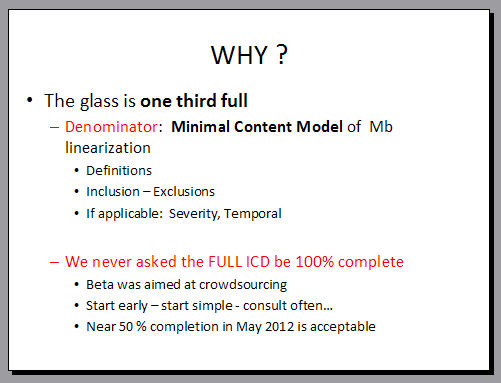
But from a PowerPoint presentation posted briefly on the ICD-11 Revision website at the end of February, but swiftly removed following enquiries, evidently the WHO has been discussing the pros and cons of postponing the release of its own Beta Draft for public input until the autumn, or until the end of 2011, or possibly even May 2012.

Another ICD Revision document: ICD Revision Project Plan v 2.1, projects a date of May 2012 for release of the Beta Draft. Since there is no definitive and recent ICD-11 timeline on any of the WHO’s ICD Revision sites, and since ICD Revision is keeping schtum, it remains unclear at what point in the timeline a Beta Draft for ICD-11 will be released for public scrutiny and input (as opposed to purely internal use, as the Alpha Draft had been). I will update when more information becomes available.

The original dissemination date for ICD-11 had been 2012, with the timelines for the revision of ICD-10 and DSM-IV running more or less in parallel. But in 2007/8, the release date for ICD-11 was shifted to pilot implementation in 2014 and dissemination in 2015. A “pre-final draft” of ICD-11 is projected for March 2013 with submission for WHA endorsement in May 2014. ICD Revision are balancing “incomplete software, unsatisfactory content and incomplete review process” against reduced opportunity for public input and reduced public confidence, if the timeline for the Beta were to be extended.

In December 2009, the APA announced that the publication date for their DSM-5 was being extended to May 2013.

In January 2010, APA President, Alan F Schatzburg, MD, said:

“…the extension will permit better linking of DSM-5 to the U.S. implementation of the ICD-10-CM codes for all Medicare/Medicaid claims reporting, which are scheduled to go into effect on October 1, 2013. APA will also continue to work with the World Health Organization (WHO) to harmonize DSM-5 with the mental and behavioral disorders section of ICD-11, which WHO plans to release no sooner than 2014.”

With a Partial Code Freeze looming this October for ICD-10-CM, the delays in starting field trials and now a three month postponement of publication of revised criteria for the second public review and comment period isn’t going to inspire confidence in a Task Force that has already come in for significant criticism of its oversight of the revision of DSM-IV.

Revised and expanded DSM-5 Timeline

[Timeline superceded by revised Timeline]

Ed: Footnotes: The “harmonization” of DSM-5 and ICD-11

The APA participates with the WHO in the “International Advisory Group for the Revision of ICD-10 Mental and Behavioural Disorders” (Chapter 5) and a “DSM-ICD Harmonization Coordination Group”.

There is already a degree of correspondence between DSM-IV and Chapter V of ICD-10. For the next editions, the APA and the WHO have committed as far as possible:

“To facilitate the achievement of the highest possible extent of uniformity and harmonization between ICD-11 mental and behavioural disorders and DSM-V disorders and their diagnostic criteria.”

with the objective that

“The WHO and APA should make all attempts to ensure that in their core versions, the category names, glossary descriptions and criteria are identical for ICD and DSM.”

But the WHO acknowledges there may be areas where congruency between the two systems may not be achievable.

As the iCAT (the ICD-11 electronic collaborative drafting platform) stood last November, two new categories were listed in the Linearized Chapter 5, F45 – F48.0 (Somatoform Disorders) codes. It is understood from ICD documentation (DIFF File – Changes from ICD-10 [MS Excel doc. Retrieved 29.09.10; no longer available on 01.10.10]) that child categories F45.40 and F45.41 are new entities for ICD-11 [1].

Note the ICD-11 categories between F45 – F48.0, as they stood in the iCAT drafting platform last November, do not mirror current proposals of the DSM-5 “Somatic Symptom Disorder” Work Group for renaming the “Somatoform Disorders” categories of DSM-IV to “Somatic Symptom Disorders” and combining a number of existing categories under a new rubric, “Complex Somatic Symptom Disorder (CSSD)”, and the more recently proposed “Simple Somatic Symptom Disorder (SSSD)” [2][3].

[1] Screenshot iCAT, ICD-11: Chapter 5: F45 – F48.0: https://dxrevisionwatch.com/wp-content/uploads/2010/05/2icatchapter5f45somatoform.png  

[2] Article: Erasing the interface between psychiatry and medicine (DSM-5), Chapman S, 13 February 2011: http://wp.me/pKrrB-Vn

[3] Article: Revisions to DSM-5 proposals on 14.01.11: New category proposed “Simple Somatic Symptom Disorder, Chapman S, 16 January 2011: http://wp.me/pKrrB-St  

[4] DSM-5 Development website: http://www.dsm5.org/about/Pages/Timeline.aspx

Erasing the interface between psychiatry and medicine (DSM-5)

Erasing the interface between psychiatry and medicine (DSM-5)

Post #61 Shortlink: http://wp.me/pKrrB-Vn

Under the guise of “eliminating stigma” and eradicating “terminology [that] enforces a dualism between psychiatric and medical conditions” the American Psychiatric Association (APA) appears hell bent on colonising the entire medical field by licensing the application of a mental health diagnosis to all medical diseases and disorders.

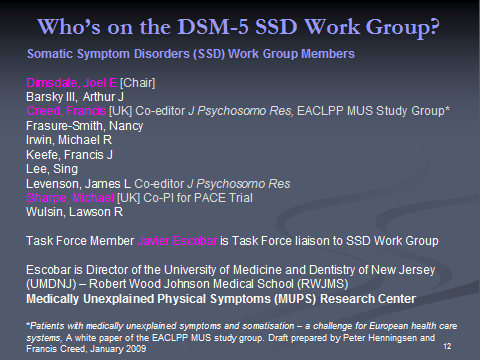
While a stream of often acerbic commentaries from two former DSM Task Force chairs, Allen Frances and Robert Spitzer, have focused on the implications for introducing new additions into the DSM and broadening the definitions of existing diagnostic criteria, the DSM-5 “Somatic Symptom Disorders” Work Group (Chair, Joel E Dimsdale) has been quietly redefining DSM’s “Somatoform Disorders” categories with proposals that if approved, would legitimise the application of an additional diagnosis of “Somatic Symptom Disorder” to all medical diseases and disorders.

Radical proposals for renaming the “Somatoform Disorders” category “Somatic Symptom Disorders” and combining a number of existing categories under a new rubric, “Complex Somatic Symptom Disorder (CSSD)”, and a more recently proposed “Simple Somatic Symptom Disorder (SSSD)”, have the potential for bringing millions more patients under a mental health banner and expanding markets for psychiatric services, antidepressants, antipsychotics and behavioural therapies such as Cognitive Behavioural Therapy (CBT) for the “modification of dysfunctional and maladaptive beliefs about symptoms and disease, and behavioral techniques to alter illness and sick role behaviors” for all patients with somatic symptoms, irrespective of cause.

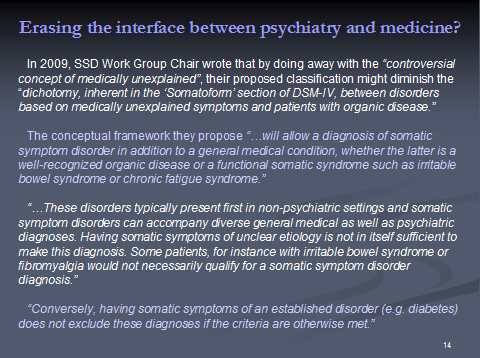
In a June ’09 Editorial, titled “The proposed diagnosis of somatic symptom disorders in DSM-V to replace somatoform disorders in DSM-IV – a preliminary report”, which expanded on a brief DSM-5 Work Group progress report published on the DSM-5 Development website that April, Joel E Dimsdale and fellow DSM-5 Work Group member, Francis Creed, reported that by doing away with the “controversial concept of medically unexplained symptoms”, their proposed classification might diminish the “dichotomy, inherent in the ‘Somatoform’ section of DSM IV, between disorders based on medically unexplained symptoms and patients with organic disease.”

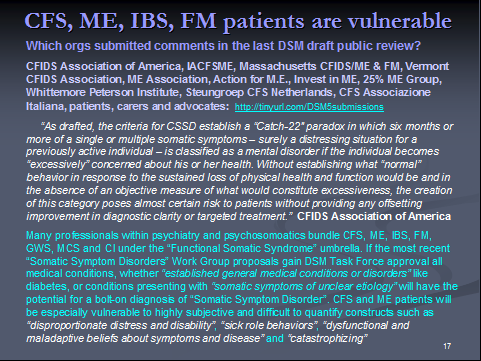
If the most recent “Somatic Symptom Disorders” Work Group proposals gain DSM Task Force approval, all medical diseases and disorders, whether “established general medical conditions or disorders” like diabetes or conditions presenting with “somatic symptoms of unclear etiology” will have the potential for a bolt-on diagnosis of “somatic symptom disorder”.

CFS and ME patients may be especially vulnerable to highly subjective and difficult to quantify constructs such as “disproportionate distress and disability”, “catastrophising”, “health-related anxiety”, “[appraising] bodily symptoms as unduly threatening, harmful, or troublesome” with “health concerns [that] may assume a central role in the individual’s life, becoming a feature of his/her identity and dominating interpersonal relationships.”

There may be considerable implications for these highly subjective criteria for the treatments offered to US patients, the provision of social care packages and the payment of medical and disability insurance.

Criteria are set out very briefly in the PowerPoint slides, but the full criteria and key documents need to be scrutinized. The most recent proposals of the DSM-5 “Somatic Symptoms Disorders” Work Group plus two key Disorder Description and Rationale PDF documents can be read on the APA’s DSM-5 Development site here:

http://www.dsm5.org/ProposedRevisions/Pages/SomatoformDisorders.aspx

Two key Somatic Symptoms Disorders Work Group Draft Proposal documents:

     Revised Justification of Criteria Version 1/31/11

     Revised Disorder Descriptions: Version 1/14/11

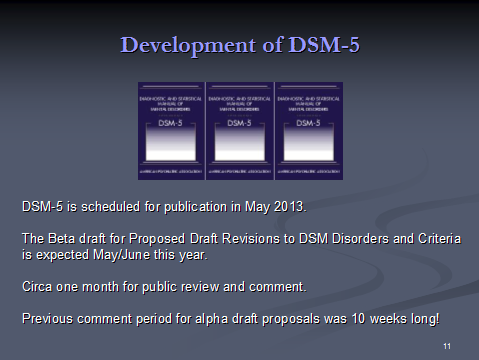
The next public review of draft criteria and disorder descriptions has been postponed to August – September, this year, for a period of approximately one month for public review and feedback.

[1] Psychiatric Times Special Report, PSYCHIATRY AND MEDICAL ILLNESS Unexplained Physical Symptoms What’s a Psychiatrist to Do?  Humberto Marin, MD and Javier I. Escobar, MD, 01 August 2008

[Draft criteria superceded by third draft published on May 2, 2012]

Images copyright ME agenda 2011   No unauthorized reproduction.

The next public review of draft criteria and disorder descriptions is scheduled for May/June 2011.

Shortlink for this Post: http://wp.me/pKrrB-Vn