Kupfer (APA) statement on National Institute of Mental Health (NIMH) announcement

Kupfer (APA) statement on National Institute of Mental Health (NIMH) announcement

Post #242 Shortlink: http://wp.me/pKrrB-2VO

David J Kupfer, Chair, DSM-5 Task Force, has issued a statement in response to the April 29 announcement by NIMH’s Thomas Insel:

 Click link for PDF document   American Psychiatric Association Press Release

Text:

For Information Contact:

Eve Herold, 703-907-8640 May 3, 2013

press@psych.org Release No. 13-33

Erin Connors, 703-907-8562

econnors@psych.org

Statement by David Kupfer, MD

Chair of DSM-5 Task Force Discusses Future of Mental Health Research

The promise of the science of mental disorders is great. In the future, we hope to be able to identify disorders using biological and genetic markers that provide precise diagnoses that can be delivered with complete reliability and validity. Yet this promise, which we have anticipated since the 1970s, remains disappointingly distant. We’ve been telling patients for several decades that we are waiting for biomarkers. We’re still waiting. In the absence of such major discoveries, it is clinical experience and evidence, as well as growing empirical research, that have advanced our understanding of disorders such as autism spectrum disorder, bipolar disorder, and schizophrenia.

This progress will soon be recognized in the fifth edition of the Diagnostic and Statistical Manual of Mental Disorders (DSM-5). The new manual, due for release later this month, represents the strongest system currently available for classifying disorders. It reflects the progress that we have made in several important areas.

A revised chapter organization signals how disorders may relate to each other based on underlying vulnerabilities or symptom characteristics.

Disorders are framed in the context of age, gender, and cultural expectations, in addition to being organized along a valuable developmental lifespan within each chapter.

Key disorders were combined or reorganized because the relationships among categories clearly placed them along a single continuum, such as substance use disorder and autism spectrum disorder.

A new section introduces emerging measures, models and cultural guidance to assist clinicians in their evaluation of patients. For the first time, self-assessment tools are included to directly engage patients in their diagnosis and care.

DSM, at its core, is a guidebook to help clinicians describe and diagnose the behaviors and symptoms of their patients. It provides clinicians with a common language to deliver the best patient care possible. And through content such as the new Section III, the next manual also aims to encourage future directions in research.

Efforts like the National Institute of Mental Health’s Research Domain Criteria (RDoC) are vital to the continued progress of our collective understanding of mental disorders. But they cannot serve us in the here and now, and they cannot supplant DSM-5. RDoC is a complementary endeavor to move us forward, and its results may someday culminate in the genetic and neuroscience breakthroughs that will revolutionize our field. In the meantime, should we merely hand patients another promissory note that something may happen sometime? Every day, we are dealing with impairment or tangible suffering, and we must respond. Our patients deserve no less.

The American Psychiatric Association is a national medical specialty society whose physician members specialize in the diagnosis, treatment, prevention and research of mental illnesses, including substance use disorders. Visit the APA at www.psychiatry.org

ENDS

National Institute of Mental Health (NIMH) to ditch the DSM

National Institute of Mental Health (NIMH) to ditch the DSM

Post #241 Shortlink: http://wp.me/pKrrB-2UL

An edited version of the post published on May 3
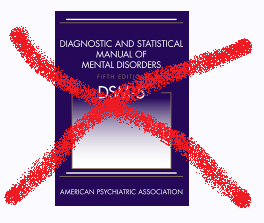
DSM5NIMH to ditch DSM

Earlier this week, in a blog dated April 29, Thomas Insel, National Institute of Mental Health’s Director, quietly drove another nail into the coffin of DSM-5.

NIMH, part funders of the 13 DSM-5 Research Planning Conferences held between 2004 and 2008 and the monographs that resulted out of them, announced that NIMH “will be re-orienting its research away from DSM categories.”

I don’t have figures for how much funding NIMH has sunk into the development of DSM-5.

This announcement comes just three weeks before the American Psychiatric Association launches its next edition of the Diagnostic and Statistical Manual of Mental Disorders, with a clutch of spin off publications scheduled for release in May and September.

APA has yet to issue a statement or comment in the press.

At the end of this post are links to the NIMH Research Domain Criteria (RDoC) posted in 2011, and a commentary by James Phillips, MD, for Psychiatric Times, from April 2011: “DSM-5 and the NIMH Research Domain Criteria Project.”

You can read Thomas Insel’s announcement in full, below, followed by a round up of media coverage.

Additional coverage and commentary is being added, as it comes in, below the NIMH announcement in the pale blue box.

Most recently added: Dr Tad; Neurocritic BlogSpot

+++
On April 24, in Mental health: On the spectrum, Nature had reported:

Research suggests that mental illnesses lie along a spectrum — but the field’s latest diagnostic manual still splits them apart…

“…The APA claims that the final version of DSM-5 is a significant advance on the previous edition and that it uses a combination of category and dimensional diagnoses. The previously separate categories of substance abuse and substance dependence are merged into the new diagnosis of substance-use disorder. Asperger’s syndrome is bundled together with a handful of related conditions into the new category called autism-spectrum disorder; and OCD, compulsive hair-pulling and other similar disorders are grouped together in an obsessive–compulsive and related disorders category. These last two changes, Regier says, should help research scientists who want to look at links between conditions. “That probably won’t make much difference to treatment but it should facilitate research into common vulnerabilities,” he says.

“The Research Domain Criteria project is the biggest of these research efforts. Last year, the NIMH approved seven studies, worth a combined US$5 million, for inclusion in the project — and, Cuthbert says, the initiative “will represent an increasing proportion of the NIMH’s translational-research portfolio in years to come”. The goal is to find new dimensional variables and assess their clinical value, information that could feed into a future DSM.

“One of the NIMH-funded projects, led by Jerzy Bodurka at the Laureate Institute for Brain Research in Tulsa, Oklahoma, is examining anhedonia, the inability to take pleasure from activities such as exercise, sex or socializing. It is found in many mental illnesses, including depression and schizophrenia.

“Bodurka’s group is studying the idea that dysfunctional brain circuits trigger the release of inflammatory cytokines and that these drive anhedonia by suppressing motivation and pleasure. The scientists plan to probe these links using analyses of gene expression and brain scans. In theory, if this or other mechanisms of anhedonia could be identified, patients could be tested for them and treated, whether they have a DSM diagnosis or not.

“One of the big challenges, Cuthbert says, is to get the drug regulators on board with the idea that the DSM categories are not the only way to prove the efficacy of a medicine. Early talks about the principle have been positive, he says. And there are precedents: “Pain is not a disorder and yet the FDA gives licences for anti-pain drugs,” Cuthbert says.

“Going back to the drawing board makes sense for the scientists, but where does it leave DSM-5? On the question of dimensionality, most outsiders see it as largely the same as DSM-IV. Kupfer and Regier say that much of the work on dimensionality that did not make the final cut is included in the section of the manual intended to provoke further discussion and research. DSM-5 is intended to be a “living document” that can be updated online much more frequently than in the past, Kupfer adds. That’s the reason for the suffix switch from V to 5; what comes out next month is really DSM-5.0. Once the evidence base strengthens, he says, perhaps as a direct result of the NIMH project, dimensional approaches can be included in a DSM-5.1 or DSM-5.2…”

National Institute of Mental Health (NIMH) announcement

Transforming Diagnosis

By Thomas Insel on April 29, 2013

Thomas R. Insel, M.D., is Director of the National Institute of Mental Health (NIMH).

“…Patients with mental disorders deserve better. NIMH has launched the Research Domain Criteria (RDoC) project to transform diagnosis by incorporating genetics, imaging, cognitive science, and other levels of information to lay the foundation for a new classification system…”

“…That is why NIMH will be re-orienting its research away from DSM categories. Going forward, we will be supporting research projects that look across current categories – or sub-divide current categories – to begin to develop a better system….”

+++


Dr Tad Blog

Paradigms lost: NIMH, McGorry & DSM-5’s failure

Dr Tad | May 4, 2013


Neurocritic Blogspot

RDoC Dimensional Approach for Research vs. DSM-5 for Diagnosis

Neurocritic | May 5, 2013


Article in Romanian

DESCOPERĂ

Cea mai importantă ştiinţă a minţii umane, psihiatria, se transformă în urma unei decizii importante


Article in French

Psychomédia

Le National Institute of Mental Health (NIMH) américain se distance du DSM-5 de l’American Psychiatric Association

Soumis par Gestion le 3 mai 2013

“Le National Institute of Mental Health (NIMH) américain réoriente ses recherches en se distançant du DSM, le Diagnostic and Statistical Manual of Mental Disorders, dont la cinquième édition sera lancée par l’American Psychiatric Association le 22 mai, explique son directeur, Thomas Insel, dans un billet publié le 29 avril…”


Article in Turkish

Psikiyatristler DSM tanı kriterlerini terk ediyor!

Dünyadaki en büyük ruh sağlığı araştırma kurumlarından ABD Ulusal Sağlık Kurumu (NIMH), psikiyatrik rahatsızlıkların semptomlara bağlı olarak belirlenmesine dayanan tanı yöntemini terk ediyor.

Pazar, 05 Mayıs 2013


Scientific American John Horgan Blog

Psychiatry in Crisis! Mental Health Director Rejects Psychiatric “Bible” and Replaces With… Nothing

“NIMH director Insel doesn’t mention it, but I bet his DSM decision is related to the big new Brain Initiative, to which Obama has pledged $100 million next year.”

John Horgan | May 4, 2013


Psychology Today
Side Effects | Christopher Lane Ph.D.

The NIMH Withdraws Support for DSM-5
The latest development is a humiliating blow to the APA.

Christopher Lane, Ph.D. | May 4, 2013


Government Health IT

NIMH moving beyond DSM

Anthony Brino, Associate Editor | May 3, 2013


1 Boring Old Man

old news…

1 Boring Old Man | May 3, 2013


Previously posted

Mindhacks blog

National Institute of Mental Health abandoning the DSM

“In a potentially seismic move, the National Institute of Mental Health – the world’s biggest mental health research funder, has announced only two weeks before the launch of the DSM-5 diagnostic manual that it will be “re-orienting its research away from DSM categories”.

In the announcement, NIMH Director Thomas Insel says the DSM lacks validity and that “patients with mental disorders deserve better”.

This is something that will make very uncomfortable reading for the American Psychiatric Association as they trumpet what they claim is the ‘future of psychiatric diagnosis’ only two weeks before it hits the shelves.

As a result the NIMH will now be preferentially funding research that does not stick to DSM categories…”


New Scientist

Psychiatry divided as mental health ‘bible’ denounced

Andy Coghlan and Sara Reardon | May 3, 2013

“The world’s biggest mental health research institute is abandoning the new version of psychiatry’s “bible” – the Diagnostic and Statistical Manual of Mental Disorders, questioning its validity and stating that “patients with mental disorders deserve better”. This bombshell comes just weeks before the publication of the fifth revision of the manual, called DSM-5…”

“…We cannot succeed if we use DSM categories as the gold standard,” says Insel. “That is why NIMH will be reorienting its research away from DSM categories,” says Insel. Prominent psychiatrists contacted by New Scientist broadly support Insel’s bold initiative. However, they say that given the time it will take to realise Insel’s vision, diagnosis and treatment will continue to be based on symptoms.

“Insel is aware that what he is suggesting will take time – probably at least a decade, but sees it as the first step towards delivering the “precision medicine” that he says has transformed cancer diagnosis and treatment. It’s potentially game-changing, but needs to be based on underlying science that is reliable,” says Simon Wessely of the Institute of Psychiatry at King’s College London. “It’s for the future, rather than for now, but anything that improves understanding of the etiology and genetics of disease is going to be better [than symptom-based diagnosis].”


New Scientist opinion piece

One manual shouldn’t dictate US mental health research

“The new edition of the DSM “bible” is so flawed that the US National Institute of Mental Health is right to abandon it, says Allen Frances”

Allen Frances, MD | May 3, 2013


@AllenFrancesMD on Twitter

@AllenFrancesMD: @dxrevisionwatch Hype alert. The NIMH dx approach is a necessary, but guarantees nothing in the future and offers nothing in the present.


The Verge

Federal institute for mental health abandons controversial ‘bible’ of psychiatry

Katie Drummond | May 3, 2013

“In a surprising move, the US government institute responsible for overseeing mental health research is distancing itself from the Diagnostic and Statistical Manual of Mental Disorders, or DSM. The DSM has, for several decades, been perceived as the “bible” that delegates how psychiatric illnesses are defined, diagnosed, and treated.”

“The National Institute of Mental Health (NIMH) — which funds more research into mental illness than any other agency in the world — this week announced a plan to re-orient its investigations “away from DSM categories.” The move comes mere weeks before the publication of the DSM-5, an update to the manual that’s been mired in controversy because of several contentious changes to existing diagnostic criteria…”


CBS News

National Institute of Mental Health no longer will use DSM diagnoses in studies

Stephanie Pappas | Livescience.com | May 3, 2013


Pharmalive

NIMH Director Says The Bible Of Psychiatry Lacks Validity

Ed Silverman | May 3, 2013


MIT Technology Review

NIMH Will Drop Widely Used Psychiatry Manual

Susan Young | May 3, 2013


Science 2.0

NIMH Delivers A Kill Shot To DSM-5

By Hank Campbell | May 3, 2013


Pacific Standard [Not on NIMH announcement]

Psychiatry’s Contested Bible: How the New DSM Treats Addiction

The 1,000-page psychiatrists’ Big Book will redefine addiction. Critics are already demanding a boycott.

Michael Dhar | May 3, 2013


Drug Rehab [Not on NIMH announcement]

Somatic Symptom Disorder

drugrehab in Mental Health | April 30, 2013

+++

Related material

DSM-5 and the NIMH Research Domain Criteria Project  Psychiatric Times, James Phillips, MD, April 13, 2011

NIMH Research Domain Criteria (RDoC)  Draft 3.1: June, 2011

+++

DSM-5 Round up: April #3

Post #240 Shortlink: http://wp.me/pKrrB-2T2

“…Psychiatry has already reached far into our daily lives, and it’s not by virtue of the particulars of any given D.S.M. It’s because the A.P.A., a private guild, one with extensive ties to the drug industry, owns the naming rights to our pain. That so significant a public trust is in private hands, and on such questionable grounds, is what we ought to worry about.”
           The New Yorker, April 9, 2013

The Book of Woe

Gary Greenberg is a Connecticut psychotherapist, author of four books and cultivator of an impressive braid.

Greenberg’s new book The Book of Woe: The DSM and the Unmaking of Psychiatry on the politics and controversies surrounding the making of DSM is published by Blue Rider Press on May 2. Read an excerpt here.

Extracts from “Manufacturing Depression” (Harpers, May 2007), essays, articles and other writings can be read here. Media interviews and podcasts here.

Gary Greenberg blogs here.

Interview with Gary Greenberg:

The Atlantic

The Real Problems With Psychiatry

A psychotherapist contends that the DSM, psychiatry’s “bible” that defines all mental illness, is not scientific but a product of unscrupulous politics and bureaucracy.

“…take the damn thing away from them.”

Hope Reese | May 2, 2013

+++
DSM-5 Media Round up: April #3

Nature | News Feature

Nature Volume: 496, Pages: 416–418 Date published: (25 April 2013) DOI:doi:10.1038/496416a

Mental health: On the spectrum

Research suggests that mental illnesses lie along a spectrum — but the field’s latest diagnostic manual still splits them apart.

David Adam | April 24, 2013

p. 397 Editorial

+++

Globe and Mail (Canada)

When did life itself become a treatable mental disorder?

Patricia Pearson | Special to The Globe and Mail | April 27, 2013

+++

+++

Plos Open Access

Perspective doi:10.1371/journal.pbio.1001544

Subgrouping the Autism “Spectrum”: Reflections on DSM-5

Meng-Chuan Lai, Michael V. Lombardo, Bhismadev Chakrabarti, Simon Baron-Cohen

+++

Monitor on Psychology (Organ of the American Psychological Association)

The Next DSM

A look at the major revisions of the Diagnostic and Statistical Manual of Mental Disorders, due out next month.

Rebecca A Clay | April 2013

+++

Psychology Today

Saving Normal

The International Reaction to DSM-5

Allen Frances, MD | April 23, 2013

For WPA/WHO survey of global usage of ICD-10 v DSM-5 see Presentation slides: Slides 17 and 18:
Revising the ICD Definition of Intellectual Disability: Implications and Recommendations March 19, 2013
Data from World Psychiatry. 2011 Jun;10(2):118-31.
The WPA-WHO Global Survey of Psychiatrists’ Attitudes Towards Mental Disorders Classification.
Reed GM, Mendonça Correia J, Esparza P, Saxena S, Maj M. Free full paper

+++

Huffington Post Allen Frances MD
Allen Frances MD, Professor Emeritus, Duke University | April 21, 2013

+++

Slide presentation David J Kupfer

Psychiatry Update – American College of Physicians | March 2, 2013

www.acponline.org/about_acp/chapters/va/13mtg/kupfer_psychiatryupdate.pptx

File Format: Microsoft Powerpoint .pptx

(Emerging options for DSM-5 Primary Care Version from Slide 18)

++

Psychiatric News | April 19, 2013
Volume 48 Number 8 page 5-5
10.1176/appi.pn.2013.4b14
American Psychiatric Association

Professional News

Gambling Disorder to Be Included in Addictions Chapter

Mark Moran | April 19, 2013

+++

Full paper PDF:

www.luc.edu/law/media/law/students/publications/llj/pdfs/hass.pdf

Could the American Psychiatric Association Cause You Headaches? The Dangerous Interaction between the DSM-5 and Employment Law

Douglas A. Hass | March 9, 2013

+++

Scientific American

New DSM-5 Ignores Biology of Mental Illness

The latest edition of psychiatry’s standard guidebook neglects the biology of mental illness. New research may change that

Ferris Jabr | April 2013

+++

UK Times

First, the good news: you’re not having a nervous breakdown

John Naish | April 16, 2013

Behind a paywall

+++

+++

DSM-5 publication date May 22: American Psychiatric Association to release DSM-5 between May 18-22, San Francisco

Post #235 Shortlink: http://wp.me/pKrrB-2Lq

DSM-5 publication date May 22: American Psychiatric Association to release DSM-5 between May 18-22, San Francisco

After 14 years and with a staggering $25 million thrown at it, the 5th edition of the Diagnostic and Statistical Manual of Mental Disorders (DSM-5) will be launched during the American Psychiatric Association’s (APA) Annual Meeting in San Francisco, May 18-22, 2013.

The Bumper Book of Head Stuff has cost $25,000 a page.

“…ignore DSM 5. It is not official. It is not well done. It is not safe. Don’t buy it. Don’t use it. Don’t teach it.”

Commentary: “Does DSM 5 Have a Captive Audience?” Saving Normal, Allen Frances, MD

Further revisions and refinements to the criteria sets and disorder descriptions, following closure of the third and final stakeholder review and comment period (June 15, 2012) and the finalizing of texts in December and January, are embargoed and won’t be evident until the manual is released, next month.

Draft proposals, as they had stood on the DSM-5 Development site for the third stakeholder review, were removed from the APA’s website last November. Additional pages archiving draft proposals for DSM-5 Development internal use which remained publicly accessible were put behind a webmaster log in, around mid March.

(No drafts of the expanded texts that accompany the disorder sections and categories have been available for public scrutiny at any stage in the drafting process.)

The official publication date for DSM-5 is May 22 for the U.S. (May 31 for UK). The manual is 1000 pages and costs nearly $200 for the hardcover edition. An electronic version of the DSM-5 is understood to be in development for later this year.

According to this December 1 interview with Task Force Chair, David J Kupfer, MD, for the Washingtonian,

…While it will likely be some time before we can expect a DSM-6, it may only be a few years until a DSM-5.1 or -5.2, thanks to the expected digital version of the manual. “We don’t wait to wait another 19 to 20 years to have a new revision of the whole volume,” says Kupfer. “But if there is some unexpected consequence, which we can’t anticipate, we have an opportunity to fix something two to three years from now.”

A DSM-5 Table of Contents listing the new disorder sections and category names for DSM-5 (but not the criteria sets) can be accessed on this APA page.

Also at that URL – fact sheets, articles and videos for selected categories, which are being added to every few weeks (including justifications for some of the more controversial changes and new inclusions), and the following documents relating to the overall development process:

Insurance Implications of DSM-5 (New document)
Highlights of Changes from DSM-IV-TR to DSM-5 (updated April 5, 2013)
From Planning to Publication: Developing DSM-5
The Organization of DSM-5
The People Behind DSM-5

A number of books are publishing around the DSM-5 this April and May:

The Intelligent Clinician’s Guide to the DSM-5® by Joel Paris (Apr 17, 2013)

The Book of Woe: The DSM and the Unmaking of Psychiatry by Gary Greenberg  (May 2, 2013) (also available as an Audio Book and Audio CD)

Saving Normal: An Insider’s Revolt Against Out-of-Control Psychiatric Diagnosis, DSM-5, Big Pharma, and the Medicalization of Ordinary Life by Allen Frances (May 14, 2013)

Essentials of Psychiatric Diagnosis: Responding to the Challenge of DSM-5 by Allen Frances MD (May 17, 2013)

Making the DSM-5: Concepts and Controversies by Joel Paris and James Phillips (May 31, 2013)

Recent press releases

December 1, 2012: APA Release No. 12-43 American Psychiatric Association Board of Trustees Approves DSM-5 (includes Attachment A: Select Decisions Made by APA Board of Trustees)

January 18, 2013: APA Release No. 13-06 DSM-5 Now Available for Preorder

February 28, 2013:  APA Release No. 13-11 APA Annual Meeting in San Francisco, May 18-22; DSM-5 to be Released

April 9, 2013: APA Release No. 13-19 APA 2013 Annual Meeting Special Track to Present DSM-5 Changes

DSM and DSM-5 are registered trademarks of the American Psychiatric Association.

Many faces of somatic symptom disorders, International Review of Psychiatry

Many faces of somatic symptom disorders, International Review of Psychiatry February 2013

Post #234 Shortlink: http://wp.me/pKrrB-2Kl

Cavia15

Buried within the ‘Disorders Description’ document, published with the Somatic Symptom Disorders Work Group proposals for the second DSM-5 stakeholder review, are three brief references to children:

“The presentation of these symptoms may vary across the lifespan. A corroborative historian with a life course perspective may provide important information for both the elderly and for children.”

“PFAMC [Psychological Factors Affecting Medical Condition] can occur across the lifespan. Particularly with young children, corroborative history from parents or school can assist the diagnostic evaluation.”

“In the elderly somatic symptoms and comorbid medical illnesses are more common, and thus a focus on criteria B becomes more important. In the young child, the ‘B criteria’ may be principally expressed by the parent.” [1]

1 Somatic Symptom Disorders Work Group ‘Disorders Description’ document, Second draft review, May 2011

APA evidently intends its new Somatic Symptom Disorder for application in children with chronic, distressing symptoms; or where the parent of a child with chronic, distressing symptoms is perceived to be expressing ‘disproportionate and persistent concerns,’ or ‘maladaptive’ coping strategies, or devoting ‘excessive time and energy’ to [a child’s] symptoms or health concerns or demonstrating ‘dysfunctional and maladaptive beliefs’ about symptoms or disease.

The finalized texts that expand on disorder descriptions in the DSM-5 manual are under embargo and it won’t be known until May what guidance (if any) is included for practitioners for the application of SSD and PFAMC in children and adolescents.

But there are no specific references, guidance or cautions for the application of SSD or PFAMC in children within the draft criteria sets, as they had stood at the last stakeholder review, nor within the proposals and brief rationale texts published with the third draft.

And there are no specific references to the application of PFAMC in children, or SSD in children and parents within the APA’s Somatic Symptom Disorder Fact Sheet or the Highlights of Changes from DSM-IV-TR to DSM-5 document, or in this Mark Moran Psychiatric News article justifying the proposals.

Not surprising, then, that the use of this new SSD construct in children and young people, or as applied to the parent(s) of a child with chronic somatic symptoms has received little discussion within the field or in the advocacy arena.

In DSM-IV-TR, PFAMC was listed under ‘Other Conditions That May Be a Focus of Clinical Attention.’ For DSM-5, APA has approved the shifting of PFAMC “from its obscure place in the back of prior DSM editions into the Somatic Symptom Disorders chapter” where it now attracts a mental disorder code. (Another issue that has attracted scant attention.)

What evidence for safety of application of SSD in children?

Very little is known about the APA’s field trials for what was at that point known as ‘CSSD’ (Complex Somatic Symptom Disorder). There is no publicly available information on patient selection or study design.

The make-up of the three field trial study groups was presented at conference as: a ‘diagnosed illness’ group (n=205), comprising patients with cancer or coronary disease; a ‘functional somatic’ group (n=94), comprising patients with irritable bowel syndrome and ‘chronic widespread pain’ (a term often used as an alternative to ‘fibromyalgia’; and a considerably larger ‘healthy’ control group.

There is no evidence that either SSD or PFAMC has been field tested by APA or investigated by any other group for safety and reliability of application in children and young people – an issue raised in my recent BMJ Rapid Response: What evidence for safety of application of SSD in children? March 27, 2013.

The lack of a body of rigorous evidence to support the validity and safety of the new SSD construct in adults (and especially in older patients who are more likely to be living with multiple age onset diseases and subject to polypharmacy and the potential for somatic symptoms resulting from medication side effects or drug interactions) is disturbing.

Joel Dimsdale’s insouciant, “If it doesn’t work, we’ll fix it in the DSM-5.1 or DSM-6” is particularly disturbing in the absence of evidence for the safety and validity of the application of SSD in children and adolescents.

For ICD-11, the current proposal is to replace or subsume six or seven existing ICD-10 Somatoform Disorder categories with a new category, Bodily Distress Disorder. According to emerging proposals for ICD-11-PHC (the primary care version of ICD-11), BDD is proposed to include DSM-5‘s new [C]SSD [1] [2].

Does ICD-11 intend its proposed BDD to be applied to children and adolescents? On what evidence does the ICD-11 working group for the revision of ICD-10’s Somatoform Disorders, the Topic Advisory Group for Mental Health, the ICD-11 Revision Steering Group and WHO classification experts rely for the validity of BDD as a construct and its application in children?

1 Goldberg DP. Comparison between ICD and DSM diagnostic systems for mental disorders. In: Sorel E, ed. 21st century global mental health. Jones & Bartlett Learning, 2012:37-53. Free Sample Chapter 2: Page 50
2 Creed F, Gureje O. Emerging themes in the revision of the classification of somatoform disorders. Int Rev Psychiatry 2012;24:556-67. PMID:23244611

Other than the two papers, below, I have yet to find any other papers which reference or specifically discuss the operationalization of the SSD criteria in children and adolescents.

Schulte IE, Petermann F: Somatoform disorders: 30 years of debate about criteria! What about children and adolescents? J Psychosom Res 2011; 70:218-228. [PMID: 21334492] Abstract

“The aim of this study was to evaluate the suitability of the complex somatic symptom disorder, proposed by the DSM-V Somatic Symptom Disorders Workgroup, in classifying children and adolescents who suffer severely from medically unexplained symptoms.”

That paper is cited by this 2012 paper, below, for which a full PDF is available:

http://www.hdbp.org/psychiatria_danubina/pdf/dnb_vol24_no4/dnb_vol24_no4_353.pdf

Ghanizadeh, G, Ali Firoozabadi, A. A review of somatoform disorders in DSM-IV and somatic symptom disorders in proposed DSM-V. Psychiatria Danubina 12/2012; 24(4):353-8.

which addresses a question, “Is it suitable for children and adolescents?” under “SOME OTHER CHANGES AND CONCERNS ABOUT NEW CLASSIFICATION”

If readers are aware of other papers discussing the application of SSD in children I’d be pleased to have information.

Many faces of somatic symptom disorders, International Review of Psychiatry February 2013

As far as one can tell from the abstracts, none of the recently published papers below appears to discuss the application of the new SSD diagnosis in children, young people and families:

A free access editorial and abstracts for 11 papers in the February issue of International Review of Psychiatry:

http://informahealthcare.com/toc/irp/25/1

Volume 25, Number 1 (February 2013) Somatic Symptoms Disorders

Please refer to site for links to free Abstracts and subscription papers.

GUEST EDITOR: Santosh K. Chaturvedi

Editorial
Many faces of somatic symptom disorders
Santosh K. Chaturvedi

International Review of Psychiatry Feb 2013, Vol. 25, No. 1: 1–4.

Free PDF Plus: http://informahealthcare.com/doi/pdfplus/10.3109/09540261.2012.750491

——————————————————————————–
Somatic symptom disorders and illness behaviour: Current perspectives
Kirsty N. Prior, Malcolm J. Bond
International Review of Psychiatry Feb 2013, Vol. 25, No. 1: 5–18.
——————————————————————————–
Diagnostic criteria for psychosomatic research and somatic symptom disorders
Laura Sirri, Giovanni A. Fava
International Review of Psychiatry Feb 2013, Vol. 25, No. 1: 19–30.
——————————————————————————–
Measurement and assessment of somatic symptoms
Santosh K. Chaturvedi, Geetha Desai
International Review of Psychiatry Feb 2013, Vol. 25, No. 1: 31–40.
——————————————————————————–
Somatization and somatic symptom presentation in cancer: A neglected area
Luigi Grassi, Rosangela Caruso, Maria Giulia Nanni
International Review of Psychiatry Feb 2013, Vol. 25, No. 1: 41–51.
——————————————————————————–
Somatic symptoms in consultation-liaison psychiatry
Sandeep Grover, Natasha Kate
International Review of Psychiatry Feb 2013, Vol. 25, No. 1: 52–64.
——————————————————————————–
Association of somatoform disorders with anxiety and depression in women in low and middle income countries: A systematic review
Rahul Shidhaye, Emily Mendenhall, Kethakie Sumathipala, Athula Sumathipala, Vikram Patel
International Review of Psychiatry Feb 2013, Vol. 25, No. 1: 65–76.
——————————————————————————–
‘I’m more sick than my doctors think’: Ethical issues in managing somatization in developing countries
Prabha S. Chandra, Veena A. Satyanarayana
International Review of Psychiatry Feb 2013, Vol. 25, No. 1: 77–85.
——————————————————————————–
Review of somatic symptoms in post-traumatic stress disorder
Madhulika A. Gupta
International Review of Psychiatry Feb 2013, Vol. 25, No. 1: 86–99.
——————————————————————————–
Somatic symptoms in primary care and psychological comorbidities in Qatar: Neglected burden of disease
Abdulbari Bener, Elnour E. Dafeeah, Santosh K. Chaturvedi, Dinesh Bhugra
International Review of Psychiatry Feb 2013, Vol. 25, No. 1: 100–106.
——————————————————————————–
Psychopharmacotherapy of somatic symptoms disorders
Bettahalasoor Somashekar, Ashok Jainer, Balaji Wuntakal
International Review of Psychiatry Feb 2013, Vol. 25, No. 1: 107–115.
——————————————————————————–
Behavioural and psychological management of somatic symptom disorders: An overview
Mahendra P. Sharma, M. Manjula
International Review of Psychiatry Feb 2013, Vol. 25, No. 1: 116–124.

‘Somatic Symptom Disorders in DSM-5: A step forward or a fall back?’ Eleanor Stein MD FRCP(C)

‘Somatic Symptom Disorders in DSM-5: A step forward or a fall back?’ Eleanor Stein MD FRCP(C) slide presentation

Post #233 Shortlink: http://wp.me/pKrrB-2Jt

Eleanor Stein MD FRCP(C) is a psychiatrist in private practice and a Clinical Assistant Professor in the Department of Psychiatry, University of Calgary, Canada.

In March, Dr Stein gave a presentation on the new Somatic Symptom Disorder category (as it had stood at the third draft) to the Alberta Psychiatric Association and has very kindly made her presentation slides available. These are in PDF format so no PowerPoint viewer is required.

Somatic Symptom Disorders in DSM-5 A step forward or a fall back?

Alberta Psychiatric Association March 23, 2013

 Click link for PDF document   SSD Stein Presentation March 2013

The American Psychiatric Association is not affiliated with nor endorses this presentation.

The next edition of the American Psychiatric Association’s Diagnostic and Statistical Manual of Mental Disorders unwraps next month; finalized criteria sets are embargoed until May 22.

Until then, you will have to make do with the DSM-5 Table of Contents and Highlights of Changes from DSM-IV-TR to DSM-5 and the fact sheets and justifications on this APA webpage.

Erasing the interface between psychiatry and general medicine?

It’s four years, now, since I first started reporting on the deliberations of the Somatic Symptom Disorders Work Group.

The Somatoform Disorders section of DSM-IV has been dismantled and four rarely used disorders replaced for DSM-5 by a single new diagnosis, ‘Somatic Symptom Disorder’ (SSD).

From May, everyone with chronic medical illness or long-term pain becomes a potential candidate for this new mental disorder label.

Out go DSM-IV’s rigorous criteria sets and the requirement for multiple symptoms to be medically unexplained; in comes a far looser definition that doesn’t distinguish between ‘medically unexplained’ somatic symptoms or symptoms in association with diagnosed medical disease.

You can read APA’s rationale for the change here and here and Task Force Chair, David J Kupfer, defending the SSD work group’s decisions here, on Huffington Post.

For DSM-5, the SSD criteria set focuses on the psychological impact of persistent, distressing bodily symptoms on the patient’s thoughts, feelings and behaviours and the degree to which their response is perceived to be ‘disproportionate’ or ‘excessive’ – irrespective of symptom etiology.

Patients with common diseases like cancer, angina, diabetes, CVD, or multiple sclerosis; with long-term pain; with chronic illnesses and conditions like irritable bowel syndrome, fibromyalgia, CFS, interstitial cystitis, chronic Lyme disease, or persistent, somatic symptoms of unclear etiology may qualify for an additional mental disorder diagnosis if the clinician considers the patient also meets the criteria for ‘Somatic Symptom Disorder’ and may benefit from treatment  – psychotropic drugs, CBT or other therapies to modify ‘faulty illness beliefs’ and ‘maladaptive’ coping strategies.

“[The SSD Work Group’s] framework will allow a diagnosis of somatic symptom disorder in addition to a general medical condition*, whether the latter is a well-recognized organic disease or a functional somatic syndrome such as irritable bowel syndrome or chronic fatigue syndrome” [1]

“These disorders typically present first in non-psychiatric settings and somatic symptom disorders can accompany diverse general medical as well as psychiatric diagnoses. Having somatic symptoms of unclear etiology is not in itself sufficient to make this diagnosis. Some patients, for instance with irritable bowel syndrome or fibromyalgia would not necessarily qualify for a somatic symptom disorder diagnosis. Conversely, having somatic symptoms of an established disorder (e.g. diabetes) does not exclude these diagnoses if the criteria are otherwise met.

“The symptoms may or may not be associated with a known medical condition. Symptoms may be specific (such as localized pain) or relatively non-specific (e.g. fatigue). The symptoms sometimes represent normal bodily sensations (e.g., orthostatic dizziness), or discomfort that does not generally signify serious disease.” [2]

*According to page 1 of APA document Highlights of Changes from DSM-IV-TR to DSM-5, under the heading “Terminology,” the document states: ‘The phrase “general medical condition” is replaced in DSM-5 with “another medical condition” where relevant across all disorders.’ Without better context for this change of terminology, it’s not clear what the implications might be or whether this might represent evidence of intent to blur the boundary between psychiatric and general medical conditions, or the colonization of general medicine. (If any readers are aware of earlier references to this change of terminology for DSM-5 and/or APA’s rationale, I should be pleased to receive information, as I can find no reference prior to January 21.)

Psychiatric creep

This new category will potentially result in a ‘bolt-on’ mental disorder diagnosis being applied to all chronic illnesses and medical conditions if the clinician decides the patient’s response to distressing bodily symptoms is ‘excessive’ or their coping strategies are ‘maladaptive,’ or that the patient is ‘catastrophising,’ or displaying ‘fear avoidance’ or is overly preoccupied with their symptoms (or in the case of a parent, a child’s symptoms).

If the practitioner feels the patient is spending too much time on the internet researching data, symptoms and treatments, or that their lives have become dominated by ‘illness worries,’ they may be vulnerable to dual-diagnosis with a mental disorder.

Patients with chronic, multiple bodily symptoms due to rare conditions or multi-system diseases like Behçet’s syndrome or Systemic lupus, which may take several years to diagnose, may be vulnerable to misdiagnosis with a mental disorder and premature case closure.

Families caring for children with chronic illness may be placed at risk of wrongful accusation of ‘over-involvement’ or of being ‘excessively concerned’ with a child’s symptoms or of colluding in the maintenance of ‘sick role behaviour.’

Just one distressing symptom for at least six months duration plus one of the three ‘B type’ criteria is all that is required to tick the box for a diagnosis of a mental health disorder – cancer + SSD; angina + SSD; asthma + SSD; COPD + SSD; diabetes + SSD; IBS + SSD; CFS + SSD…

15% of the ‘diagnosed illness’ study group (cancer and coronary disease) met the criteria for an additional diagnosis of SSD in the DSM-5 field trials.

In the ‘functional somatic’ study group (irritable bowel syndrome or chronic widespread pain), 26% were coded with SSD.

The criteria, as they stood at the third draft, caught 7% of the ‘healthy’ field trial control group.

The Somatic Symptom Disorder construct represents a significant change to the current DSM-IV-TR categories.

There is no substantial body of evidence to support the validity, reliability and safety of the application of SSD in adults or children nor any published data on projected prevalence rates across the entire disease spectrum or on the potential clinical and economic burdens for providers and payers – yet the SSD Work Group, Task Force and APA Board of Trustees have barrelled this through.

In February, SSD Work Group Chair, Joel E Dimsdale, MD, told journalist, Susan Donaldson James, for ABC News:

 “…If it doesn’t work, we’ll fix it in the DSM-5.1 or DSM-6.”

APA says there will be opportunities to reassess and revise DSM-5′s new disorders, post publication, and that it intends to start work on a DSM-5.1 release. Advocates and patient groups are not reassured by APA’s ‘publish first – patch later’ approach: is this science or Windows 7?

This section of DSM-5, seemingly overlooked by clinicians in the field, both within and outside psychiatry and psychosomatics, and by medico-legal and disability specialists demands scrutiny and investigation.

The SSD construct is now influencing emerging proposals and field testing for three severities of a new category for ICD-11, Bodily Distress Disorder, proposed to replace half a dozen existing ICD-10 Somatoform Disorders [3] [4].

As Dr James Brennan wrote in a recent BMJ Rapid Response:

“…All human distress occurs within the context of complicated factors (biological, psychological, emotional, interpersonal, social etc) and it is this context that demands our assessment and understanding, not reducing it all to a subjective judgment by a clinician as to whether a particular emotion is ‘excessive’ or ‘disproportionate’. How much distress ought a cancer patient to have? What democratic authority gives any of us the right to say what is excessive or proportionate about another person’s thoughts, emotions and behaviour? The SSD criteria in this regard are dangerously loose and over-inclusive.”

References

1 Dimsdale J, Creed F. DSM-V Workgroup on Somatic Symptom Disorders: the proposed diagnosis of somatic symptom disorders in DSM-V to replace somatoform disorders in DSM-IV – a preliminary report. J Psychosom Res 2009;66:473-6.
2 DSM-5 Somatic Symptom Disorders Work Group Disorder Descriptions PDF document, published May 4, 2011 for the second stakeholder review.
3 Creed F, Gureje O. Emerging themes in the revision of the classification of somatoform disorders. Int Rev Psychiatry 2012;24:556-67.
4 Goldberg DP. Comparison between ICD and DSM diagnostic systems for mental disorders. In: Sorel E, ed. 21st century global mental health. Jones & Bartlett Learning, 2012:37-53.


Further reading

APA Somatic Symptom Disorder Fact Sheet

Somatic Chapter Drops Centrality Of Unexplained Medical Symptoms Psychiatric News, Mark Moran, March 1, 2013

Somatic Symptoms Criteria in DSM-5 Improve Diagnosis, Care David J Kupfer, MD, Chair, DSM-5 Task Force, defends the SSD construct, Huffington Post, February 8, 2013

The new somatic symptom disorder in DSM-5 risks mislabeling many people as mentally ill Allen Frances, MD, BMJ 2013;346:f1580 BMJ Press Release

Somatic Symptom Disorder could capture millions more under mental health diagnosis Suzy Chapman, May 26, 2012

Mislabeling Medical Illness As Mental Disorder Allen Frances, MD, Psychology Today, DSM 5 in Distress, December 8, 2012

Why Did DSM 5 Botch Somatic Symptom Disorder? Allen Frances, MD, Psychology Today, Saving Normal, February 6, 2013

New Psych Disorder Could Mislabel Sick as Mentally Ill Susan Donaldson James, ABC News, February 27, 2013

Dimsdale JE. Medically unexplained symptoms: a treacherous foundation for somatoform disorders? Psychiatr Clin North Am 2011;34:511-3. [PMID: 21889675]