Division of Clinical Psychology (DCP) calls for paradigm shift away from ‘disease model’

British Division of Clinical Psychology (DCP) calls for paradigm shift away from ‘disease model’

Post #247 Shortlink: http://wp.me/pKrrB-2Zj

Update: Prof Richard Bentall on BBC Radio 4 Start the Week, Monday, May 13, 2013

http://www.bbc.co.uk/programmes/b01sd3jq

Lucy Johnstone on BBC Radio 4 Today programme, Monday, May 13, 2013 | 2 hours 50 mins in from start

http://www.bbc.co.uk/programmes/b01sd3jn

Lucy Johnstone article at Mad in America, May 13, 2013:

UK Clinical Psychologists Call for the Abandonment of Psychiatric Diagnosis and the ‘Disease’ Model

Lucy Johnstone World Service interview  | MP3 file | 8.2 MB at Dropbox (no Dropbox account required)

+++

Update: Statement released: May 13, 2013

Division of Clinical Psychology

Position Statement on the Classification of Behaviour and Experience in Relation to Functional Psychiatric Diagnoses

Time for a Paradigm Shift

Click link for PDF document   Position Statement on Diagnosis

+++

Today’s Observer reports on the release, tomorrow, of a Position Statement by the British Division of Clinical Psychology (DCP), a sub-division of the British Psychological Society, calling for the abandonment of diagnosis and the ‘illness/disease’ model.

Observer

Psychiatrists under fire in mental health battle
(British) Psychological Society to launch attack on rival profession, casting doubt on biomedical model of mental illness

Jamie Doward | May 12, 2013

“…In a groundbreaking move that has already prompted a fierce backlash from psychiatrists, the British Psychological Society’s division of clinical psychology (DCP) will on Monday issue a statement declaring that, given the lack of evidence, it is time for a “paradigm shift” in how the issues of mental health are understood. The statement effectively casts doubt on psychiatry’s predominantly biomedical model of mental distress – the idea that people are suffering from illnesses that are treatable by doctors using drugs. The DCP said its decision to speak out “reflects fundamental concerns about the development, personal impact and core assumptions of the (diagnosis) systems”, used by psychiatry…”

Also in today’s Observer, opposing positions from Oliver James and Professor Sir Simon Wessely, a member of the Royal College of Psychiatrists and chair of psychological medicine at King’s College London, in which he defends the need to create classification systems for mental disorder and downplays the influence of the DSM:

Do we need to change the way we are thinking about mental illness?
Experts on both sides of the debate over the classification of mental disorders make their case

The Observer | Oliver James | Prof Sir Simon Wessely | Sunday 12 May 2013

Comment from Allen Frances, MD, on Huffington Post, on today’s Observer report:

[Note the position statement is issued by the Division of Clinical Psychology (DCP), a sub-division of the British Psychological Society (BPS) and is not the official position of the BPS.]

 The Inmates Seem to Have Taken Over the Asylum

“…Then the NIMH recklessly renounced all syndromal DSM diagnosis as invalid. But NIMH has nothing to offer now in its place except an oversold and undeliverable promise of some future strictly biological model of mental illness that will take decades to deliver — assuming it can ever be delivered at all…

“…Now the British Psychological Society has produced its own brand of extremist posturing, offering its own quixotic paradigm shift..”


Further mainstream media coverage of the DSM debate

An Editorial and an Opinion piece in the New York Times:

Editorial

Shortcomings of a Psychiatric Bible

The Editorial Board | May 11, 2013

Opinion

Why the Fuss Over the D.S.M.-5?

Sally Satel | May 11, 2013


Nature | News

Psychiatry framework seeks to reform diagnostic doctrine

Critics say clinical manual unfit for mental-health research.

Heidi Ledford | May 10, 2013

Quotes from NIMH’s director, Thomas Insel; epidemiologist, Jane Costello, who resigned from the DSM-5 Work Group for Child and Adolescent Disorders in 2009, and Steven Hyman, a former NIMH director and a former DSM-5 Task Force member, who has chaired the APA-WHO International Advisory Group for the Revision of ICD-10 Mental and Behavioural Disorders [Members].


New Scientist Print edition

Feature article This Week

How a scientific DSM will transform psychiatry

Peter Aldhous, Andy Coghlan and Sara Reardon | May 8, 2013

This article appears in the print edition under the headline “A revolution in mental health, Patients deserve better than an unscientific manual, says leading health institute.”

Also in this week’s New Scientist print edition:

Editorial Opinion

Don’t count on this manual, The future of psychiatric research lies in simpler questions

Allen Frances, MD | May 8, 2013

A longer version of this Allen Frances opinion piece appeared online, earlier in the week, here

Something rotten in the state of Denmark: Karina Hansen’s story

Clarification notice
Reports and updates on Dx Revision Watch site on the Hansen family’s situation are being published as provided by, and in consultation with, Rebecca Hansen, Chairman, ME Foreningen, Danmark (ME Association, Denmark), or edited from reports as provided by Ms Hansen.
Dx Revision Watch site has no connection with any petitions or initiatives, or with any social media platforms or other platforms set up to promote petitions or initiatives, or to otherwise raise awareness of the Hansen family’s situation. The use of any links to content on Dx Revision Watch does not imply endorsement of, or association with any initiatives other than the ME Foreningen, Danmark (ME Association, Denmark) Postcard to Karina Campaign.
All enquiries in relation to petitions or other initiatives, social media platforms, or any other platforms associated with them should be addressed directly to the organizers, sponsors or owners responsible for them.

+++
For update to this post see:

Human Rights denied: Something rotten in the state of Denmark: Karina Hansen’s story: Update 1: http://wp.me/pKrrB-35o

Menneskerettighederne nægtet: Noget råddent i staten Danmark: Karina Hansen: Opdater 1: http://wp.me/pKrrB-36e  (Update reports in English and Danish)
+++

“How can I get out of here? I can’t take this.”

+++
KH5

+++
Something rotten in the state of Denmark:

Karina Hansen’s story

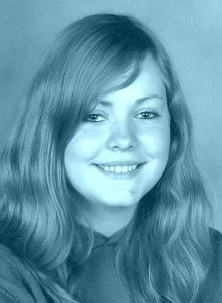
Karina Hansen is 24. She has been completely bedridden since 2009.

In February, this year, Karina was forcibly removed from her home and committed to a hospital. The family is still waiting for a legal explanation for why she was removed.

Karina suffers from severe ME and her family believes she is getting worse.

Karina removed from home

On February 12, 2013, five policemen from Holstebro county, Denmark, arrived at Karina’s house and forcibly removed her from her bedroom.

Two doctors, a locksmith and two social workers were also present.

Karina called for her mother’s help, but her mother was blocked by the police from aiding her. Karina used her mobile phone for the first time in years to call her mother, her father, her cousin and her sister, Janni. Karina is so ill that she can usually only speak in one or two word sentences, but during her removal she managed to call her father and say: Help Dad, in my room, and to her sister: Help, Janni I don’t know where they are taking me.

Karina’s mother could not answer her phone because she was surrounded by policemen.

Karina was driven off to a hospital in an ambulance. Her parents were not told where she was being taken or why they were taking her away. They were given no paperwork.

Later that day, her parents received a phone call. They were told that Karina was at Hammel Neurocenter and that someone would call them every day at 10am to tell them how Karina was doing and that no one would be allowed to visit their daughter for 14 days.

On the morning of February 13, Karina managed to call her mother from her mobile phone. She said: How can I get out of here? I can’t take this. (Hvordan kan jeg komme væk herfra? Jeg kan ikke klare det.) Then the connection was cut.

A few days later, Karina’s parents received a letter from a psychiatrist, Nils Balle Christensen, which said that he would be in charge of Karina’s treatment at Hammel Neurocenter. He also wrote that because “of her condition,” Karina was not allowed visitors for two weeks. That ban on visitors was later extended to three weeks because Dr Christensen was on vacation.

Nils Balle Christensen works at the Aarhus Research Clinic for Functional Disorders and Psychosomatics. He and his boss, Per Fink, believe that ME is a functional disorder. The treatments the clinic recommends are graded exercise therapy (GET), cognitive behavioural therapy (CBT), “mindfulness therapy,” and in some cases, antidepressants. In Denmark, a functional disorder is understood to be a psychosomatic illness.

The psychiatrists at this clinic are considered to have no experience with severely ill ME patients and the Hansen family and ME Foreningen, Danmark fear that if Karina is being treated incorrectly this may lead to a severe and permanent worsening of her condition.

Karina’s parents have not been permitted to see their daughter for three months

The family visited the Neurocenter on April 1 to try to visit Karina, but the parents were not allowed to see her. Karina’s sister, Janni, who is a nurse, was allowed to see Karina for a few minutes. A staff member followed Janni into the room. Janni said that Karina was extremely pale, was unable to talk, and did not show signs that she recognized her sister.

In Janni’s opinion, Karina’s condition is worse now than before she was hospitalized.

Why was Karina forcibly removed?

Karina’s parents and lawyer have yet to receive any official paperwork from any government body or clinician about the reason for her removal. They have received no treatment plan or copies of Karina’s medical reports.

No charges have been made against Karina’s parents. The case has never been heard by a court.

Karina’s parents do not know if or when they will be allowed to see their daughter or if or when she will be allowed to come home. Her parents and her lawyer have obtained power of attorney for Karina, but this is being ignored.

The regional state administrations for Mid-Jutland (Statsforvaltningen Midtjylland) are trying to appoint someone as guardian for Karina.

The only information the family receives comes from Jens Gyring, senior doctor at Hammel Neurocenter. He now calls Karina’s father twice a week and tells him how Karina is.

But the parents are finding it difficult to trust what they are told because they are being given conflicting information. Dr Christensen says Karina is improving every day, but Jens Gyring says there is no change.

Karina’s sister, Janni, thinks her sister is deteriorating.

Jens Grying says he is taking instructions about Karina’s care from Dr Christensen and that the treatment given is a rehabilitation programme.

+++
There are many unanswered questions

Karina’s mother was paid by the county to take care of her daughter and there was never any report of neglect. After Karina was taken away, her mother was fired from her job on the grounds that the caregiver duties were no longer needed.

Which authority gave the order to remove Karina and by whom was it authorized?
What legislation was used to remove and detain her as an involuntary patient in a hospital?
Why are the parents and their lawyer not permitted to see paperwork about the case?
Why have the parents not been allowed to visit?
Are there any charges levelled against the parents?
What is the treatment plan for Karina? The hospital requires that a treatment plan be made on admission.
Why all the secrecy?

+++
Meeting with Liselott Blixt

On April 4, Karina’s parents and two representatives from ME Foreningen, Danmark met with parliament member, Liselott Blixt, who agreed to help to get answers to the many questions in this case.

ME Foreningen, Danmark had been waiting to publish information about Karina’s case until her parents and lawyer had received the official documents. But it is now obvious that these documents will not be released unless pressure is placed on the officials.

+++

ME Foreningen, Danmark campaign

A campaign was launched by ME Foreningen, Danmark for May 12th ME Awareness Week for sending postcards to Karina and also signing a petition in support of the Hansen family’s situation:

http://www.ipetitions.com/petition/postcardtokarina/

For information on where to send your postcard go to ME Foreningen, Danmark on Facebook

If you have a blog or a website, please link to this post or contact ME Foreningen, Danmark for a copy of the account and publish your own blog post. Post a link to this post on Facebook, Twitter, Listservs and forums.

Timeline

Karina Hansen was born in November 1988. She is now 24.

2004/5: Karina contracts mononucleosis, after which she succumbs to countless infections, including sinus infections, as well as severe gastritis. She received many courses of antibiotics. Her activity became very limited because of post exertional malaise. In 2006, Karina had a serious sinus infection and never fully recovered.

2008: Karina receives a diagnosis of Myalgic Encephalomyelitis/ME (ICD-10 G93.3) while at a Danish arthritis hospital, where she was admitted for rehabilitation: exercise and cognitive behavioural therapy (CBT). She was there for 17 days and could never do more than one hour of activity a day.

During the course of her illness, Karina was examined several times by psychiatrists who found no evidence of mental illness. One psychiatrist wrote that her symptoms were most likely caused by the mononucleosis.

Autumn 2009: Karina has an influenza vaccine after which she becomes completely bedridden. In March 2010, Karina’s mother took leave from work to take care of her daughter.

May 2010: Karina’s GP pressured her parents into admitting her to hospital for rehabilitation. By this time, Karina was so ill that she cried from the headaches when they talked to her. There appears to have been an attempt to detain her at the hospital by declaring her mentally unfit. But the medical officer wrote that the “psychiatry law enforcement provisions cannot be used.” She was allowed to go home after three days. Karina’s condition deteriorated after this hospitalization.

May 2010: Karina is seen for the first time by Dr Isager, who confirms the diagnosis of ME. Dr Isager is a Danish doctor who has seen hundreds of ME patients in his long career and has made home visits to many severely ill patients. In 2001, the Danish Ministry of Health wrote that Dr Isager was the Danish doctor with the most experience of ME and had about 250 patients at that time.

March 2011: Karina is seen by another doctor with experience in severe ME. This doctor reconfirmed the ME diagnosis. Karina’s parents worked with her new GP, with Dr Isager, and a nutritionist to try to give Karina the best treatment possible at home. Gut function tests were sent to the USA to try to find a treatment for Karina. There is no hospital in Denmark equipped to take care of severely ill ME patients.

A request was made to have a saline IV started in the home but the county did not cooperate. Karina received a special protein powder and a high iron diet to ensure her nutritional needs were met. Many ME patients do not tolerate iron supplements in pill form.

June 2011: Karina’s mother is hired by the county to be Karina’s caregiver.

May 2012: Sundhedssytrelsen (Danish National Board of Health) contacts two psychiatrists, Per Fink and Jens Nørbæk, about Karina. Karina’s case was presented to them over the phone and Jens Nørbæk stated that Karina must be in an insane-like state: “sindsyglignende tilstand.” These two psychiatrists are considered to have no knowledge of severe ME.

Based on these conversations, the Danish Board of Health put pressure on Karina’s GP to declare Karina psychologically ill and to sign commitment papers. Karina’s GP refused because Karina was not mentally ill. Karina’s GP then resigned as her doctor.

The Danish National Board of Health contacted Per Fink, lead clinician at The Research Clinic for Functional Disorders and Psychosomatics, and asked him to take charge of Karina’s case. The case was then given to another psychiatrist from the clinic, Nils Balle Christensen.

Karina and her parents did not want Dr Christensen as Karina’s doctor. They knew about the research clinic and did not feel the doctors had sufficient knowledge about ME to undertake Karina’s medical care. Karina and her parents said many times they did not want the psychiatric treatment that Dr Christensen was offering. They hired a private doctor to assist Dr Isager in Karina’s care. (Dr Isager is retired.)

February 12, 2013: Karina is forcibly removed from her home and put in the hospital under Dr Christensen’s care. She is now forced to receive the “treatment” she does not want.

May 12, 2013: For three months, Karina’s parents have been denied visits to see their daughter; denied documentation; denied answers to their questions.

+++

The Research Clinic for Functional Disorders and Psychosomatics, Aarhus, Denmark

According to a report by ME Foreningen, Danmark:

The Danish government has put this clinic in charge of taking care of all ME patients in Denmark. The doctors employed here are primarily psychiatrists or psychologists. The centre has spent millions of dollars working to create a new diagnosis, Bodily Distress Syndrome (BDS).

For information on Bodily Distress Syndrome see Part Two of Dx Revision Watch Post:
ICD-11 Beta draft and BDD, Per Fink and Bodily Distress Syndrome

They want to place ME and other illnesses like Fibromyalgia, IBS, chronic pelvic pains and PMS under their new diagnosis. Read about BDS, here, in English:

http://funktionellelidelser.dk/en/for-specialists-researchers/doctors/

Per Fink and his colleagues have been lobbying for their BDS concept to be included in revisions of classification systems.

According to ME Foreningen, Danmark, all treatment at this clinic is on a research basis and all patients receive the same treatment: cognitive behavioural therapy (CBT), graded exercise therapy (GET) and antidepressants. ME Foreningen, Danmark says it has contact with many patients who have ME, Fibromyalgia, IBS, etc but when they are referred to this clinic by their GP, their previous diagnosis is ignored and they are given a psychiatric diagnosis.

ME Foreningen, Danmark states it has many examples of patients who have been pressured by their doctors and case workers to go to this clinic. Patients have reported that their doctors or caseworkers believe this clinic has a proven treatment for ME, Fibromyalgia, IBS etc, so benefits will be denied unless this research treatment is tried. In the 14 years for which the clinic has been open, they only have documentation that they have seen 74 patients with chronic fatigue syndrome. Karina is the first severely ill ME patient that the clinic has had contact with.

+++

Report edited from an account provided by ME Foreningen, Danmark, with permission of the Hansen family.
For more information on the ME Association of Denmark’s postcard campaign go here on Facebook
For information on Bodily Distress Syndrome see Part Two of Dx Revision Watch Post:
ICD-11 Beta draft and BDD, Per Fink and Bodily Distress Syndrome
Something rotten in the state of Denmark: Karina Hansen’s story: http://wp.me/pKrrB-2Xc
Noget råddent i staten Danmark: Karina Hansen: http://wp.me/pKrrB-2Xc
Etwas ist faul in Dänemark: Karina Hansens Geschichte: http://wp.me/pKrrB-2Xc
Il y a quelque chose de pourri au royaume du Danemark: l’histoire de Karina Hansen: http://wp.me/pKrrB-2Xc

DSM-5 Round up: May #1

Post #245 Shortlink: http://wp.me/pKrrB-2WM

More reports on last week’s announcement by NIMH Director, Thomas Insel

BMJ News [Full report behind paywall]

Director of top research organization for mental health criticizes DSM for lack of validity

BMJ 2013; 346 doi: http://dx.doi.org/10.1136/bmj.f2954 (Published 8 May 2013)

Michael McCarthy, Seattle | May 8, 2013


New Scientist print edition No 2196 May 11, 2013

[The first of these two print edition articles is behind a subscription]

How a scientific DSM will transform psychiatry

Peter Aldhous, Andy Coghlan, additional reporting by Sara Reardon

This article appears in the print edition THIS WEEK section under the headline

A revolution in mental health, Patients deserve better than an unscientific manual, says leading health institute

…don’t expect the landscape of mental illness to change any time soon. Insel accepts that it will take at least a decade to conduct the research necessary to devise a new approach to diagnosis. In the meantime, patients’ illnesses will continue to be diagnosed using the DSM’s symptom-based categories…

…Even the transition in research will be gradual – the NIMH isn’t going to stop funding projects based around DSM diagnoses overnight. But it is clear that new approaches will get priority in future, and with a budget of almost $1.5 billion per year, the NIMH is in a position to call the shots…

This week’s Editorial in the print edition is an edited version of the Allen Frances opinion piece published by New Scientist earlier this week:

Print edition Editorial > Opinion

Don’t count on this manual, The future of psychiatric research lies in simpler questions, by Allen Frances


UK Independent

The Diagnostic and Statistical Manual of Mental Disorders has been updated but should we beware this manual’s diagnosis?

The book which gives doctors a checklist for mental illnesses – as made famous by The Psychopath Test – has been updated. But does it really work?

…An alternative – and free – publication, International Statistical Classification of Diseases (ICD), issued by the World Health Organisation, provides an official international classification system of mental illness that the DSM sometimes borrows. The ICD is used in Europe for clinical treatment in preference to the DSM and without the lurid headlines. The DSM, though, is increasingly influential on our way of thinking about mental health…

Mark Piesing | May 8, 2013

Comment to article from Dx Revision Watch


For global usage of DSM v ICD by practising psychiatrists and country by country breakdown see
Slide 17 Global use of DSM-5 and ICD-10; Slide 18 Use by country breakdown http://www.aaidd.org/media/3192013.pdf
Data from The WPA-WHO Global Survey of Psychiatrists’ Attitudes Towards Mental Disorders Classification Free full paper

UK Radio

BBC R4 Today programme

Discussion on DSM-5 | Today programme, Thurs, May 9

http://www.bbc.co.uk/iplayer/episode/b01s8qx7/Today_09_05_2013/

1 hr.50 mins in from start |  7 minutes

With James Davies, Lecturer and author of “Cracked” (has also had two articles around his book published in the Times)

Does your child really have a behavioural problem? James Davies, May 6 2013

and Prof Nick Craddock

+++
BBC R4 All in the Mind [One year left to listen again]

http://www.bbc.co.uk/programmes/p018qfjm

Presenter Claudia Hammond

The new edition of the American Diagnostic and Statistical Manual of Mental Disorders will be launched later this month, Professor Simon Wessely discusses its potential impact in the UK.

Duration: 9 mins at start of 28 min broadcast| Tuesday 07 May 2013 21:00 | Repeated Wed 8 May 2013 15:30

Discussion omitted any reference to, and implications for the WHO/APA International Advisory Group for the Revision of ICD-10 Mental and Behavioural Disorders commitment to strive as far as possible for harmonization between the mental health chapter of the forthcoming ICD-11 (Chapter 5) and DSM-5.

The Scientist

NIMH to Steer Away from New Manual

The agency will no longer use the newly revised guide to mental disorders to categorize its funding priorities.

Kate Yandell | May 9, 2013

…To better classify mental disease, the NIMH has started the Research Domain Criteria (RDoC) project, which Insel said will “transform diagnosis by incorporating genetics, imaging, cognitive science, and other levels of information to lay the foundation for a new classification system.” However, biological biomarkers for mental disease are few, so Insel said that RDoC is more of a framework for future knowledge to fit into than a completed classification system…

…In order to better fill in the gaps, he said that NIMH grant applicants will be asked to think of research projects that cut across diagnoses…

…NIMH is not “ditching” the DSM completely, Insel told Time. DSM diagnostic criteria will continue to be important in the clinic, just not as guides for research.


+++
Not specific to recent announcement by NIMH’s, Thomas Insel

Huffington Post [Also at Psychiatric Times, Psychology Today]

Hippocratic Humility in the Face of ‘Unexplained’ Medical Problems

Allen Frances, MD | May 7, 2013

With contribution from Dr Diane O’Leary


National Pain Report

Could Fibromyalgia Be Labeled as a Psychiatric Illness?

Celeste Cooper, RN | May 5, 2013

+++

Related material

National Institute of Mental Health (NIMH) announcement Transforming Diagnosis
Published by Thomas Insel, Director, NIMH, April 29, 2013

Full text of rebuttal statement from David J Kupfer, Chair, DSM-5 Task Force, press released by APA on May 6, 2013
Dx Revision Watch Post #242: http://wp.me/pKrrB-2VO

+++
DSM-5 and the NIMH Research Domain Criteria Project Psychiatric Times, James Phillips, MD, April 13, 2011

NIMH Research Domain Criteria (RDoC) Draft 3.1: June, 2011

+++

Somatic Symptom Disorder paper in Australian & New Zealand Journal of Psychiatry

Somatic Symptom Disorder paper (Frances and Chapman) published in May edition of Australian & New Zealand Journal of Psychiatry

Post #244 Shortlink: http://wp.me/pKrrB-2Wi

ANZJP is a subscription journal.

Commentary by Frances and Chapman discussing the over-inclusive DSM-5 Somatic Symptom Disorder criteria and potential implications for diverse patient groups. The paper concludes by advising clinicians not to use the new SSD diagnosis.

http://anp.sagepub.com/content/current

Commentaries

DSM-5 somatic symptom disorder mislabels medical illness as mental disorder

Aust N Z J Psychiatry May 2013 47: 483-484, doi:10.1177/0004867413484525

Allen Frances¹, Suzy Chapman²

1 Department of Psychiatry, Duke University
2 DxRevisionWatch.com

http://anp.sagepub.com/content/47/5/483.full
http://anp.sagepub.com/content/47/5/483.full.pdf+html

A further commentary on the Somatic Symptom Disorder criteria by Allen Frances, MD, who had chaired the Task Force for DSM-IV, is in press for the June 2013 edition of The Journal of Nervous and Mental Disease.

+++
A second paper, Catatonia from Kahlbaum to DSM-5, by David Healy, is also published in this month’s edition of ANZJP:

May 2013; 47 (5)

Perspectives

Viewpoint

David Healy

Catatonia from Kahlbaum to DSM-5

Aust N Z J Psychiatry May 2013 47: 412-416, doi:10.1177/0004867413486584

+++
Further reading

APA Somatic Symptom Disorder Fact Sheet

Somatic Chapter Drops Centrality Of Unexplained Medical Symptoms Psychiatric News, Mark Moran, March 1, 2013

Somatic Symptoms Criteria in DSM-5 Improve Diagnosis, Care David J Kupfer, MD, Chair, DSM-5 Task Force, defends the SSD construct, Huffington Post, February 8, 2013

The new somatic symptom disorder in DSM-5 risks mislabeling many people as mentally ill Allen Frances, MD, BMJ 2013;346:f1580 BMJ Press Release

Somatic Symptom Disorder could capture millions more under mental health diagnosis Suzy Chapman, May 26, 2012

Mislabeling Medical Illness As Mental Disorder Allen Frances, MD, Psychology Today, DSM 5 in Distress, December 8, 2012

Why Did DSM 5 Botch Somatic Symptom Disorder? Allen Frances, MD, Psychology Today, Saving Normal, February 6, 2013

New Psych Disorder Could Mislabel Sick as Mentally Ill Susan Donaldson James, ABC News, February 27, 2013

Dimsdale JE. Medically unexplained symptoms: a treacherous foundation for somatoform disorders? Psychiatr Clin North Am 2011;34:511-3. [PMID: 21889675]

International media Round up #1: National Institute of Mental Health to re-orientate research away from DSM categories

International media Round up #1: National Institute of Mental Health to re-orientate research away from DSM categories

Post #243 Shortlink: http://wp.me/pKrrB-2VZ

Update: Additional media coverage on NIMH added (Matthew Herper, Forbes; Deborah Brauser, Medscape Medical News; Ferris Jabr, Scientific America; John M Grohol, PsychCentral; TIME; 1 Boring Old Man), plus details of DSM-5 on BBC R4 radio

BBC R4’s All in the Mind this evening will be discussing the impact of the DSM on UK mental health and asking whether or not we in the UK pay any attention to what it contains. No other details about whom Claudia Hammond will be interviewing:

http://www.bbc.co.uk/programmes/b01s8cpf

BBC Radio 4 | Duration: 28 minutes | Tuesday 07 May 2013 21:00 | Wed 8 May 2013 15:30


Yesterday, American Psychiatric Association press released a rebuttal from DSM-5 Task Force Chair, David J Kupfer, to the announcement, last week, that the world’s largest federal mental health funding agency will be re-orientating research away from DSM categories.

Read Kupfer’s statement here:

Statement, David Kupfer, MD, May 3, 2013 [press@psych.org Release No. 13-33]

Chair of DSM-5 Task Force Discusses Future of Mental Health Research

Click link for PDF document American Psychiatric Association Press Release

+++

The story is trickling into mainstream media and being picked up internationally. For earlier media and blogger coverage, see Dx Revision Watch post: National Institute of Mental Health (NIMH) to ditch the DSM (May 3).

There has been mixed reaction to this announcement by NIMH’s Director, Thomas Insel, with many welcoming a shift from DSM dominance but scepticism, also, over whether NIMH might realistically achieve its objectives, as set out a couple of years ago.

+++
Media Round up #1


Forbes

Pharma & Healthcare

Why Psychiatry’s Seismic Shift Will Happen Slowly

Matthew Herper Forbes Staff | May 8, 2013

…I called the NIMH, and was put on the phone with Bruce Cuthbert, the director of the division of adult translational research. I had a pretty simple question. If the NIMH were really rejecting or abandoning the DSM, that would mean the agency wouldn’t accept studies that use DSM-5 criteria. For instance, if you wanted to test a new schizophrenia drug in schizophrenics, you’d have to find some new RDoC way of describing the disease.

Cuthbert said repeatedly that would not be the case. It’s not so much that studies that use the DSM-5 will be excluded and abandoned, but that researchers would now be allowed to apply for grants that would not use the manual’s diagnostic criteria, or subdivided them in new, creative ways…


Medscape Medical News > Psychiatry

NIMH, APA Clash Over Upcoming DSM-5

‘Patients Deserve Better,’ NIMH Director Says

Deborah Brauser | May 7, 2013


Scientific America

No One Is Abandoning the DSM, But It Is Almost Time to Transform It

Ferris Jabr | May 7, 2013


PsychCentral

Did the NIMH Withdraw Support for the DSM-5? No

John M. Grohol, Psy.D. | May 7, 2013

…Will this replace the DSM-5? No, because as Dr. Insel notes, “This is a decade-long project that is just beginning.” If the NIMH effort ever replaces the DSM, it will be a long time from now…

“I also should point out that these comments reflect [only] our translational research portfolios. Our Division of Services and Intervention Research mostly supports research conducted in clinical settings that is relevant to current clinical practice and services delivery. Thus, […] grants in these areas will continue to be predominantly funded with DSM categories for some time.” [according to Dr. Bruce Cuthbert, director of the Division of Adult Translational Research at the National Institute of Mental Health]


1 Boring Old Man

…groundhog day

1 Boring Old Man | May 7, 2013


TIME

Mental Illness

Mental Health Researchers Reject Psychiatry’s New Diagnostic ‘Bible’

Maia Szalavitz | May 7, 2013

Just weeks before psychiatry’s new diagnostic “bible”—the DSM 5— is set to be released, the world’s major funder of mental health research has announced that it will not use the new diagnostic system to guide its scientific program, a change some observers have called “a cataclysm” and “potentially seismic.” Dr. Thomas Insel, the director of the National Institute on Mental Health, said in a blog post last week that “NIMH will be re-orienting its research away from DSM categories.”

The change will not immediately affect patients. But in the long run, it could completely redefine mental health conditions and developmental disorders. All of the current categories — from autism to schizophrenia — could be replaced by genetic, biochemical or brain-network labeled classifications. Psychiatrists, who are already reeling from the conflict-filled birth of the fifth edition of the Diagnostical and Statistical Manual of Mental Disorders, are feeling whipsawed…

…The NIMH has outlined a new diagnostic system — called Research Domain Criteria (RDoC) — that could ultimately replace the DSM, but it’s not yet ready for prime time. For the time being, NIMH and the psychiatrists who use the manual will continue to abide by existing classifications for diagnosing patients and getting treatment reimbursed. “Some people have the idea that we’re trying to ditch or diss the DSM and that’s not a fair assessment,” says Insel…


New York Times

Psychiatry’s Guide Is Out of Touch With Science, Experts Say

Pam Belluck and Benedict Carey | May 6, 2013

…“As long as the research community takes the D.S.M. to be a bible, we’ll never make progress,” Dr. Insel said, adding, “People think that everything has to match D.S.M. criteria, but you know what? Biology never read that book.”

…Dr. Insel said in the interview that his motivation was not to disparage the D.S.M. as a clinical tool, but to encourage researchers and especially outside reviewers who screen proposals for financing from his agency to disregard its categories and investigate the biological underpinnings of disorders instead. He said he had heard from scientists whose proposals to study processes common to depression, schizophrenia and psychosis were rejected by grant reviewers because they cut across D.S.M. disease categories.

“They didn’t get it,” Dr. Insel said of the reviewers. “What we’re trying to do with RDoC is say actually this is a fresh way to think about it.”

He added that he hoped researchers would also participate in projects funded through the Obama administration’s new brain initiative.

Dr. Michael First, a psychiatry professor at Columbia who edited the last edition of the manual, said, “RDoC is clearly the way of the future,” although it would take years to get results that could apply to patients. In the meantime, he said, “RDoC can’t do what the D.S.M. does. The D.S.M. is what clinicians use. Patients will always come into offices with symptoms.”

For at least a decade, Dr. First and others said, patients will continue to be diagnosed with D.S.M. categories as a guide, and insurance companies will reimburse with such diagnoses in mind…


Science Insider

NIMH Won’t Follow Psychiatry ‘Bible’ Anymore

Emily Underwood | May 6, 2013

…Helena Kraemer, a biostatistician at Stanford University in Palo Alto, California, who was responsible for field trials of diagnostic categories proposed for DSM-5, says that Insel is right that the NIMH’s new program, called Research Domain Criteria (RDoC) is “the direction we have to go.” However, she says, “he’s wrong in saying that DSM-5 is to be set aside.” When it comes to validity, there now is no gold standard, she says. “The DSM is a series of successive approximations.” Kraemer’s vision is that future versions of the manual will not have to wait 10 to 15 years for revision, but incorporate new scientific data from RDoC as it emerges. She says that a meeting is scheduled in June to discuss the possibility of converting the DSM into an electronic document that could incorporate those changes. “Everybody I’ve talked to about it thinks that’s a good idea.”

…Implementing RDoC will present some practical challenges, [William] Carpenter acknowledges. “This does shift the paradigm.” Rather than excluding all study subjects who do not fit a DSM diagnosis, such as major depression, for example, the new approach might include a range of participants with different diagnoses who all demonstrate anhedonia, the impaired ability to experience pleasure, and might look for underlying brain abnormalities that they share in common. “I bet that the rough spots are overcome pretty quickly,” Carpenter says, “but of course we have to see how well that actually works out…”


The Globe and Mail [Canada]

American Psychiatric Association rebuked over new diagnostic manual

Wency Leung | May 6, 2013

…[Gary] Greenberg says that while he believes that this change in the institute’s research direction will generate a huge amount of science on mental health, he is skeptical that researchers will be able to boil down the extraordinarily complex workings of the brain into sound and specific diagnostic criteria.

In response to Insel, the APA issued a statement on Saturday by David Kupfer, chair of the DSM-5 task force, noting that it has been waiting for decades for reliable biological and genetic markers on which to base precise diagnoses. “We are still waiting,” Kupfer said.

In the meantime, the DSM is the “strongest system currently available for classifying disorders,” he said.

“Efforts like the National Institute of Mental Health’s Research Domain Criteria (RDoC) are vital to the continued progress of our collective understanding of mental disorders,” Kupfer said. “But they cannot serve us in the here and now, and they cannot supplant DSM-5…”


Psychology Today Blog Mood Swings

NIMH: A Requiem for DSM – and its Critics
A new generation will reject DSM, and the anti-biological critics of DSM too

Dr. Nassir Ghaemi in Mood Swings | May 5, 2013

Update: Response from Gary Greenberg and further comment from Bernard Carroll, MD


Wetenschap 24 News [Netherlands]

Psychiaters verwerpen psychiatriebijbel

Door: Nadine Böke | mei 03, 2013

De grootste onderzoeksinstelling voor geestelijke gezondheidszorg ter wereld, het Amerikaanse NIMH (National Institute for Mental Health) verwerpt ‘psychiatriebijbel’ DSM.


LaPresse [French Canadian]

Le blogue santé

DSM-5: une bible controversée

Valérie Simard | 6 mai 2013


Agence Science-Presse [French Canadian]

Recherche: désaveu de la bible des psychiatres

Agence Science-Presse |  le 6 mai 2013

(Agence Science-Presse) L’ouvrage qu’on décrit sans cesse comme la «bible» des maladies mentales, et dont la nouvelle édition, après des années d’attente, doit paraître ce mois-ci, vient d’être écarté par rien de moins que le plus gros organisme subventionnaire de la recherche sur les maladies mentales au monde.


De Morgen [Belgium]

Something rotten in de psychiatrie

OPINIE − 07/05/13

De labelingmachine van de DSM 5 is mensonwaardig.
Wat doet de overheid, vraagt Marc Calmeyn. Calmeyn is psychiater en psychoanalyticus. Hij werkt in Brugge.


For earlier media and blogger coverage, see Dx Revision Watch post: National Institute of Mental Health (NIMH) to ditch the DSM.

Kupfer (APA) statement on National Institute of Mental Health (NIMH) announcement

Kupfer (APA) statement on National Institute of Mental Health (NIMH) announcement

Post #242 Shortlink: http://wp.me/pKrrB-2VO

David J Kupfer, Chair, DSM-5 Task Force, has issued a statement in response to the April 29 announcement by NIMH’s Thomas Insel:

 Click link for PDF document   American Psychiatric Association Press Release

Text:

For Information Contact:

Eve Herold, 703-907-8640 May 3, 2013

press@psych.org Release No. 13-33

Erin Connors, 703-907-8562

econnors@psych.org

Statement by David Kupfer, MD

Chair of DSM-5 Task Force Discusses Future of Mental Health Research

The promise of the science of mental disorders is great. In the future, we hope to be able to identify disorders using biological and genetic markers that provide precise diagnoses that can be delivered with complete reliability and validity. Yet this promise, which we have anticipated since the 1970s, remains disappointingly distant. We’ve been telling patients for several decades that we are waiting for biomarkers. We’re still waiting. In the absence of such major discoveries, it is clinical experience and evidence, as well as growing empirical research, that have advanced our understanding of disorders such as autism spectrum disorder, bipolar disorder, and schizophrenia.

This progress will soon be recognized in the fifth edition of the Diagnostic and Statistical Manual of Mental Disorders (DSM-5). The new manual, due for release later this month, represents the strongest system currently available for classifying disorders. It reflects the progress that we have made in several important areas.

A revised chapter organization signals how disorders may relate to each other based on underlying vulnerabilities or symptom characteristics.

Disorders are framed in the context of age, gender, and cultural expectations, in addition to being organized along a valuable developmental lifespan within each chapter.

Key disorders were combined or reorganized because the relationships among categories clearly placed them along a single continuum, such as substance use disorder and autism spectrum disorder.

A new section introduces emerging measures, models and cultural guidance to assist clinicians in their evaluation of patients. For the first time, self-assessment tools are included to directly engage patients in their diagnosis and care.

DSM, at its core, is a guidebook to help clinicians describe and diagnose the behaviors and symptoms of their patients. It provides clinicians with a common language to deliver the best patient care possible. And through content such as the new Section III, the next manual also aims to encourage future directions in research.

Efforts like the National Institute of Mental Health’s Research Domain Criteria (RDoC) are vital to the continued progress of our collective understanding of mental disorders. But they cannot serve us in the here and now, and they cannot supplant DSM-5. RDoC is a complementary endeavor to move us forward, and its results may someday culminate in the genetic and neuroscience breakthroughs that will revolutionize our field. In the meantime, should we merely hand patients another promissory note that something may happen sometime? Every day, we are dealing with impairment or tangible suffering, and we must respond. Our patients deserve no less.

The American Psychiatric Association is a national medical specialty society whose physician members specialize in the diagnosis, treatment, prevention and research of mental illnesses, including substance use disorders. Visit the APA at www.psychiatry.org

ENDS