Abstract: WPA Congress 2014: ICD-11 Symposia: Proposals and evidence for the ICD-11 classification of bodily distress disorders

Post #320 Shortlink: http://wp.me/pKrrB-43v

Edited version of the text published on 13.01.15.

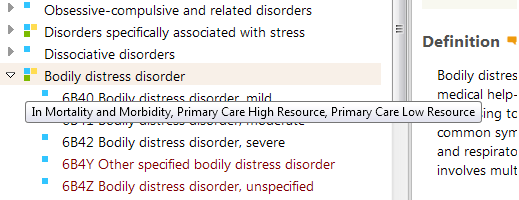
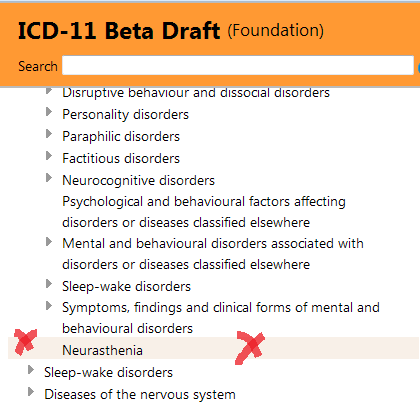
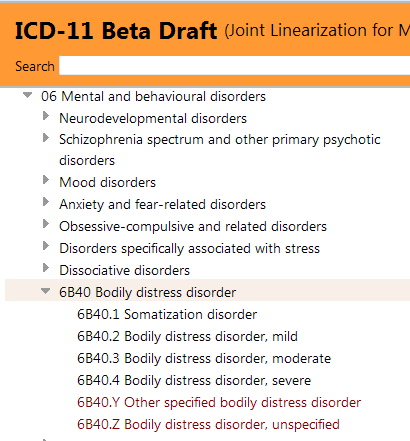
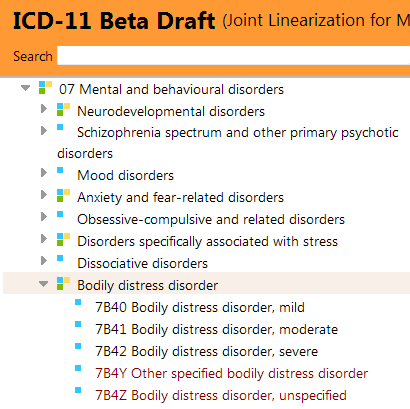
Screenshot: ICD-11 Beta drafting platform, public version, 13.01.15; Chapter 07 Mental and behavioural disorders: Bodily distress disorder. Joint Linerarization for Mortality and Morbidity Statistics (JLMMS) view selected.

+++
BDD130115

“Show availability in main linearizations” view selected. Hover text for categories designated with three coloured key reads: “In Mortality and Morbidity, Primary Care High Resource, Primary Care Low Resource.” Hover text for categories designated with single blue key reads: “In Mortality and Morbidity.”

Two working groups, two sets of recommendations

The Expert Working Group on Somatic Distress and Dissociative Disorders (S3DWG) is one of two working groups advising the Mental Health Topic Advisory Group (TAG) on the potential revision of the ICD-10 Somatoform disorders categories for ICD-11.

The other group tasked with making recommendations on the revision of the Somatoform disorders is the Primary Care Consultation Group (PCCG), led by Prof Sir David Goldberg [1].

The S3DWG’s disorder construct is the construct that has been entered into the ICD-11 Beta drafting platform since 2012 [2].

Perversely, the S3DWG is proposing to call its disorder construct, “Bodily distress disorder” (BDD) – a term already being used outside ICD Revision, interchangeably, with Bodily Distress Syndrome (BDS), which is conceptually different.

To further muddy the waters, the PCCG has proposed calling its construct (which in 2012 had drawn heavily on the Fink et al BDS concept but with some DSM-5 SSD-like psychobehavioural features tacked on), “Bodily stress syndrome” (BSS).

So four very similar terms in play:

Bodily distress disorder (S3DWG, the construct entered into the Beta draft)

Body distress disorders (PCCG primary care disorder group heading*)

Bodily stress syndrome (PCCG disorder category sitting under Body distress disorders*)

Bodily Distress Syndrome (Fink et al, 2010)

*As proposals of the Primary Care Consultation Group had stood in mid 2012 [1].

The co-chair of the Mental Health TAG agrees that the S3DWG’s BDD and Fink et al’s (2010) BDS construct [3] are conceptually different; that there is potential for confusion between the two constructs and he will be discussing the issue of BDD terminology with the working group.

I shall be reporting on some recently proposed revisions to the definition text for BDD and its three Severities in my next post.

ICD-11 Symposia, XVI World Congress of Psychiatry, Madrid 2014

The have been no progress reports from either the S3DWG or the PCCG since emerging proposals for both working groups were published in 2012.

In September, Professor Oye Gureje, who chairs the ICD-11 Expert Working Group on Somatic Distress and Dissociative Disorders, presented on “Proposals and evidence for the ICD-11 classification of Bodily Distress Disorders” as part of series of symposia on the development of the ICD-11 chapter for mental and behavioural disorders, at the World Psychiatric Association XVI World Congress, in Madrid.

In the absence of progress reports, I have requested that WHO/WPA make a transcript, slides or summary of this presentation publicly available.

In the meantime, the Abstracts for these ICD-11 symposia presentations can be found here:

http://www.tilesa.es/wpamadrid2014/abstracts/volume8/files/assets/basic-html/page352.html

also: http://www.tilesa.es/wpamadrid2014/abstracts/volume8/index.html#/352/zoomed

XVI World Congress of Psychiatry. Madrid 2014
Volume 2. Abstracts Regular Symposia

[…]

http://www.tilesa.es/wpamadrid2014/abstracts/volume8/files/assets/basic-html/page354.html

Session: Regular Symposium SPEAKER 3 Code SY469

Title: Proposals and evidence for the ICD-11 classification of bodily distress disorders

Speaker O. Gureje University of Ibadan, Ibadan, Nigeria Abstract Objectives:

The disorder categories currently classified in the group of Somatoform Disorders in ICD-10 have been the subject of controversy relating to their names, utility, reliability and acceptability.

The ongoing development of ICD-11 presents an opportunity to revise these categories so as to enhance their utility and overall acceptability.

Methods: The WHO ICD-11 Working Group on Somatic Distress and Dissociative Disorders has conducted a comprehensive review of the current status of Somatoform Disorders, drawing on literature from across the world and considered within diverse clinical experiences of experts who were consulted for the revision exercise. Proposals for DSM-5 and their suitability for global application were also considered.

Results: Important areas for improving the utility and reliability of disorders grouped under Somatoform Disorders were identified. These areas encompass name, content, structure and clarity of the phenomenology. A simplified category of Bodily Distress Disorder with an improved set of guidelines for making the diagnosis has been proposed to replace current Somatoform Disorders categories.

Bodily Distress Disorder may be described as Mild, Moderate, or Severe based on the extent of focus on bodily symptoms and their interference with personal functioning. Bodily Distress Disorder is currently a subject of tests of its utility and reliability in internet- and clinic-based studies via the extensive network that WHO has developed.

Conclusions: Bodily Distress Disorder holds the promise of addressing the various concerns that have been expressed in regard to the utility and applicability of categories currently classified under Somatoform Disorders. The overarching goal of the new category is to enhance the clinical care of patients presenting with these common and disabling conditions. Bodily Distress Disorder is currently a subject of tests of its utility and reliability in internet- and clinic-based studies, including in primary care settings, via the extensive network that WHO has developed.

References Creed F, Gureje O. Emerging themes in the revision of the classification of somatoform disorders. International Review of Psychiatry 2012; 24:556-567

Further reading:

1 Lam TP, Goldberg DP, Dowell AC, Fortes S, Mbatia JK, Minhas FA, Klinkman MS: Proposed new diagnoses of anxious depression and bodily stress syndrome in ICD-11-PHC: an international focus group study. Family Practice (2013) 30 (1): 76-87. Full free text: http://fampra.oxfordjournals.org/content/30/1/76.long

2 Creed F, Gureje O. Emerging themes in the revision of the classification of somatoform disorders. Int Rev Psychiatry 2012;24:556-67. [Abstract: PMID: 23244611]

3 Fink P, Schröder A. One single diagnosis, bodily distress syndrome, succeeded to capture 10 diagnostic categories of functional somatic syndromes and somatoform disorders. J Psychosom Res. 2010 May; 68(5):415-26.  [Abstract: PMID: 20403500].

Caveats: The ICD-11 Beta drafting platform is not a static document: it is a work in progress, subject to daily edits and revisions, to field test evaluation and to approval by ICD Revision Steering Group and WHO classification experts. Not all new proposals may survive ICD-11 field testing. Chapter numbering, codes and sorting codes currently assigned to ICD categories may change as chapters and parent/child hierarchies are reorganized. The public version of the Beta draft is incomplete; not all “Content Model” parameters display or are populated; the draft may contain errors and category omissions.

References for intention not to retain Neurasthenia for ICD-11

Post #319 Shortlink: http://wp.me/pKrrB-439

When ICD-10 was completed in 1992, Chapter V Mental and behavioural disorders retained the disorder category term, Neurasthenia, coded at F48.0.

This is how Neurasthenia is listed within ICD-10:

F48.0 Neurasthenia (with Fatigue syndrome as inclusion term).


Neurasthenia and ICD-10-CM

The forthcoming U.S. specific ICD-10-CM inherits Neurasthenia in Chapter 5 Mental, Behavioral and Neurodevelopmental disorders (F01–F99). But here, it is coded under F48.8, owing to the different coding arrangement for the F48–F48.9 entities within ICD-10-CM.

This is how Neurasthenia is listed in the ICD-10-CM Tabular List release for FY 2015*

Neurasthenia ICD-10-CM

*Although the FY 2015 ICD-10-CM is now available for public download and viewing, the codes in ICD-10-CM are not currently valid for any purpose or use until implementation date is reached.


Neurasthenia and DSM

There was no discrete category for Neurasthenia within DSM-IV or DSM-IV-TR; nor within DSM-5, which published in May 2013.


Neurasthenia and ICD-11 and ICD-11-PHC

I reported in 2012 that for ICD-11 and ICD-11-PHC, the intention is not to retain Neurasthenia.

Here are the references:

Creed F, Gureje O. Emerging themes in the revision of the classification of somatoform disorders. Int Rev Psychiatry. 2012 Dec;24(6):556-67. http://www.ncbi.nlm.nih.gov/pubmed/23244611 [Full text behind paywall]

On Page 563 of this review paper, the authors state that a major highlight of the proposals of the ICD-11 Expert Working Group on Somatic Distress and Dissociative Disorders (the S3DWG sub working group) for the revision of the ICD-10 Somatoform disorders is that of subsuming all of the ICD-10 categories of F45.0–F45.9 and F48.0 under a single category with the proposed name of “Bodily distress disorder” (BDD).

ICD-10 PHC is a simplified version of the WHO’s ICD-10 chapter for mental and behavioural disorders for use in general practice and primary health care settings. This system has rough but not exact equivalence to selected of the mental disorders in the core ICD-10 classification.

The ICD-10 PHC includes and describes 26 disorders commonly encountered within primary care and and low resource settings, as opposed to circa 450 classified within Chapter V of ICD-10.

For ICD-11 PHC it is also the intention not to retain the category F48 Neurasthenia.

Here are the references for the primary care version:

International Psychiatry, Issue 1 Feb 2011, Royal College of Psychiatrists
http://www.rcpsych.ac.uk/pdf/IPv8n1.pdf

Page1: Box 1 The 26 conditions included in ICD10-PHC

F45 Unexplained somatic complaints*
F48 Neurasthenia*

*Not to be included in ICD11-PHC

Neurasthenia Box 1

See also:

Goldberg DP. Comparison between ICD and DSM diagnostic systems for mental disorders.
In: Sorel E, ed. 21st Century Global Mental Health. Jones & Bartlett Learning, 2012:37-53.
Sample Chapter 2: http://samples.jbpub.com/9781449627874/Chapter2.pdf
Publication date: August, 2012: http://www.jblearning.com/catalog/9781449627874/

See Page 51: Table 2.5 The 28 Disorders Proposed for ICD11-PHC

Note: If you compare the list of proposed disorders for the ICD-11 primary care version, as listed in the February 2011 International Psychiatry article (on Page 2, Box 2 The 28 disorders to be field tested for ICD11-PHC), with Table 2.5, above, you will note that some proposed disorder names, disorder groupings and disorder group headings have been revised since the article in International Psychiatry. Prof Goldberg has clarified that the iteration published in the sample book chapter was the more recent of the two, cf:

February 2011 iteration:

Body distress disorders

16 Bodily distress syndrome (new – was unexplained somatic complaints)
17 Health preoccupation (new)
18 Conversion disorder (was dissociative disorder)


Sample chapter (2012) iteration:

Body distress disorders

15 Bodily stress syndrome
16 Acute stress reaction
17 Dissociative disorder
18 Self-harm

This list of disorder proposals and groupings may have undergone further revision since publication of 21st Century Global Mental Health. But no progress reports have emerged on behalf of the Primary Care Consultation Group (PCCG) setting out more recent proposals for their “Bodily stress syndrome” construct since the Lam et al (July 2012) paper [1].

The disorder term and construct that is entered into the ICD-11 Beta draft and defined with three severities, is the S3DWG group’s conceptually different, but similarly named construct, Bodily distress disorder (BDD).

The ICD-11 S3DWG group is advising ICD Revision in parallel with the PCCG on a potential replacement for the ICD-10 Somatoform disorders.

It is the case, however, that some professional and consumer stakeholders are unaware that are two groups advising on the revision of the Somatoform disorders, that there have been two sets of proposals presented, or how they differ in conceptualization.

Four revised definition texts were submitted to the Proposals List on behalf of Mental Health TAG for “Bodily distress disorder (BDD)” on January 9–11, which will be the subject of a future post.


Further evidence of intention for Neurasthenia and ICD-11

In mid 2012, Neurasthenia was removed from the ICD-11 Beta draft and subsumed (along with the F45.0–F45.9 category terms) by the S3DWG’s new single diagnostic category, “Bodily distress disorder.”

However, a couple of redundant listings for Neurasthenia as an exclusion term remained in the Beta draft as legacy text from ICD-10, under Exclusions to Fatigue (Symptoms and signs chapter) and Generalized anxiety disorder (Mental and behavioural disorders chapter).

The deletion of Neurasthenia as an exclusion term to Fatigue has now been attended to.

The following proposal has been submitted via the Proposals facility on behalf of Mental Health TAG to address the legacy listing that remains under Generalized anxiety disorder and this provides additional and contemporary evidence of intention not to retain Neurasthenia as a disorder term for ICD-11:

Proposals List

Content Enhancement Proposal

Exclusion to Generalized anxiety disorder

neurasthenia

Submitted

Neurasthenia is not recommended for retention as a disorder category in ICD-11. Therefore, this exclusion term is not longer necessary.

–On behalf of Mental Health TAG

Geoffrey Reed 2015-Jan-09 – 10:09 UTC


If the concept is not retained in ICD-11, then the concept would be marked as obsolete rather than deleted. Thank you!

M. Meri Robinson Nicol 2015-Jan-26 – 13:14 UTC


References

1 Lam TP, Goldberg DP, Dowell AC, Fortes S, Mbatia JK, Minhas FA, Klinkman MS: Proposed new diagnoses of anxious depression and bodily stress syndrome in ICD-11-PHC: an international focus group study. Fam Pract Feb 2013 [Epub ahead of print July 2012]. http://www.ncbi.nlm.nih.gov/pubmed/22843638. Full free text: http://fampra.oxfordjournals.org/content/30/1/76.long

Briefing paper on ICD-11 and PVFS, ME and CFS: Part 1

Post #315 Shortlink: http://wp.me/pKrrB-40E


Part one of a three part report on the status of ICD-11 proposals for the classification of the three ICD-10 entities:

G93.3 Postviral fatigue syndrome (coded under parent class G93 in Tabular List)

Benign myalgic encephalomyelitis (inclusion term to G93.3 in Tabular List)

Chronic fatigue syndrome (indexed to G93.3 in Volume 3: Alphabetical Index)


Part 1: Status of the ICD-11 development process

Part 2: Status of proposals for the classification of PVFS, BME, and CFS in the public version of the ICD-11 Beta drafting platform

Part 3: Status of proposals for the revision of ICD-10’s Somatoform disorders for the core and primary care versions of ICD-11


Part 1: Status of the ICD-11 development process

The revision of ICD-10 and development of the structure for ICD-11 began in April 2007.

ICD-11 was originally planned for completion by 2012, but the timeline was extended to 2015 early in the development process.

In January 2014, WHO/ICD Revision extended the timeline by a further two years to allow more time for generation of content, peer review, field testing and evaluation, translations and transition preparations [1].

The current projected date for approval by the World Health Assembly (WHA) is May 2017 with implementation timelined for 2018+.

In July 2014, WHO issued a call for expressions of interest in a contract for an external interim assessment of the revision process. Due date for the assessment report is December 15, 2014. It is not known whether WHO intends to publish a summary of the external assessment report.

Once ICD-11 is ready for dissemination, WHO Member States will transition to the new edition at their own pace. There is no WHO mandated date by which ICD-11 must be implemented, but WHO has said that it won’t support the annual updating of ICD-10 indefinitely. Developing and low resource countries may take many years before migrating to ICD-11.


Print and electronic versions

The scope of the revision project is ambitious and technically very complex. The project is under-resourced and underfunded and there is no overall project manager. Work groups have complained about the burden of work and poor internal communications.

There will be an ICD-11 print edition and a more expansive computerized version planned to be integrable with the international SNOMED CT terminology system.

The electronic version has a Foundation Component which includes all the ICD-11 diagnostic categories arranged in hierarchical “trees.”

From the Foundation Component, subsets (known as “linearizations”) are derived that contain mutually exclusive lists of terms for different purposes, e.g. for mortality, morbidity or primary care.

There are anticipated to be linearizations for mental and behavioural disorders, low resource and high resource primary care settings, rare diseases and occupational health and speciality classifications, including neurology, paediatrics, ophthalmology and dermatology.

The public version of the Beta drafting platform currently displays only the Foundation Component and a Joint Linearization for Mortality and Morbidity Statistics.

The country specific “Clinical Modifications” of ICD-10, including the U.S.’s forthcoming ICD-10-CM, are expected to be incorporated into ICD-11, as linearizations, as is ICPC-2.

The development process is overseen by a Revision Steering Group (RSG) chaired by biomedical informatics expert, Christopher Chute, MD, Mayo Clinic, Rochester, MN [2].


Primary Care version

ICD-10 PHC (sometimes written as ICD-10-PHC or ICD10-PHC or ICD-10 PC), is a simplified version of the WHO’s ICD-10 chapter for mental and behavioural disorders for use in general practice and primary health care settings. This system has rough but not exact equivalence to mental disorders in the core ICD-10 classification.

The ICD-10 PHC describes 25 disorders commonly managed within primary care as opposed to circa 450 classified within Chapter V of ICD-10.

An revised version, known as ICD-11 PHC, is being developed simultaneously with the core version.

The ICD-11 Primary Care Consultation Group, chaired by Prof Sir David Goldberg, is charged with the revision of the 26 mental and behavioural disorders in ICD-10 PHC. The 28 mental disorders proposed for the new primary care edition (ICD-11 PHC) will require an equivalent category within the core ICD-11 version [5].


Work Groups

Over 20 work groups have been assembled since 2007 reporting to the RSG. These are known as Topic Advisory Groups (TAGs). Professional and scientific organisations also have representatives on the TAGs [3].

TAG Managing Editors may also recruit external reviewers for reviewing proposals and textual content. Terms of Reference for TAGs and work groups can be viewed in reference [4].

Reporting to the TAGs are sub working groups charged with making recommendations for specific chapter sections. TAG membership lists are available from the WHO site but the names of sub working group members and external reviewers are not posted.

The Work Groups with most relevance for the ICD-10 G93.3 categories are:

TAG Neurology (Diseases of the nervous system) Chair: Prof Raad Shakir, Managing editor: Tarun Dua, WHO.

TAG Mental Health (Mental and behavioural disorders) Co-Chairs: Geoffrey Reed, PhD, WHO; Steven Hyman, MD, Harvard University.

ICD-11 Expert Working Group on Somatic Distress and Dissociative Disorders (S3DWG) Chair: Prof Oye Gureje. A sub working group to TAG Mental Health. Prof emeritus, Francis Creed, is a member. This group is said to have 17 members but apart from two others, I have been unable to establish the full membership list.

ICD-11 Primary Care Consultation Group (PCCG) Chair: Prof Sir David Goldberg, Vice-chair: Prof Michael Klinkman (U.S.). Per Fink’s research collaborator, Marianne Rosendal, is a member of the 12 person, PCCG. The full member list has been published in a journal paper [5] but is not posted on the WHO website.


Differences between ICD-10 and ICD-11

There are significant differences between the structure of ICD-10 and ICD-11: more chapters (currently 26 against ICD-10’s 22); reordering of chapters; restructuring of disease classes and parent/child hierarchies within chapters; renaming of some terms; relocation of some terms to other existing chapters or to new chapters; multiple linearizations; more descriptive content; a new system of code numbers.

Disease terms with an equivalent ICD-10 term are back referenced to their legacy terms and codes in the electronic platform for ICD-10 Version: 2010 [6].


Multiple parents and multisystem diseases

For ICD-10 Tabular List, an ICD entity (a parent class, title term or inclusion term) can appear in only one place within the classification.

For ICD-11, multiple parentage is permissible. In the Foundation Component, disorder or disease terms can appear under more than one hierarchical parent [7].

Diseases that straddle two chapters, like malignant neoplasms of the skin, can now be viewed under Diseases of the skin as well as cross-linking to the Neoplasms chapter. Premenstrual Dysphoric Disorder (PMDD), proposed for inclusion in ICD-11, is listed under both Depressive disorders, in the Mental and behavioural disorders chapter, and also under Premenstrual tension syndrome under new chapter, Conditions related to sexual health.

So the ICD-10 concept of discrete chapter location is being dispensed with for ICD-11.

In 2010, the Revision Steering Group posted a discussion paper on the potential for incorporating a new chapter into ICD-11 for Multisystem diseases, but this proposal has been rejected [8].

In 2013, consideration was being given, instead, for generating a multisystem diseases linearization – as a virtual chapter – compiled from the Foundation Component that lists all ICD disorders and diseases, but there would be no separate Multisystem diseases chapter within the print version [9].

It isn’t known whether a decision has been reached but there is currently no ability to generate a multisystem diseases linearization from the Foundation Component, at least not within the public version of the Beta drafting platform.

How to represent multisystem diseases within ICD-11 (and the potential for an ICD category term to be assigned to multiple parents) could have implications for classification of one or more of the three ICD-10 G93.3 terms.


The Content Model

Another major difference between ICD-10 and ICD-11 is the Content Model. For ICD-11, all uniquely coded ICD Title terms (but not their Inclusion terms or Synonyms) are intended to have Definitions and in some cases, other descriptive content populated [10]. Whereas category terms located in ICD-10 chapters other than Chapter V: Mental and behavioural disorders were listed, to quote WHO’s, Bedirhan Üstün, like a laundry list, with no descriptive content.


Outside of the WHO classification experts, the RSG, the working groups, sub working groups and their external advisers who else is inputting into the development process?

In 2009, ICD Revision Steering Group began inviting professional bodies and Royal Colleges to submit proposals for revisions to the ICD structure and content for ICD-11.

WHO has also set up a Global Clinical Practice Network (GCPN), an international network of over 11,000 mental health and primary care professionals [11].

Calls have gone out for various classes of professional stakeholder to register with the public version of the Beta draft to participate in the revision process:

Medicine; Nursing; Midwifery; Dentistry; Pharmacy; Health information management (coding, medical records); Environmental and occupational health and hygiene; Physiotherapy or Physical therapy; Nutrition; Social Sciences; Psychology; Social work and counseling; Epidemiology; Health Policy; Traditional and complementary medicine.

A pre-final draft for ICD-11 is expected to be released for public comment at some point in 2015/16, but no firm date for this has been announced.


How can stakeholders participate?

Professional stakeholders and others who register an interest are able to interact with the Beta drafting platform and access additional content, e.g. PDFs of the print versions and Index.

The public version of the Beta drafting platform can be viewed without registration but comments submitted by registered stakeholders are not visible to non registered viewers.

Comments and suggestions are screened and forwarded to the appropriate TAG Managing editors for review. Occasionally, a TAG Managing editor or one of the ICD Revision staff will respond to a proposal or a request for correction via the comments facility.

Registered stakeholders are permitted to:

• Add comments on and read other stakeholder comments on concepts; title terms; synonyms; inclusion terms; exclusions and other Content Model parameter terms;
• Comment on whether a category is in the right place;
• Comment on whether the category is useful for Primary Care; Research; Clinical;
• Suggest definitions (with sources) for a disease or disorder and comment on already populated draft definitions;
• Make proposals to change ICD categories, supported with references;
• Offer to participate in field trials (for professionals only);
• Offer to assist in translating ICD into other languages

Stakeholders can register for participation here: http://www.who.int/classifications/icd/revision/en/

Video inviting professional and stakeholder participation here: http://www.who.int/classifications/icd/revision/video/en/

The Beta platform is intended for considered and collegiate input – not as a platform for campaigning or activism.

Some patient advocacy organisations, for example, gender and trans* groups, have been holding face to face meetings with ICD Revision personnel at conferences or other venues to inform the revision process and represent their constituencies’ interests.

A new Proposals mechanism was launched on the public Beta draft in July 2014. This is a more sophisticated system through which registered users can submit proposals, supported with rationales and references, for changes/additions/deletions to proposed ICD-11 entities.

Proposals guide: http://apps.who.int/classifications/icd11/browse/Help/Get/proposal_main/en


Where to view the Beta drafting platform

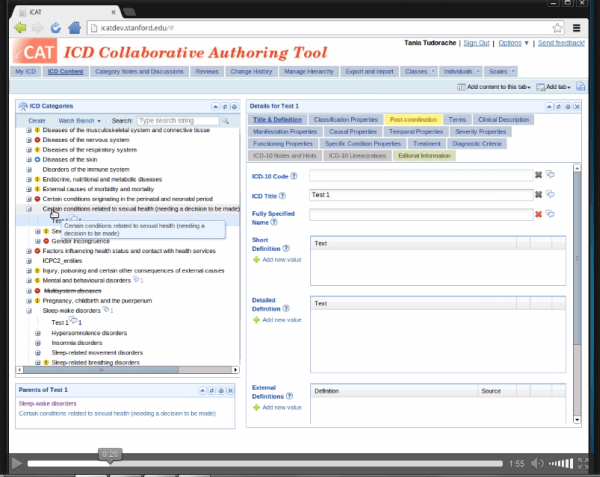
ICD Revision and TAG Managing editors are developing the Beta draft on a separate electronic multi-authoring platform, known as the iCAT, on a server which is not accessible to the public.

The iCAT Beta platform is more layered than the Beta version which the public sees: it displays a larger number of “Content Model” parameters; there are tabs for tracking “Change Histories” and “Category Notes and Discussions” for comparing earlier iterations of a specific chapter section with the most recent edits. There are sub lists for terms that are proposed to be retired or for which decisions are needing to be made.

The public version of the Beta has no means through which changes to the draft (and rationales for changes) can be tracked, or for comparing, for example, an earlier edit of a specific chapter section with the most recent content.

The inability to monitor editing histories in the public Beta draft and the absence of progress reports from the work groups adds to confusion around interpretation of the Beta content. The draft is updated daily, so it needs checking every day for relevant changes.

You can view the public version of the Beta drafting platform here:
http://apps.who.int/classifications/icd11/browse/f/en

Foundation Component (the entire ICD universe):
http://apps.who.int/classifications/icd11/browse/f/en#/

Joint Linearization for Mortality and Morbidity Statistics:
http://apps.who.int/classifications/icd11/browse/l-m/en#/

User Guide: http://apps.who.int/classifications/icd11/browse/Help/en


Click on the small grey arrows next to the Beta draft categories to display their parent, child and grandchildren categories, as drop down hierarchies.

Linearization display button1Select this coloured button to display symbols and hover text indicating which linearization(s) a selected term is listed under.

The display panel on the right contains the “Content Model” text: Short and Long Definitions, Inclusion terms, Synonyms, Exclusions, Index terms etc. for the selected ICD Title term. Many terms are still awaiting population of Short Definitions (for print version) and Long Definitions (for electronic version), and other descriptive content.

For comparison between the public Beta draft and the iCAT, view this 2 minute iCAT screencast animation (with audio), intended as a demo for ICD Revision editors.

The animation is an .ogv file which should run in recent releases of Firefox but may not load in other browsers. If you don’t have the right program installed to run an .ogv file, the iCAT multi-authoring platform that the TAG editors are using looks like this:

iCAT editing platform 3


In Part Two, I shall be setting out what is currently known about proposals for the classification of Postviral fatigue syndrome, Benign myalgic encephalomyelitis and Chronic fatigue syndrome for ICD-11.

Important caveats: The public Beta platform is not a static document, it is a work in progress, subject to daily editing and revision, to field test evaluation and to approval by the RSG and WHO classification experts. Not all new proposals may survive the ICD-11 field tests. Chapter numbering, codes and “sorting codes” currently assigned to ICD categories are not stable and will change as chapters and parent/child hierarchies are reorganized. The public version of the Beta is incomplete; not all “Content Model” parameters display or are populated; the draft may contain errors and omissions.


Part 2: Status of proposals for the classification of PVFS, BME, and CFS in the public version of the ICD-11 Beta drafting platform published September 30, 2014

Part 3: Status of proposals for the revision of ICD-10’s Somatoform disorders for the core and primary care versions of ICD-11 [to follow]


References for Part 1

1 Committee for the Coordination of Statistical Activities, Twenty-second Session 4-6 September 2013, Items for discussion and decision: Item 8, provisional agenda, pp 8-10: http://unstats.un.org/unsd/accsub/2013docs-22nd/SA-2013-12-Add1-Health-WHO.pdf

2 http://www.who.int/classifications/icd/RSG/en/

3 http://www.who.int/classifications/icd/TAGs/en/

4 http://www.who.int/entity/classifications/TOR_TAGs_WGs.pdf?ua=1

5 Lam TP, Goldberg DP, Dowell AC, Fortes S, Mbatia JK, Minhas FA, Klinkman MS: Proposed new diagnoses of anxious depression and bodily stress syndrome in ICD-11-PHC: an international focus group study. Family Practice (2012) 30 (1): 76-87. Free text: http://fampra.oxfordjournals.org/content/30/1/76.full.pdf+html

6 http://apps.who.int/classifications/icd11/browse/f/en#/

7 http://apps.who.int/classifications/icd11/browse/Help/Get/architecture/en

8 https://dxrevisionwatch.com/wp-content/uploads/2010/10/considerations20on20multisystem_diseases_201008181.doc

9 http://informatics.mayo.edu/WHO/ICD11/collaboratory/attachments/208/19.Multisystem_Diseases_Chapter.v1.2.docx

10 http://www.who.int/classifications/icd/revision/contentmodel/en/

11 http://www.globalclinicalpractice.net/en/

Summary of responses from WHO re: Bodily distress disorder, Bodily stress syndrome, Bodily Distress Syndrome

Post #313 Shortlink: http://wp.me/pKrrB-3YR

+++

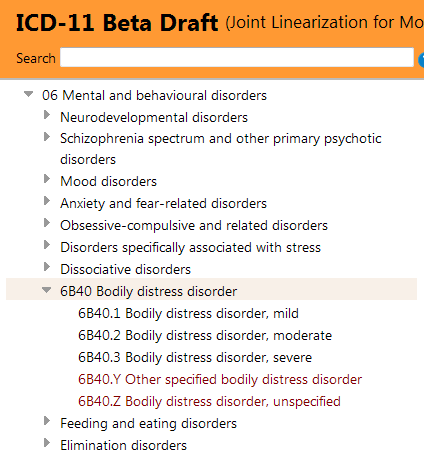
Screenshot: ICD-11 Beta drafting platform, public version, July 31, 2014; Chapter 06 Mental and behavioural disorders: Bodily distress disorder.

+++
BDD310714

Joint Linerarization for Mortality and Morbidity Statistics view selected; “show availability in main linearizations” view selected. Categories designated with three coloured key hover text: “In Mortality and Morbidity, Primary Care High Resource, Primary Care Low Resource. Categories designated with single blue key hover text: “In Mortality and Morbidity.”

+++
Summary of responses from Dr Geoffrey Reed, WHO

On July 23, I submitted an analysis and four questions via the ICD-11 Beta drafting platform for the attention of the Managing Editors for Topic Advisory Group (TAG) Mental Health, the advisory group that is revising ICD-10’s Chapter V.

A copy has been posted in Dx Revision Watch Post #311: Questions raised on ICD-11 Beta draft re: Bodily distress disorder http://wp.me/pKrrB-3Yh

Comments and suggestions submitted by registered users of the ICD-11 Beta drafting platform are screened and forwarded to the appropriate TAG Managing Editors for review.

I also sent a copy of my comments to Dr Geoffrey Reed. Dr Reed is Senior Project Officer overseeing the revision of the ICD Mental and behavioural disorders chapter.

On July 24, I received a response from Dr Reed, via email.

Dr Reed’s responses do not address all the points I had raised via the Beta platform and in my covering email. I am providing a summary of selected of Dr Reed’s responses, below.

I had also drawn Dr Reed’s attention to the absence, since early 2013, of the three G93.3 terms from the public version of the Beta draft and collective concerns for ICD Revision’s failure, to date, to respond to multiple requests to provide an explanation for the continued absence of these terms from the Beta draft and to clarify ICD Revision’s intentions and proposals for the classification of these three ICD-10 terms within ICD-11 [i.e. chapter location(s), parent code(s), hierarchies, Definitions, Synonyms, Inclusion terms etc.].

+++
Dr Reed provided the following information on July 24:

The placement of ME and related conditions within the broader ICD-11 classification is still unresolved.

There has been no proposal and no intention to include ME or other conditions such as fibromyalgia or chronic fatigue syndrome in the classification of mental disorders.

That ME and related conditions be clearly identified as NOT being part of this section of the classification could be made absolutely clear through the use of exclusion terms.

However, Dr Reed will be unable to request that exclusion terms be added to relevant Mental and behavioural disorders categories (e.g., Bodily Distress Disorder) until the conditions that are being excluded exist in the classification. At such time, he would be happy to request exclusion terms.

ICD Revision is currently involved in testing the proposals of the ICD-11 Primary Care Consultation Group* in primary care settings around the world, in part to compare how they work with the proposals of the ICD-11 Expert Working Group on Somatic Distress and Dissociative Disorders**.

Whether the primary care proposal ends up capturing specific groups of patients in primary care who are likely to have underlying medical conditions will certainly be one of the issues for examination and further discussion. Study data would be used as a basis for modifying proposals.

That he considers my analysis is accurate.

That it is not WHO policy to make research protocols for field trial studies that are planned or currently being implemented publicly available for comment.

Details of the study methodology at the time the data are published are expected to be provided, in order that others may examine and critique the methodology, their interpretation of results and their subsequent decisions based on the studies.

Further modifications of the proposals will be based on data evaluation, and justifications made available.

In due course, ICD Revision will make more detailed diagnostic guidelines for all Mental and behavioural disorders available for review and comment before they are finalized, but ICD Revision is not yet ready to do that.

Dr Reed will notify me when that occurs, but anticipates this will be before the end of the year and considers there is plenty of time for review as the approval of ICD-11 is now currently planned for May, 2017.

Dr Reed’s purview does not extend to the section on classification of Diseases of the nervous system or other areas outside the Mental and behavioural disorders chapter, and is therefore unable to provide any information related to how these conditions will be classified in other chapters***.

He is unable to comment about the management of correspondence by other TAG groups**** and signposts to another member of WHO staff [a senior classification expert who had been copied into the joint organizations’ letter to WHO/ICD Revision, in March].

+++
Footnotes:

* Back in 2012, the ICD-11 Primary Care Consultation Group (the PCCG) were proposing a disorder construct that presented a modified version of the Fink et al (2010) Bodily Distress Syndrome (BDS) construct which, at that point, the Primary Care group were proposing to call, “Bodily stress syndrome (BSS).”

The PCCG hasn’t published a progress report since 2012 and the group’s current proposals are not available for scrutiny. If a modified version of BDS is currently being proposed by the PCCG, it isn’t known what changes have been made to the group’s proposals since the Lam et al paper was published in 2012, a paper which is now in the public domain [1].

An editorial co-authored by Prof David Goldberg, in June 2013, implied that Prof Goldberg, at least, was advancing that BDS should be progressed to ICD-11 field testing. It is unclear from Dr Reed’s responses to what extent the PCCG’s most recent proposals correspond to the disorder descriptions and criteria for Fink et al’s, already operationalized, BDS, or whether the group has retained the “BSS” disorder name for the purposes of the field tests and a modified construct/criteria set.

+++
** In 2012, the ICD-11 Expert Working Group on Somatic Distress and Dissociative Disorders (the S3DWG) were proposing an alternative and divergent disorder construct that had good concordance with DSM-5’s Somatic symptom disorder, and poor concordance with Fink et al’s BDS [2].

Perversely, the S3DWG were proposing to call their disorder construct, “Bodily distress disorder (BDD)” – a term already used outside ICD Revision, interchangeably, with Bodily Distress Syndrome [3].

It is the S3DWG’s BDD disorder construct that has been entered into the ICD-11 Beta drafting platform.

The Beta draft entry for BDD has recently had characterizations inserted for three BDD severity specifiers: BDD, Mild; BDD, Moderate; BDD, Severe. This post (which was written before I received responses from Dr Reed) sets out these recent additions to the draft in the context of the two divergent sets of proposals: Definitions for three severities of Bodily distress disorder now inserted in ICD-11 Beta draft, July 19, 2014 http://wp.me/pKrrB-3X9

+++
*** This February 8, 2014 post: http://wp.me/pKrrB-3IX tracks the history of the progression of the three ICD-10 G93.3 categories, PVFS, (B)ME and CFS within the ICD-11 drafting platform, from May 2010 to early 2013.

Under the subheading “So why have these three ICD-10 terms disappeared and why is ICD Revision reluctant to respond?” I have suggested a number of potential reasons for the current absence of these three terms from the Beta draft.

+++
**** On March 17, a joint letter signed by Sonya Chowdhury, CEO, Action for M.E., Annette Brooke MP, Chair, All Party Parliamentary Group on M.E., The Countess of Mar, Chair, Forward M.E. and Dr Charles Shepherd, ME Association, was sent to key Topic Advisory Group for Neurology members and copied to WHO’s Dr Margaret Chan, Dr Geoffrey Reed and Dr Robert Jakob.

The letter had requested, inter alia, clarification for the absence of the three ICD-10 G93.3 terms, Postviral fatigue syndrome, Benign myalgic encephalomyelitis and Chronic fatigue syndrome from the public version of the ICD-11 Beta drafting platform.

Prior to early 2013, in the public version of the Beta draft, Chronic Fatigue Syndrome had been listed in the Beta Foundation Component as an ICD Title entity under the Diseases of the nervous system chapter, with Benign Myalgic encephalomyelitis specified as an Inclusion term to Title term CFS, and Postviral fatigue syndrome listed under Synonyms to Title term, CFS.

The joint letter can be read here:

http://www.actionforme.org.uk/Resources/Action%20for%20ME/Documents/get-informed/who-icd-11-letter-17-3-14-sc.pdf

At the July 1 meeting of the APPG on M.E. it was agreed that in the absence of a response, Annette Brooke MP (Chair) would follow up the correspondence. Minuted here (under 3 Matters arising; d) ICD-11):

http://www.meassociation.org.uk/2014/07/minutes-of-the-appg-on-me-meeting-and-the-agm-held-on-1-july-2014/

I have advised Sonya Chowdhury, Dr Charles Shepherd, Neil Riley and Jane Colby of Dr Reed’s responses and suggested that Annette Brooke MP is updated.

+++
Forthcoming Symposium:

In September, Professor Oye Gureje, who chairs the ICD-11 Expert Working Group on Somatic Distress and Dissociative Disorders, will be presenting on “Proposals and evidence for the ICD-11 classification of Bodily Distress Disorders” as part of series of symposia on the development of the ICD-11 chapter for mental and behavioural disorders, at the World Psychiatric Association XVI World Congress, in Madrid, Spain, 14–18 September 2014.

+++
References:

1. Lam TP, Goldberg DP, Dowell AC, Fortes S, Mbatia JK, Minhas FA, Klinkman MS: Proposed new diagnoses of anxious depression and bodily stress syndrome in ICD-11-PHC: an international focus group study. Family Practice (2013) 30 (1): 76-87. Full free text: http://fampra.oxfordjournals.org/content/30/1/76.long

2. Creed F, Gureje O. Emerging themes in the revision of the classification of somatoform disorders. Int Rev Psychiatry. 2012 Dec;24(6):556-67. http://www.ncbi.nlm.nih.gov/pubmed/23244611 [Full text behind paywall]

3. Fink P, Toft T, Hansen MS, Ornbol E, Olesen F. Symptoms and syndromes of bodily distress: an exploratory study of 978 internal medical, neurological, and primary care patients. Psychosom Med. 2007 Jan;69(1):30-9.

+++
Caveats: The ICD-11 Beta drafting platform is not a static document: it is a work in progress, subject to daily edits and revisions, to field test evaluation and to approval by ICD Revision Steering Group and WHO classification experts. Not all new proposals may survive ICD-11 field testing. Chapter numbering, codes and Sorting codes currently assigned to ICD categories may change as chapters and parent/child hierarchies are reorganized. The public version of the Beta draft is incomplete; not all “Content Model” parameters display or are populated; the draft may contain errors and category omissions.

Editorial: Bodily distress syndrome (BDS): the evolution from medically unexplained symptoms (Goldberg and ICD-11-PHC)

Post #308 Shortlink: http://wp.me/pKrrB-3Uh

An editorial and four papers on the theme of medically unexplained symptoms, first published in the June 2013 issue of Mental Health in Family Medicine and embargoed until June 1, 2014, are now accessible for free at: http://www.ncbi.nlm.nih.gov/pmc/issues/229531/

Mental Health in Family Medicine is the official journal of The World Organization of Family Doctors (Wonca) Working Party on Mental Health.

The editorial: Bodily distress syndrome (BDS): the evolution from medically unexplained symptoms (MUS), is co-authored by Prof Gabriel Ivbijaro and Prof Sir David Goldberg.

Prof Ivbijaro is Editor in Chief, Mental Health in Family Medicine, a past chair of Wonca Working Party on Mental Health and was elected president elect of the World Federation of Mental Health in August 2013.

Prof Goldberg chairs the WHO Primary Care Consultation Group (PCCG) that is leading the development of the primary care classification of mental and behavioural disorders for ICD-11 (known as ICD-11-PHC).

This report sets the editorial into context.

++
ICD-11 PHC

ICD-10 PHC (sometimes written as ICD-10-PHC or ICD10-PHC or ICD-10 PC), is a simplified version of the WHO’s ICD-10 chapter for mental and behavioural disorders for use in general practice and primary health care settings. This system has rough but not exact equivalence to selected of the mental disorders in the core ICD-10 classification.

The ICD-10 PHC describes 25 disorders commonly managed within primary care as opposed to circa 450 classified within Chapter V of ICD-10.

A revised edition, ICD-11 PHC, is being developed for use by clinicians and (often non-specialist) health-care workers in a wide range of global primary care settings and low- and middle-income countries.

The primary care version of the ICD-11 mental and behavioural disorders chapter is being developed simultaneously with the specialty settings version. Disorders that survive the ICD-11 PHC field tests require a corresponding disorder in the main ICD-11 classification.

The PCCG work group is developing and field testing 28 mental disorders for ICD-11 PHC, which includes making recommendations to the International Advisory Group for a potential replacement for the existing ICD-10 PHC category, F45 Unexplained somatic symptoms/medically unexplained symptoms.

A second ICD-11 working group, the Expert Working Group on Somatic Distress and Dissociative Disorders (S3DWG), is advising on the revision of ICD-10’s Somatoform disorders in parallel with the PCCG and has proposed an alternative disorder construct.

Thus far, neither working group has commented publicly on the alternative proposals presented by the other group, how the two groups interrelate, whether they are expected to reach consensus over a potential new conceptual framework to replace the existing Somatoform disorders, or to what extent consensus has been reached.

No public progress reports are being published by either group, or by the International Advisory Group, and those monitoring and reporting on the revision of these ICD-10 Chapter V categories rely on journal papers, editorials, symposia presentations, internal ICD Revision summary reports and meeting materials and on the limited content in the public version of the ICD-11 Beta drafting platform to piece together updates.

++
Does this editorial advance our understanding of current proposals?

Key point: this Ivbijaro and Goldberg editorial is now over 12 months old and should be read with the caveat that proposals by the PCCG working group may have been revised since the editorial was first published.

As a source of information on the current status of proposals by the Primary Care Consultation Group (PCCG), this editorial is problematic.

Firstly, it is over 12 months old and the PCCG’s proposals may have undergone further revision since the editorial was submitted for publication.

At the time of submission, the authors anticipated imminent field testing for ICD-11 PHC but the projected start dates for internet and clinic-based field testing, which will assess utility of proposed ICD-11 diagnostic guidelines in different types of primary care settings with particular focus on low- and middle-income countries, may be delayed. (It is on record that field tests were running behind schedule and there have been funding shortfalls, two factors in WHO’s decision, earlier this year, to shift WHA approval of ICD-11 from 2015 to 2017 to allow more time for incorporation of field test results.*)

*WICC ICPC-3 presentation, June 2013, M Klinkman, Slide 29: http://www.ph3c.org/PH3C/docs/27/000312/0000451.pdf
Committee for the Coordination of Statistical Activities, Twenty-second Session 4-6 September 2013, Items for discussion and decision: Item 8 of provisional agenda, Pages 8-10:
http://unstats.un.org/unsd/accsub/2013docs-22nd/SA-2013-12-Add1-Health-WHO.pdf

Secondly, the editorial does not declare Prof Goldberg’s interest as chair of the PCCG. It does not clarify whether the views and opinions expressed within the editorial represent the views and opinions of its authors or represent the official positions of the PCCG working group, or of the International Advisory Group for the Revision of ICD-10 Mental and Behavioural Disorders, or of the ICD-11 Revision Steering Group.

Thirdly, its brevity. This is a short editorial – not a paper:

it does not discuss the PCCG’s rationales for the changes made to its own proposals, as published in 2012.

it does not retrospectively review and compare the PCCG’s 2012 proposals for a construct which the group proposed to call, at that point, Bodily stress syndrome, with the 2012 proposals of the Expert Working Group on Somatic Distress and Dissociative Disorders (S3DWG) for an alternative construct called Bodily distress disorder.

it does not compare the PCCG’s revised proposals, as they stood in June 2013, with the S3DWG’s proposals, at that point.

crucially, it does not clarify why, if the PCCG’s June 2013 proposals were expected to be progressed to field trials, it is the S3DWG’s Bodily distress disorder diagnostic construct that has been listed and defined in the Beta draft for the Foundation, Mortality and Morbidity, Primary Care High Resource, Primary Care Low Resource linearizations.

Key points: It is difficult to disentangle the authors’ views and opinions from official position of the PCCG working group or the International Advisory Group. The editorial provides no discussion of the S3DWG’s alternative proposals or whether any consensus between the two groups had been reached. The opinions of the International Advisory Group on both sets of proposals are not discussed.

++
What new information does this June 2013 editorial provide since the 2012 Lam et al paper?

that the authors consider the Fink P, Schröder A. 2010 paper [1] provides evidence that the term Bodily Distress Syndrome has both face and content validity.

that the authors consider the concept Bodily Distress Syndrome as “a possible diagnosis that captures the range of presentations in primary care, which may be acceptable to both patient and medical professional”, for which the authors list “a range of poorly defined disorders [that include] chronic fatigue syndrome (CFS), fibromyalgia, irritable bowel syndrome (IBS), chronic pain syndrome, hyperventilation syndrome, non-cardiac chest pain and somatoform disorder.”

that the authors consider the forthcoming revision of the ICD provides an opportunity to include BDS in a revised classification for primary care, the ICD11-PHC, which is planned to be field tested in eight countries.

• that “not only has BDS replaced ‘medically unexplained symptoms’, but also ‘health anxiety’ has replaced ‘hypochondriasis'” and that the field trials “would examine whether primary care physicians wish to distinguish health anxiety (which may have few or indeed no somatic symptoms) from BDS (which by definition has at least three different somatic symptoms).”

According to the editorial, the PCCG had evidently revised its proposal for what to call its new disorder category since publication of the Lam et al paper, in 2012.

In 2012, the PCCG’s proposed term for ICD-11 PHC was Bodily stress syndrome (BSS). In this June 2013 editorial, the authors are using the term, Bodily distress syndrome (BDS).

In 2012, criteria for the PCCG’s BSS had included the requirement for psychobehavioural responses, which do not form part of the Fink et al 2010 BDS criteria – which are based on symptom patterns.

The editorial does not clarify whether, in June 2013, the PCCG (or its chair) was now advancing that the BDS construct and criteria should progress unmodified for ICD-11 PHC testing and evaluation, that is, in the form already operationalized in research and clinical settings in Denmark or would be modified for the purpose of ICD-11 PHC field trials, or to what extent.

(There is no revised criteria set included in this editorial for comparison with the detailed disorder descriptions and criteria set that had been included in Appendix 2 of the 2012 Lam et al paper.)

 Key point: The editorial provides no details or discussion of a 2013 field trial protocol. The most recent disorder descriptions, diagnostic guidelines and criteria proposed by the PCCG are not in the public domain. It is not known whether a field trial protocol has been finalized, whether or when it will be made available for public scrutiny, or whether field trials have started yet.

++
Before reading the editorial please read the appended notes and if you are linking to the editorial on social media or forums, please also include a link back to this report because it is important that this editorial is placed into context.
+++

Ment Health Fam Med.
2013 Jun;10(2):63-4.
Bodily distress syndrome (BDS): the evolution from medically unexplained symptoms (MUS).
Ivbijaro G, 1 Goldberg D. 2
Author information
1 Editor-in-Chief Mental Health in Family Medicine, Medical Director, Waltham Forest Community and Family Health Services, and Vice President (Europe), World Federation for Mental Health.
2 Professor Emeritus and Fellow, King’s College, London.PMID: 24427171
[PubMed] PMCID: PMC3822636 [Available on 2014/6/1]
Article: http://www.ncbi.nlm.nih.gov/pmc/articles/PMC3822636/?report=classic
PubReader: http://www.ncbi.nlm.nih.gov/pmc/articles/PMC3822636/?report=reader
PDF – 44KB: http://www.ncbi.nlm.nih.gov/pmc/articles/PMC3822636/pdf/MHFM-10-063.pdf

+++

Two ICD Revision working groups – two sets of proposals published in 2012:

In their respective 2012 journal papers, the two working groups presented divergent conceptual proposals and neither group refers to the work being undertaken by the other group.

The 17 member Expert Working Group on Somatic Distress and Dissociative Disorders (the S3DWG) is an ICD Revision sub working group advising specifically on the revision of ICD-10’s Somatoform disorders.

Prof emeritus Francis Creed (a former DSM-5 Somatic Symptom Disorder work group member) is a member of the S3DWG, and the group is chaired by Prof Oye Gureje.

In late 2012, Creed and Gureje published a paper which had included the S3DWG’s emerging proposals for a new, single diagnostic category that would subsume the existing Somatoform disorders categories F45.0 – F45.9 and Neurasthenia [2].

The S3DWG paper sets out the group’s remit which includes:

“To provide drafts of the content (e.g. definitions, descriptions, diagnostic guidelines) for somatic distress and dissociative disorder categories in line with the overall ICD revision requirements.

“To propose entities and descriptions that are needed for classification of somatic distress and dissociative disorders in different types of primary care settings, particularly in low- and middle-income countries.”

Which suggests that the proposals the S3DWG group are advancing are also being considered for utility in primary care and low resource settings, in parallel with those recommended by the PCCG.

The S3DWG’s 2012 paper had described a disorder model which it proposed to call Bodily distress disorder (BDD).

Key point: Although the Creed, Gureje 2012 paper does not acknowledge the congruency, the BDD disorder descriptions and criteria are conceptually close to DSM-5’s new Somatic symptom disorder (SSD).

With its

“much simplified set of criteria”; no assumptions about causality; elimination of the requirement that symptoms be “medically unexplained” as the central defining feature; inclusion of the presence of a co-occurring physical health condition; focus on identification of positive psychobehavioural responses (excessive preoccupation with symptoms, unreasonable illness fear, frequent or persistent healthcare utilization, activity avoidance for fear of damaging the body) in response to any (unspecific) persistent, distressing, single or multiple bodily symptoms; and with no requirement for symptom counts or symptom patterns from body or organ systems;

the group’s BDD construct had good concordance with DSM-5’s Somatic symptom disorder (SSD) and poor concordance with Fink et al’s Bodily Distress Syndrome.

++
The PCCG’s Bodily stress syndrome (BSS):

In contrast, the PCCG’s 2012 paper [3] had described a disorder construct which it proposed to call Bodily stress syndrome (BSS), that drew heavily on Fink et al’s 2010 Bodily Distress Syndrome (BDS) disorder model [4].

BSS would replace ICD-10-PHC’s F45 Unexplained somatic symptoms/medically unexplained symptoms category. Primary care’s Neurasthenia category would also be eliminated for ICD-11-PHC.

Based (theoretically) on the “autonomic over-arousal” model, the PCCG’s BSS required symptom patterns from body systems to meet the diagnosis.

But, “If the symptoms are accounted for by a known physical disease this is not BSS.”

Which also mirrors Fink et al’s BDS – “if the symptoms are better explained by another disease, they cannot be labelled BDS. The diagnosis is therefore exclusively made on the basis of the symptoms, their complexity and duration” [4].

But the tentative BSS criteria, as presented by Lam et al, in 2012, also incorporated some DSM-5 SSD-like psychobehavioural responses, viz, “The patient’s concern over health expresses itself as excessive time and energy devoted to these symptoms.” (A straight lift from DSM-5’s SSD criteria.)

Psychological and behavioural responses do not form part of the Fink et al 2010 BDS criteria and their inclusion within BSS appeared to be a tokenistic nod towards accommodation of DSM-5’s SSD into any new conceptual framework for ICD-11. (The rationale for their insertion into an otherwise BDS-like construct is not discussed within the 2012 paper.)

Key point: In 2012, whilst highly derivative of BDS and the influence of PCCG group member, Marianne Rosendal, is clear, the proposed BSS model could not be described as a “pure” BDS model.

++
How viable is BDS for incorporation into ICD-11?

The vice-chair of the PCCG is Dr Michael Klinkman, a GP who represents WONCA (World Organization of Family Doctors). Dr Klinkman is current convenor of WONCA’s International Classification Committee (WICC) that is responsible for the development of ICPC-2.

Dr Marianne Rosendal (Department of Public Health, Aarhus University), who has published with Prof Per Fink, is the European representative on WONCA’s International Classification Committee and a member of the PCCG.

In addition to the revision of ICD-10 and ICD-10-PHC, the ICPC-2 (International Classification of Primary Care, Second edition), which classifies patient data and clinical activity in the domains of general/family practice and primary care, is also under revision.

Per Fink and colleagues have been lobbying for their Bodily Distress Syndrome construct to be integrated into forthcoming classification systems and adopted as a diagnosis by primary care practitioners.*

*Budtz-Lilly A: The Research Unit for General Practice, School of Public Health, Aarhus University, Denmark. Bodily Distress Syndrome: A new diagnosis for functional disorders in primary care, EACLPP 2012 Conference Abstract, p 17.

++
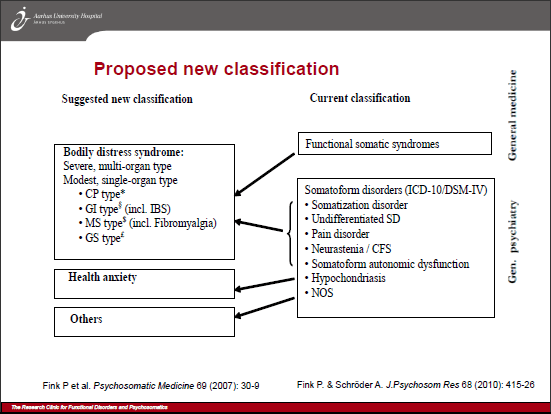
Proposed new classification

There are a number of reasons why the International Advisory Group for the Revision of ICD-10 Mental and Behavioural Disorders and the ICD Revision Steering Group might have difficulty justifying approval of any new disorder construct that seeks to arrogate the so-called “functional somatic syndromes,” CFS, IBS and Fibromyalgia, and subsume them under a new, overarching disorder category that also subsumes Neurasthenia and the Somatoform disorders.

limited independent evidence for construct validity, utility and safety of application of BDS in adults and children.

no requirements within BDS criteria for positive psychobehavioural features – location within the ICD-11 mental and behavioural disorders chapter is therefore problematic.

potential data loss, data disaggregation problems and code mapping issues resulting from loss of discretely coded terms currently located within various ICD chapters outside the mental and behavioural disorders chapter; loss of backward compatibility with ICD-10 codes and with ICD-10-CA, ICD-10-GM, ICD-10-AM and other country modifications. (Some countries may take many years to transition to ICD-11, or an adaptation of ICD-11.) Potential incompatibility problems mapping to SNOMED-CT.

• unacceptability to patients and medical professionals

medico-political sensitivities

BDS and SSD are divergent constructs; a hybrid between BDS and SSD-like characteristics is conceptually problematic and would present difficulties if the intention is to harmonize ICD-11 with DSM-5 for this section of the classification [5].

the DSM-5 to ICD-9/ICD-10-CM cross-walk already maps DSM-5 Somatic symptom disorder to ICD-9 code 300.82 (ICD-10-CM F45.1).

It has been proposed that Somatic symptom disorder is added to the U.S.’s forthcoming clinical modification as an inclusion term to F45.1, in the Tabular List and Index.* If approved by NCHS, ICD-10-CM and ICD-11 would lack congruency if a BDS-like disorder model were incorporated into ICD-11 to replace the existing Somatoform disorders, rather than an SSD-like model.**

*September 18-19, 2013 and March 19-20, 2014 NCHS/CMS ICD-10-CM Coordination and Management Committee meetings.
**Note: since early 2009, I have strongly opposed the introduction of SSD into the DSM-5, ICD-11 and ICD-10-CM, and I am not arguing, here, in favour of an SSD-like model to replace the existing ICD-10 Somatoform disorders. There is no public domain documentary evidence that the two ICD working groups are currently considering any alternative models as potential replacements for the Somatoform disorders.

++
Has Professor Fink achieved his goal?

Disorders that survive the ICD-11 PHC field tests must have an equivalent disorder in the main ICD-11 classification.

With the criteria’s lack of positive psychobehavioural features presenting barriers for location within the ICD-11 mental and behavioural disorders chapter and with a hybrid between BDS and SSD-like features conceptually problematic, fitting BDS into ICD-11 isn’t the shoo in that Rosendal, Fink and colleagues had hoped for.

At the presentations on Functional Disorders held at the Danish parliament (March 19, 2014), Prof Fink had stated that he and his colleagues had tried to get WHO to incorporate a section for a special group of disorders where BDS could be placed that was located neither in psychiatry nor in general medicine, but had not been successful. [Creating a new ICD chapter or new parent class within an existing chapter for “interface” disorders may possibly have been proposed to ICD Revision.]*

But if a “pure” BDS (or a modification of BDS for ICD usage) is progressed to field testing over the next year or two, it should perhaps be considered whether ICD Revision has agreed to field test the PCCG’s proposal as a “straw man” construct to disprove its clinical utility, reliability and acceptability, with the intention of defaulting, after field trial evaluation, to a disorder construct that is conceptually closer to SSD, if the latter is already the preference of the International Advisory Group and the ICD Revision Steering Group.

*See: Constanze Hausteiner-Wiehle and Peter Henningsen. Irritable bowel syndrome: Relations with functional, mental, and somatoform disorders World J Gastroenterol 2014 May 28; 20(20): 6024-6030 Full free text
“An overarching category of general (medical-psychiatry) interface disorders could be a helpful conceptualization for the many phenomena that are neither only somatic nor only mental [32,56,79]. The ICD-11, awaited in 2015, offers a new chance to do that. The concept of a bodily distress syndrome (BDS) offers another scientifically coherent common basis for the classification of different dimensional graduations of IBS [80].

++
WHO on Twitter:

On Feb 12, 2014, @WHO Twitter admin stated: “Fibromyalgia, ME/CFS are not included as Mental & Behavioural Disorders in ICD-10, there is no proposal to do so for ICD-11”. This position was additionally confirmed by Mr Gregory Härtl, Head of Public Relations/Social Media, WHO.

++
So what has been entered into the Beta drafting platform?

The term entered into the Beta platform (since February 2012) is Bodily distress disorder (the term favoured by the S3DWG working group) – not the term Bodily stress syndrome or Bodily Distress Syndrome.

A Definition for Bodily distress disorder was inserted around four months ago. There are no definitions or characterizations inserted yet for any of the three, uniquely coded severity specifiers (Mild; Moderate; Severe).

The psychological and behavioural features that characterize the disorder, as per the BDD Definition, are drawn from the disorder conceptualizations in the 2012 Creed, Gureje paper on emerging proposals for Bodily distress disorder which had described a disorder model with good concordance with DSM-5′s Somatic symptom disorder construct and poor concordance with Fink et al’s Bodily Distress Syndrome construct.

Key point: The term entered into the Beta drafting platform is Bodily distress disorder (the term favoured by the S3DWG working group) with a Definition based on disorder conceptualizations in the 2012 Creed, Gureje paper which had described a disorder model with good concordance with DSM-5′s Somatic symptom disorder and poor concordance with Fink et al’s Bodily Distress Syndrome construct.

++
This Dx Revision Watch post sets out (with screenshots) the most recent changes to the Beta drafting platform for the listing of BDD and the current Definition:

Recent changes to ICD-11 Beta drafting platform for “Bodily distress disorder”

++
Forthcoming symposium presentation:

In September, Oye Gureje (chair ICD-11 Expert Working Group on Somatic Distress and Dissociative Disorders), will be presenting on Proposals and evidence for the ICD-11 classification of Bodily Distress Disorders, as part of series of symposia on the development of the ICD-11 chapter on mental and behavioural disorders, at the World Psychiatric Association XVI World Congress, in Madrid, Spain, 14–18 September 2014 [6].

++
Field testing:

Field testing on a potential replacement for the ICD-10 Somatoform disorder categories is expected to be conducted over the next couple of years. Currently, there is no publicly available protocol or other information on the finalized characteristics, diagnostic guidelines, criteria, inclusions, exclusions, differential diagnoses etc. that are planned to be used for the field tests which would provide the level of detail lacking in the public version of the Beta drafting platform.

++
Requests for clarification repeatedly stonewalled:

ICD Revision has been asked several times, via the Beta drafting platform, to clarify its current proposals for the framework and disorder construct for a replacement for the ICD-10 Somatoform disorders. ICD Revision has also been asked to comment on the following:

“If, in the context of ICD-11 usage, the S3DWG working group’s proposal for a replacement for the Somatoform disorders remains for a disorder model with good concordance with DSM-5’s SSD construct, what is the rationale for proposing to name this disorder “Bodily distress disorder”?

“Have the S3DWG, PCCG and Revision Steering Group given consideration to the significant potential for confusion if its replacement construct for the Somatoform disorders has greater conceptual alignment with the SSD construct but is assigned a disorder name that sounds very similar to, and is already being used interchangeably with an operationalized but divergent construct and criteria set?”

No clarifications have been forthcoming to date. Lack of progress reports by both working groups and the degree of confusion over the content of the Beta draft is hampering stakeholder scrutiny, discourse and input. It’s not surprising few papers have been published to date reviewing and discussing ICD Revision’s proposals for a potential replacement for the ICD-10 Somatoform disorders when information on the most recent proposals for both working groups is proving so difficult to obtain.

It’s time medical and allied professionals and advocacy organizations demanded transparency from ICD Revision for its current intentions.

++
Caveats:

ICD-11 Beta is a work in progress, updated daily, not finalized. Proposals for new categories are subject to ongoing revision and refinement, to field test evaluation, may not survive field testing, and are not approved by ICD Revision or WHO.

++
References:

1. Fink P and Schröder A. One single diagnosis, bodily distress syndrome, succeeded to capture 10 diagnostic categories of functional somatic syndromes and somatoform disorders. Journal of Psychosomatic Research 2010;68:415–26.

2. Creed F, Gureje O. Emerging themes in the revision of the classification of somatoform disorders. Int Rev Psychiatry. 2012 Dec;24(6):556-67. [Abstract: PMID: 23244611]

3. Lam TP, Goldberg DP, Dowell AC, Fortes S, Mbatia JK, Minhas FA, Klinkman MS: Proposed new diagnoses of anxious depression and bodily stress syndrome in ICD-11-PHC: an international focus group study. Fam Pract Feb 2013 [Epub ahead of print July 2012]. [Abstract: PMID: 22843638] Full free text: http://fampra.oxfordjournals.org/content/30/1/76.long

4. http://funktionellelidelser.dk/en/about/bds/

5. Creed F, Fink P: Research Clinic for Functional Disorders Symposium presentations, Aarhus University Hospital, May 15, 2014.

That SSD and BDS are divergent constructs is also discussed in: Medically Unexplained Symptoms, Somatisation and Bodily Distress: Developing Better Clinical Services, Francis Creed, Peter Henningsen, Per Fink (Eds), Cambridge University Press, 2011.

6. World Psychiatric Association XVI World Congress, Madrid, Spain, 14–18 September 2014.
 

Recent changes to ICD-11 Beta drafting platform for “Bodily distress disorder”

Post #307 Shortlink: http://wp.me/pKrrB-3Ts

This post updates on further changes in the public version of the ICD-11 Beta drafting platform to the listing of proposed new ICD category, Bodily distress disorder.

Caveat: The ICD-11 Beta draft is not a static document: it is a work in progress, subject to daily edits and revisions, to field test evaluation and to approval by Topic Advisory Group Managing Editors, the International Advisory Group, the ICD Revision Steering Group and WHO classification experts. “Sorting codes” assigned to categories are subject to frequent change as chapters and categories are reorganized.

The revision of the Somatoform disorders categories has undergone a number of iterations since the release of the initial iCAT drafting platform, in May 2010.

Two working groups

The ICD-11 Expert Working Group on Somatic Distress and Dissociative Disorders (S3DWG) is one of two WHO convened groups charged with making recommendations for the revision of the ICD-10 Somatoform disorders categories.

The second group, the Primary Care Consultation Group (PCCG), leads the development of the revision of the mental and behavioural disorders publication known as “ICD-10 PHC”.

The PCCG is making recommendations for the revision of ICD-10 PHC’s primary care diagnostic category, F45 Unexplained somatic symptoms/medically unexplained symptoms. Disorders included in the abridged primary care version will require an equivalent category within the core ICD-11 classification.

+++

What has the S3DWG work group been proposing?

The S3DWG has proposed Bodily distress disorder as a single diagnostic category to replace all of the ICD-10 Somatoform disorders between F45.0 – F45.9 and F48.0 Neurasthenia [1].

So initially, in the drafting platform, these ICD-10 legacy categories were removed.

As the Beta draft stood in mid 2013, Bodily distress disorder had been assigned three, uniquely coded severity specifiers: Mild BDD, Moderate BDD and Severe BDD. These were then reduced to just two: Bodily distress disorder and Severe bodily distress disorder.

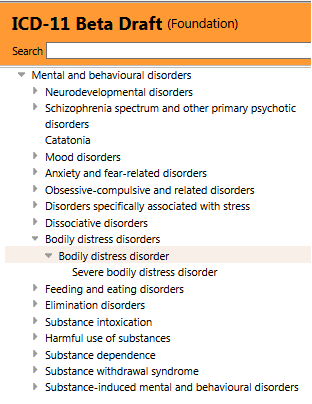
So in January 2014, the Beta drafting platform had stood like this:

BDD at 02.02.14

Source: ICD-11 Beta drafting platform at January 29, 2014

+++

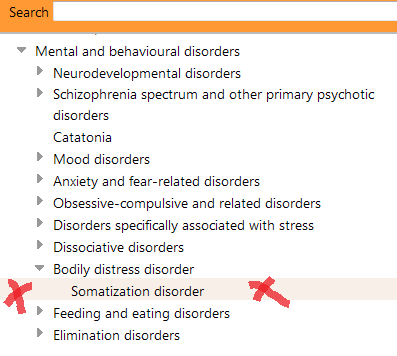
On February 18, I reported that Severe bodily distress disorder was no longer listed in the Beta drafting platform and had been replaced with the ICD-10 legacy category Somatization disorder.

I also reported that the ICD-10 category, Neurasthenia, previously proposed to be eliminated for both the ICD-11 core and Primary Care versions, had been inserted back into the Beta draft.

It was unclear how these two ICD-10 legacy categories were intended to relate to a single new diagnostic category whose conceptual framework had originally been proposed to replace both of them. The Definition texts displaying for both legacy categories had been imported unedited from ICD-10 and provided no clues to the (evidently revised) proposed framework.

So by February 2014, the draft stood like this:

BDD 240214

Source: ICD-11 Beta drafting platform at February 24, 2014

with Neurasthenia back in the draft under parent Mental and behavioural disorders:

Neurasthenia240214

Source: ICD-11 Beta drafting platform at February 24, 2014

+++
Since these changes, there have been several further modifications to the Beta draft:

Circa May 9, 2014:

Somatization disorder remained listed as a uniquely coded child category under Bodily distress disorder, with a definition comprising unedited text imported from the ICD-10 F45.0 classification.

But three uniquely coded severity specifiers had been added back in:

Bodily distress disorder, mild
Bodily distress disorder, moderate
Bodily distress disorder, severe

So by May 9, the Beta draft Joint Linearization for Mortality and Morbidity Statistics looked like this:

May_9_14_BDD

*Note that the “Sorting codes” assigned to categories change daily as chapters and category hierarchies are reorganized.

+++
Circa May 15, 2014:

Somatization disorder has now been removed from the Beta draft Linearizations as a uniquely coded child category under Bodily distress disorder.

Somatization disorder is now listed with the ICD-10 term somatoform disorders under Synonyms to Bodily distress disorder and both ICD-10 legacy terms are listed as Index Terms.

Update at June 6, 2014: The ICD-10 legacy terms, Somatoform disorders and somatization disorder are no longer listed under Index Terms to Bodily distress disorder in the Beta drafting platform or print version of the draft Alphabetical Index but remain listed under Synonyms. Both terms have been relocated under Index Terms to 6B4Z Bodily distress disorder, unspecified.

The three severity specifiers for BDD, (Mild, Moderate, Severe) remain.

So at May 27, the Beta draft Joint Linearization for Mortality and Morbidity Statistics looks like this:

May_15_14_BDD

Neurasthenia has also been removed from the Beta draft Linearizations. Nor is it listed in the PDF of the print version of the draft Alphabetical Index.

This might suggest that the most recent proposal has reverted back to eliminating Neurasthenia from ICD-11, but to retain both Somatization disorder and the term somatoform disorders under Synonyms to BDD, and as Index Terms (as opposed to retaining and coding specifically for Somatization disorder under new ICD parent term, Bodily distress disorder).

[Neurasthenia remains specified as an Exclusion to Generalized anxiety disorder (currently Chapter 06) and to Fatigue (currently Chapter 20) but this may be an oversight.]

You can view the entry for Bodily distress disorder here, in the Foundation Linearization, which also displays a Definition, Synonyms and Exclusions:

http://apps.who.int/classifications/icd11/browse/f/en#/http://id.who.int/icd/entity/767044268

(Click on the small grey arrow to the left of the BDD category term to display the three severity specifiers.)

+++

Current ICD-11 Definition:

A Definition for Bodily distress disorder was inserted around four months ago, but there are no definitions or characterizations inserted yet for any of the three severity specifiers (BDD Mild, Moderate, Severe).

The Definition for Bodily distress disorder remains the same as previously reported:

http://apps.who.int/classifications/icd11/browse/f/en#/http%3a%2f%2fid.who.int%2ficd%2fentity%2f767044268

“Bodily distress disorder is characterized by high levels of preoccupation regarding bodily symptoms, unusually frequent or persistent medical help-seeking, and avoidance of normal activities for fear of damaging the body. These features are sufficiently persistent and distressing to lead to impairment in personal, family, social, educational, occupational or other important areas of functioning. The most common symptoms include pain (including musculoskeletal and chest pains, backache, headaches), fatigue, gastrointestinal symptoms, and respiratory symptoms, although patients may be preoccupied with any bodily symptoms. Bodily distress disorder most commonly involves multiple bodily symptoms, though some cases involve a single very bothersome symptom (usually pain or fatigue).”

The psychological and behavioural features that characterize the disorder, as per this definition, are drawn from disorder conceptualizations in the 2012 Creed, Gureje paper on emerging proposals for Bodily distress disorder.

The paper described a disorder model with good concordance with DSM-5’s Somatic symptom disorder construct and poor concordance with Fink et al’s Bodily Distress Syndrome construct [1,2].

+++

In sum:

At the point of publishing this post, we can say that the public version of the Beta draft displays:

 a single Bodily distress disorder category with three uniquely coded (but as yet uncharacterized) severities replacing all the ICD-10 Somatoform disorders between F45.0 – F45.9 and ICD-10’s Neurasthenia (F48.0);

that the ICD-10 legacy terms, somatoform disorders (F45) and Somatization disorder (F45.0), are listed under Synonyms and under Index Terms to Bodily distress disorder.

Update at June 6, 2014: The ICD-10 legacy terms, Somatoform disorders and somatization disorder are no longer listed under Index Terms to Bodily distress disorder in the Beta drafting platform and print version of the Alphabetical Index but remain listed under Synonyms. Both terms have been relocated under Index Terms to 6B4Z Bodily distress disorder, unspecified.

that ICD-10’s Neurasthenia is no longer displaying in any Linearization and may remain proposed to be eliminated for ICD-11 (but remains anomalously specified in two chapters as an Exclusion term);

that an ICD-11 Definition for Bodily distress disorder has been entered into the draft, the wording for which is based on disorder conceptualizations in the 2012 paper: Creed F, Gureje O. Emerging themes in the revision of the classification of somatoform disorders. Int Rev Psychiatry. 2012 Dec;24(6):556-67.

Apart from scrutinizing the Definition, that is all we can safely determine about the current, proposed construct of Bodily distress disorder, in the context of ICD-11’s deployment of the term, solely from the content of the public version of the Beta drafting platform.

I’ll be writing more about this Definition and the 2012 proposals by both ICD-11 working groups in the next post (Post #308).

These recent changes are a good example of why the public version of the Beta drafting platform needs to be viewed with the WHO’s caveats in mind – the draft is in a state of flux, it is incomplete, it contains errors, omissions and anomalies and is subject to frequent rejiggery.

The entry for BDD may undergo further changes over the coming year or so and following field trials evaluation.

+++

iCAT ICD Collaborative authoring platform:

Note that ICD Revision staff and external editors are developing the draft on a separate, multi-authoring electronic platform called “iCAT ICD Collaborative authoring tool” — a platform considerably more technically sophisticated than the version of the draft that the public sees. In the editors’ version, more Content Model parameters display and there are tabs for change histories, category notes and discussions, and for reviews of proposals. 

So revisions to category chapter locations, hierarchies, internal and external peer review of proposals, drafting and revisions of textual content and rationales for these revisions can be tracked by users of the platform with editing rights or viewing access. The absence of this level of detail in the public version of the draft makes it very difficult for stakeholders to monitor changes and rationales for changes, or to account for missing or no longer displaying category terms.

iCAT ICD Collaborative authoring platform screencast:

This link ICD-11 iCAT screencast will open a 1:55 minute animated screencast intended as a demo for iCAT users but in the public domain. It shows the iCAT platform that the Managing Editors for the various chapters of ICD-11 are developing the draft on. Note the larger number of function tabs along the top of the screen and at 17 secs in, note the larger number of Content Model tabs load under “Details for Test 1” in the category description pane, on the right.

What you see in the Beta draft is a cut down version for public viewing and public interaction that omits many of the functions and much of the detail of the ICD Revision iCAT platform.

To be continued in Post #308.

+++
References:

1. Creed F, Gureje O. Emerging themes in the revision of the classification of somatoform disorders. Int Rev Psychiatry. 2012 Dec;24(6):556-67. [Abstract: PMID: 23244611]

2. Fink P, Schröder A. One single diagnosis, bodily distress syndrome, succeeded to capture 10 diagnostic categories of functional somatic syndromes and somatoform disorders. J Psychosom Res. 2010 May;68(5):415-26. [Abstract: PMID: 20403500].