National Institute of Mental Health (NIMH) to ditch the DSM

National Institute of Mental Health (NIMH) to ditch the DSM

Post #241 Shortlink: http://wp.me/pKrrB-2UL

An edited version of the post published on May 3
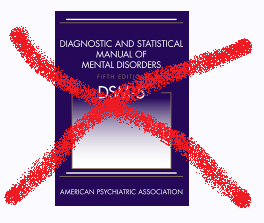
DSM5NIMH to ditch DSM

Earlier this week, in a blog dated April 29, Thomas Insel, National Institute of Mental Health’s Director, quietly drove another nail into the coffin of DSM-5.

NIMH, part funders of the 13 DSM-5 Research Planning Conferences held between 2004 and 2008 and the monographs that resulted out of them, announced that NIMH “will be re-orienting its research away from DSM categories.”

I don’t have figures for how much funding NIMH has sunk into the development of DSM-5.

This announcement comes just three weeks before the American Psychiatric Association launches its next edition of the Diagnostic and Statistical Manual of Mental Disorders, with a clutch of spin off publications scheduled for release in May and September.

APA has yet to issue a statement or comment in the press.

At the end of this post are links to the NIMH Research Domain Criteria (RDoC) posted in 2011, and a commentary by James Phillips, MD, for Psychiatric Times, from April 2011: “DSM-5 and the NIMH Research Domain Criteria Project.”

You can read Thomas Insel’s announcement in full, below, followed by a round up of media coverage.

Additional coverage and commentary is being added, as it comes in, below the NIMH announcement in the pale blue box.

Most recently added: Dr Tad; Neurocritic BlogSpot

+++
On April 24, in Mental health: On the spectrum, Nature had reported:

Research suggests that mental illnesses lie along a spectrum — but the field’s latest diagnostic manual still splits them apart…

“…The APA claims that the final version of DSM-5 is a significant advance on the previous edition and that it uses a combination of category and dimensional diagnoses. The previously separate categories of substance abuse and substance dependence are merged into the new diagnosis of substance-use disorder. Asperger’s syndrome is bundled together with a handful of related conditions into the new category called autism-spectrum disorder; and OCD, compulsive hair-pulling and other similar disorders are grouped together in an obsessive–compulsive and related disorders category. These last two changes, Regier says, should help research scientists who want to look at links between conditions. “That probably won’t make much difference to treatment but it should facilitate research into common vulnerabilities,” he says.

“The Research Domain Criteria project is the biggest of these research efforts. Last year, the NIMH approved seven studies, worth a combined US$5 million, for inclusion in the project — and, Cuthbert says, the initiative “will represent an increasing proportion of the NIMH’s translational-research portfolio in years to come”. The goal is to find new dimensional variables and assess their clinical value, information that could feed into a future DSM.

“One of the NIMH-funded projects, led by Jerzy Bodurka at the Laureate Institute for Brain Research in Tulsa, Oklahoma, is examining anhedonia, the inability to take pleasure from activities such as exercise, sex or socializing. It is found in many mental illnesses, including depression and schizophrenia.

“Bodurka’s group is studying the idea that dysfunctional brain circuits trigger the release of inflammatory cytokines and that these drive anhedonia by suppressing motivation and pleasure. The scientists plan to probe these links using analyses of gene expression and brain scans. In theory, if this or other mechanisms of anhedonia could be identified, patients could be tested for them and treated, whether they have a DSM diagnosis or not.

“One of the big challenges, Cuthbert says, is to get the drug regulators on board with the idea that the DSM categories are not the only way to prove the efficacy of a medicine. Early talks about the principle have been positive, he says. And there are precedents: “Pain is not a disorder and yet the FDA gives licences for anti-pain drugs,” Cuthbert says.

“Going back to the drawing board makes sense for the scientists, but where does it leave DSM-5? On the question of dimensionality, most outsiders see it as largely the same as DSM-IV. Kupfer and Regier say that much of the work on dimensionality that did not make the final cut is included in the section of the manual intended to provoke further discussion and research. DSM-5 is intended to be a “living document” that can be updated online much more frequently than in the past, Kupfer adds. That’s the reason for the suffix switch from V to 5; what comes out next month is really DSM-5.0. Once the evidence base strengthens, he says, perhaps as a direct result of the NIMH project, dimensional approaches can be included in a DSM-5.1 or DSM-5.2…”

National Institute of Mental Health (NIMH) announcement

Transforming Diagnosis

By Thomas Insel on April 29, 2013

Thomas R. Insel, M.D., is Director of the National Institute of Mental Health (NIMH).

“…Patients with mental disorders deserve better. NIMH has launched the Research Domain Criteria (RDoC) project to transform diagnosis by incorporating genetics, imaging, cognitive science, and other levels of information to lay the foundation for a new classification system…”

“…That is why NIMH will be re-orienting its research away from DSM categories. Going forward, we will be supporting research projects that look across current categories – or sub-divide current categories – to begin to develop a better system….”

+++


Dr Tad Blog

Paradigms lost: NIMH, McGorry & DSM-5’s failure

Dr Tad | May 4, 2013


Neurocritic Blogspot

RDoC Dimensional Approach for Research vs. DSM-5 for Diagnosis

Neurocritic | May 5, 2013


Article in Romanian

DESCOPERĂ

Cea mai importantă ştiinţă a minţii umane, psihiatria, se transformă în urma unei decizii importante


Article in French

Psychomédia

Le National Institute of Mental Health (NIMH) américain se distance du DSM-5 de l’American Psychiatric Association

Soumis par Gestion le 3 mai 2013

“Le National Institute of Mental Health (NIMH) américain réoriente ses recherches en se distançant du DSM, le Diagnostic and Statistical Manual of Mental Disorders, dont la cinquième édition sera lancée par l’American Psychiatric Association le 22 mai, explique son directeur, Thomas Insel, dans un billet publié le 29 avril…”


Article in Turkish

Psikiyatristler DSM tanı kriterlerini terk ediyor!

Dünyadaki en büyük ruh sağlığı araştırma kurumlarından ABD Ulusal Sağlık Kurumu (NIMH), psikiyatrik rahatsızlıkların semptomlara bağlı olarak belirlenmesine dayanan tanı yöntemini terk ediyor.

Pazar, 05 Mayıs 2013


Scientific American John Horgan Blog

Psychiatry in Crisis! Mental Health Director Rejects Psychiatric “Bible” and Replaces With… Nothing

“NIMH director Insel doesn’t mention it, but I bet his DSM decision is related to the big new Brain Initiative, to which Obama has pledged $100 million next year.”

John Horgan | May 4, 2013


Psychology Today
Side Effects | Christopher Lane Ph.D.

The NIMH Withdraws Support for DSM-5
The latest development is a humiliating blow to the APA.

Christopher Lane, Ph.D. | May 4, 2013


Government Health IT

NIMH moving beyond DSM

Anthony Brino, Associate Editor | May 3, 2013


1 Boring Old Man

old news…

1 Boring Old Man | May 3, 2013


Previously posted

Mindhacks blog

National Institute of Mental Health abandoning the DSM

“In a potentially seismic move, the National Institute of Mental Health – the world’s biggest mental health research funder, has announced only two weeks before the launch of the DSM-5 diagnostic manual that it will be “re-orienting its research away from DSM categories”.

In the announcement, NIMH Director Thomas Insel says the DSM lacks validity and that “patients with mental disorders deserve better”.

This is something that will make very uncomfortable reading for the American Psychiatric Association as they trumpet what they claim is the ‘future of psychiatric diagnosis’ only two weeks before it hits the shelves.

As a result the NIMH will now be preferentially funding research that does not stick to DSM categories…”


New Scientist

Psychiatry divided as mental health ‘bible’ denounced

Andy Coghlan and Sara Reardon | May 3, 2013

“The world’s biggest mental health research institute is abandoning the new version of psychiatry’s “bible” – the Diagnostic and Statistical Manual of Mental Disorders, questioning its validity and stating that “patients with mental disorders deserve better”. This bombshell comes just weeks before the publication of the fifth revision of the manual, called DSM-5…”

“…We cannot succeed if we use DSM categories as the gold standard,” says Insel. “That is why NIMH will be reorienting its research away from DSM categories,” says Insel. Prominent psychiatrists contacted by New Scientist broadly support Insel’s bold initiative. However, they say that given the time it will take to realise Insel’s vision, diagnosis and treatment will continue to be based on symptoms.

“Insel is aware that what he is suggesting will take time – probably at least a decade, but sees it as the first step towards delivering the “precision medicine” that he says has transformed cancer diagnosis and treatment. It’s potentially game-changing, but needs to be based on underlying science that is reliable,” says Simon Wessely of the Institute of Psychiatry at King’s College London. “It’s for the future, rather than for now, but anything that improves understanding of the etiology and genetics of disease is going to be better [than symptom-based diagnosis].”


New Scientist opinion piece

One manual shouldn’t dictate US mental health research

“The new edition of the DSM “bible” is so flawed that the US National Institute of Mental Health is right to abandon it, says Allen Frances”

Allen Frances, MD | May 3, 2013


@AllenFrancesMD on Twitter

@AllenFrancesMD: @dxrevisionwatch Hype alert. The NIMH dx approach is a necessary, but guarantees nothing in the future and offers nothing in the present.


The Verge

Federal institute for mental health abandons controversial ‘bible’ of psychiatry

Katie Drummond | May 3, 2013

“In a surprising move, the US government institute responsible for overseeing mental health research is distancing itself from the Diagnostic and Statistical Manual of Mental Disorders, or DSM. The DSM has, for several decades, been perceived as the “bible” that delegates how psychiatric illnesses are defined, diagnosed, and treated.”

“The National Institute of Mental Health (NIMH) — which funds more research into mental illness than any other agency in the world — this week announced a plan to re-orient its investigations “away from DSM categories.” The move comes mere weeks before the publication of the DSM-5, an update to the manual that’s been mired in controversy because of several contentious changes to existing diagnostic criteria…”


CBS News

National Institute of Mental Health no longer will use DSM diagnoses in studies

Stephanie Pappas | Livescience.com | May 3, 2013


Pharmalive

NIMH Director Says The Bible Of Psychiatry Lacks Validity

Ed Silverman | May 3, 2013


MIT Technology Review

NIMH Will Drop Widely Used Psychiatry Manual

Susan Young | May 3, 2013


Science 2.0

NIMH Delivers A Kill Shot To DSM-5

By Hank Campbell | May 3, 2013


Pacific Standard [Not on NIMH announcement]

Psychiatry’s Contested Bible: How the New DSM Treats Addiction

The 1,000-page psychiatrists’ Big Book will redefine addiction. Critics are already demanding a boycott.

Michael Dhar | May 3, 2013


Drug Rehab [Not on NIMH announcement]

Somatic Symptom Disorder

drugrehab in Mental Health | April 30, 2013

+++

Related material

DSM-5 and the NIMH Research Domain Criteria Project  Psychiatric Times, James Phillips, MD, April 13, 2011

NIMH Research Domain Criteria (RDoC)  Draft 3.1: June, 2011

+++

DSM-5 Round up: April #3

Post #240 Shortlink: http://wp.me/pKrrB-2T2

“…Psychiatry has already reached far into our daily lives, and it’s not by virtue of the particulars of any given D.S.M. It’s because the A.P.A., a private guild, one with extensive ties to the drug industry, owns the naming rights to our pain. That so significant a public trust is in private hands, and on such questionable grounds, is what we ought to worry about.”
           The New Yorker, April 9, 2013

The Book of Woe

Gary Greenberg is a Connecticut psychotherapist, author of four books and cultivator of an impressive braid.

Greenberg’s new book The Book of Woe: The DSM and the Unmaking of Psychiatry on the politics and controversies surrounding the making of DSM is published by Blue Rider Press on May 2. Read an excerpt here.

Extracts from “Manufacturing Depression” (Harpers, May 2007), essays, articles and other writings can be read here. Media interviews and podcasts here.

Gary Greenberg blogs here.

Interview with Gary Greenberg:

The Atlantic

The Real Problems With Psychiatry

A psychotherapist contends that the DSM, psychiatry’s “bible” that defines all mental illness, is not scientific but a product of unscrupulous politics and bureaucracy.

“…take the damn thing away from them.”

Hope Reese | May 2, 2013

+++
DSM-5 Media Round up: April #3

Nature | News Feature

Nature Volume: 496, Pages: 416–418 Date published: (25 April 2013) DOI:doi:10.1038/496416a

Mental health: On the spectrum

Research suggests that mental illnesses lie along a spectrum — but the field’s latest diagnostic manual still splits them apart.

David Adam | April 24, 2013

p. 397 Editorial

+++

Globe and Mail (Canada)

When did life itself become a treatable mental disorder?

Patricia Pearson | Special to The Globe and Mail | April 27, 2013

+++

+++

Plos Open Access

Perspective doi:10.1371/journal.pbio.1001544

Subgrouping the Autism “Spectrum”: Reflections on DSM-5

Meng-Chuan Lai, Michael V. Lombardo, Bhismadev Chakrabarti, Simon Baron-Cohen

+++

Monitor on Psychology (Organ of the American Psychological Association)

The Next DSM

A look at the major revisions of the Diagnostic and Statistical Manual of Mental Disorders, due out next month.

Rebecca A Clay | April 2013

+++

Psychology Today

Saving Normal

The International Reaction to DSM-5

Allen Frances, MD | April 23, 2013

For WPA/WHO survey of global usage of ICD-10 v DSM-5 see Presentation slides: Slides 17 and 18:
Revising the ICD Definition of Intellectual Disability: Implications and Recommendations March 19, 2013
Data from World Psychiatry. 2011 Jun;10(2):118-31.
The WPA-WHO Global Survey of Psychiatrists’ Attitudes Towards Mental Disorders Classification.
Reed GM, Mendonça Correia J, Esparza P, Saxena S, Maj M. Free full paper

+++

Huffington Post Allen Frances MD
Allen Frances MD, Professor Emeritus, Duke University | April 21, 2013

+++

Slide presentation David J Kupfer

Psychiatry Update – American College of Physicians | March 2, 2013

www.acponline.org/about_acp/chapters/va/13mtg/kupfer_psychiatryupdate.pptx

File Format: Microsoft Powerpoint .pptx

(Emerging options for DSM-5 Primary Care Version from Slide 18)

++

Psychiatric News | April 19, 2013
Volume 48 Number 8 page 5-5
10.1176/appi.pn.2013.4b14
American Psychiatric Association

Professional News

Gambling Disorder to Be Included in Addictions Chapter

Mark Moran | April 19, 2013

+++

Full paper PDF:

www.luc.edu/law/media/law/students/publications/llj/pdfs/hass.pdf

Could the American Psychiatric Association Cause You Headaches? The Dangerous Interaction between the DSM-5 and Employment Law

Douglas A. Hass | March 9, 2013

+++

Scientific American

New DSM-5 Ignores Biology of Mental Illness

The latest edition of psychiatry’s standard guidebook neglects the biology of mental illness. New research may change that

Ferris Jabr | April 2013

+++

UK Times

First, the good news: you’re not having a nervous breakdown

John Naish | April 16, 2013

Behind a paywall

+++

+++

ICD-11 Round up: April #1

ICD-11 Round up: April #1

Post #239 Shortlink: http://wp.me/pKrrB-2Qy

[PMID 23583019]

The Lancet, Early Online Publication, 11 April 2013
doi:10.1016/S0140-6736(12)62191-6

Proposals for mental disorders specifically associated with stress in the International Classification of Diseases-11

Maercker A, Brewin CR, Bryant RA, Cloitre M, Reed GM, Ommeren MV, Humayun A, Jones LM, Kagee SA, Llosa AE, Rousseau C, Somasundaram DJ, Souza R, Suzuki Y, Weissbecker I, Wessely SC, First MB, Saxena S.

Mental disorders specifically associated with stress are exceptional in needing external events to have caused psychiatric symptoms for a diagnosis to be made. The specialty of stress-associated disorders is characterised by lively debates, including about the extent to which human suffering should be medicalised, 1 and the purported overuse of the diagnosis of post-traumatic stress disorder (PTSD). 2 Most common mental disorders are potentiated or exacerbated by stress and childhood adversity…

Contributors
AM, CRB, RAB, MC, GMR, MvO, SW, MBF, and SS were the core writing group. AH, LJ, SAK, AEL, CR, DS, RS, YS, and IW discussed the text and gave feedback to the core writing group.
Conflicts of interest
AM, CRB, RAB, MC, AH, LJ, SAK, CR, DS, SCW, and YS are members of the WHO ICD-11 Working Group on the Classification of Disorders Specifically Associated with Stress, reporting to the WHO International Advisory Group for the Revision of ICD-10 Mental and Behavioural Disorders. GMR, MvO, and SS are members of the WHO Secretariat, Department of Mental Health and Substance Abuse. AEL, RS, IW, and MBF are special invitees to Working Group meetings. However, the views expressed in this article are those of the authors and, except as specifically noted, do not represent the official policies or positions of the International Advisory Group or WHO.
[Subscription required for full paper. A PDF may be available on authors’ personal websites or academic websites.]

+++

According to CDC’s, Donna Picket, as reported by AHIMA (American Health Information Management Association), “ICD-11 would likely not be ready for implementation in the US until after 2020.”

AHIMA

Update: ICD-11 on Track For 2015

Melanie Endicott | AHIMA & ICD-10 & ICD-10/CAC Summit | April 23, 2013

While the United States is preparing to implement ICD-10-CM/PCS on October 1, 2014, the World Health Organization (WHO) is anticipating a 2015 release of ICD-11. Taking into account the need to then clinically modify the WHO version, ICD-11 would likely not be ready for implementation in the US until after 2020. Donna Pickett, MPH, RHIA, medical systems administrator at Centers for Disease Control and Prevention/National Center for Health Statistics, delivered an update on the progress of ICD-11 development in Monday’s presentation “ICD-11 Update” at the 2013 AHIMA ICD-10-CM/PCS and Computer-Assisted Coding Summit, taking place in Baltimore, MD this week...  Read on

+++

Go here to view ICD-11 Beta drafting platform public version

http://www.who.int/classifications/icd/revision/betaexpectations/en/

ICD-11 Beta: Expectations, Concerns and Known Issues

Information for Beta Participants

ICD-11 Beta Phase started on 14 May 2012. The objective is to have a final ICD-11 version by 2015. This announcement clarifies that ICD-11 Beta version is not final, and will be enhanced by input from multiple stakeholders during the beta phase, which will last 3 years.

Caveats
Problems and Issues
Concerns and Criticisms etc

http://www.who.int/classifications/icd/revision/en/index.html

Revision

Participate in ICD Revision
Video invitation to participate
Frequently Asked Questions About ICD-11
ICD Information Sheet
ICD Revision Information Notes
Register to become involved
Timelines
Content Model
Definitions etc

+++

Presentation | T Bedirhan Üstün

ICD Revision Summary presentation: Quality and Safety Topic Advisory Group meeting, New York, April 2-3, 2013.

ICD11 Quality and Safety TAG 2013 Presentation | Slideshare

According to this presentation, by WHO’s Bedirhan Üstün, all ICD-11 Topic Advisory Groups (TAGs) have finished their editing of the structure. A good deal of work remains for the population of content, in accordance with the ICD-11 Content Model, across all chapters and on compatibility of linearizations across primary care, specialty and detailed research versions.

+++

Presentation [PDF Format, no PP viewer required]

Revising the ICD Definition of Intellectual Disability: Implications and Recommendations | March 19, 2013

Intellectual Disability’s Long Journey: George Jesien, Ph.D., Executive Director, Association for University Centers on Disabilities (AUCD)
Intellectual Disability and the Revision of ICD-10 Mental and Behavioural Disorders: Geoffrey M. Reed, Department of Mental Health and Substance Abuse, WHO
AAIDD Proposed Recommendations for ICD-11: Marc J. Tassé, Nisonger Center – UCEDD, The Ohio State University, Webinar

On Slides 17 and 18, Classification System Most Used and Classification Most Used by Country, graphics for data from WPA-WHO Survey of Practicing Psychiatrists* on global use of ICD-10, ICD-8/9, DSM-IV and Other diagnostic system(s).

*World Psychiatry. 2011 Jun;10(2):118-31.

The WPA-WHO Global Survey of Psychiatrists’ Attitudes Towards Mental Disorders Classification.

Reed GM, Mendonça Correia J, Esparza P, Saxena S, Maj M.

Abstract

Full free paper

+++

Medscape

Schizophrenia Bulletin

Schizophr Bull.2012;38(5):895-898.

Status of Psychotic Disorders in ICD-11

Wolfgang Gaebel

Abstract and full report

+++

‘Somatic Symptom Disorder’ in Current Biology, 22 April, 2013

‘Somatic Symptom Disorder’ in Current Biology

Post #238 Shortlink: http://wp.me/pKrrB-2NG

The April 22 edition of Current Biology publishes a feature article on DSM-5 by science writer, Michael Gross, Ph.D.

The article includes quotes from Suzy Chapman and Allen Frances on the implications for diverse patient groups for the introduction of the new Somatic Symptom Disorder into the next edition of the DSM, scheduled for release in May.

The article also mentions the influence of Somatic Symptom Disorder on proposals for a new ICD category – Bodily Distress Disorder – being field tested for ICD-11 and ICD-11-PHC [1].

…Chapman and Frances are concerned that the new definition of SSD will also be reflected in ICD-11. ICD-11 is field testing a new category Bodily Distress Disorder proposed to replace six or seven existing ICD-10 somatoform disorders, which, according to working group reports on emerging proposals, mirrors the DSM-5 somatic symptom disorder definition, says Chapman.

The article can be read in full at:

Current Biology 22 April, 2013 Volume 23, Issue 8

Copyright 2013 All rights reserved. Current Biology, Volume  23, Issue  8, R295-R298, 22 April 2013

doi:10.1016/j.cub.2013.04.009

Feature

Has the manual gone mental?

Michael Gross

Full text: http://www.cell.com/current-biology/fulltext/S0960-9822(13)00417-X

PDF: http://download.cell.com/current-biology/pdf/PIIS096098221300417X.pdf

1 ICD-11 Beta drafting platform: Chapter 5: Bodily Distress Disorder: Mild; Moderate; Severe

Three BMJ letters published in response to Somatic Symptom Disorder commentary

Three letters are published this week in response to Allen Frances’ BMJ commentary on ‘Somatic Symptom Disorder’

Post #237 Shortlink: http://wp.me/pKrrB-2No

On March 19, BMJ published a commentary by Allen Frances, MD, with contribution from Suzy Chapman, in both the print and online editions, strongly opposing the inclusion of ‘Somatic Symptom Disorder’ in the forthcoming DSM-5:

PERSONAL VIEW
The new somatic symptom disorder in DSM-5 risks mislabeling many people as mentally ill
This new condition suggested in the bible of mental health diagnoses lacks specificity, says Allen Frances

The opinion piece was also featured as US Editor’s Choice:

DSM-5 and the rough ride from approval to publication
Edward Davies, US news and features editor, BMJ

BMJ press released the commentary which was picked up by a number of international media sites including UK Times and Deborah Brauser for Medscape Medical News. To date, 31 Rapid Responses have been received.

Three letters (all US respondents) are printed in this week’s BMJ print edition (20 April 2013 Vol 346, Issue 7904). The letters are behind a paywall so I am giving links to the original BMJ Rapid Responses, with the caveat that responses may have been edited for the print edition:

+++
LETTERS
New somatic symptom disorder in DSM-5

Helping to find the most accurate diagnosis

BMJ 2013; 346 doi: http://dx.doi.org/10.1136/bmj.f2228 (Published 16 April 2013) BMJ 2013;346:f2228
Joel E Dimsdale, professor of psychiatry emeritus, Michael Sharpe, professor of psychiatry, Francis Creed, professor of psychiatry, DSM-5 Somatic Symptom Disorders work group  BMJ Rapid Response 20 March 2013

+++
Guilty of diagnostic expansion

BMJ 2013; 346 doi: http://dx.doi.org/10.1136/bmj.f2254 (Published 16 April 2013) BMJ 2013;346:f2254
James Phillips, psychiatrist, USA  BMJ Rapid Response 25 March 2013

+++
A step in the wrong direction

BMJ 2013; 346 doi: http://dx.doi.org/10.1136/bmj.f2233 (Published 16 April 2013) BMJ 2013;346:f2233
Steven A King, chair, DSM-IV and DSM-IV-TR pain disorders committees; Pain Management and Psychiatry, New York  BMJ Rapid Response 28 March 2013

+++
Further reading:

Somatic Symptom Disorder could capture millions more under mental health diagnosis Suzy Chapman, May 26, 2012
Mislabeling Medical Illness As Mental Disorder Allen Frances, MD, Psychology Today, DSM 5 in Distress, December 8, 2012
Why Did DSM 5 Botch Somatic Symptom Disorder? Allen Frances, MD, Psychology Today, Saving Normal, February 6, 2013
New Psych Disorder Could Mislabel Sick as Mentally Ill Susan Donaldson James, ABC News, February 27, 2013
Dimsdale JE. Medically unexplained symptoms: a treacherous foundation for somatoform disorders? Psychiatr Clin North Am 2011;34:511-3. [PMID: 21889675]

+++
American Psychiatric Association justifications for SSD:

APA Somatic Symptom Disorder Fact Sheet 
Somatic Chapter Drops Centrality Of Unexplained Medical Symptoms Psychiatric News, Mark Moran, March 1, 2013
Somatic Symptoms Criteria in DSM-5 Improve Diagnosis, Care David J Kupfer, MD, Chair, DSM-5 Task Force, defends the SSD construct, Huffington Post, February 8, 2013

Site design in transition

Post #236 Shortlink: http://wp.me/pKrrB-2Mc
Image belgianchocolate Creative CommonsFor some time now, this site has run on WordPress theme ‘Garland’ with the Custom Design CSS upgrade. It’s time for a change.

Over the coming weeks I’ll be sampling a couple of other themes – this is WordPress ‘Truly Minimal.’

The site will be in a state of flux while I settle on a new template and customize it to better suit my content. So the appearance of the site, the font colours, leading, background and the way that quotes display may change from day to day.

With the publication of DSM-5 imminent, I shall also be taking some time over the coming months to attend to site housekeeping, updating tab pages and archiving older material.

WordPress themes are optimized for FireFox. If viewing in IE 8, 9 or 10, please view in IE Compatibility Mode or use Firefox or Chrome. Depending on OS and browser and settings, the fonts used for the site header and post headings in this theme (Droid Sans and Droid Serif) may be rendered better by IE 10 than by Firefox or Chrome.

image credit | belgianchocolate | creative commons