Clarification: Coalition for Diagnostic Rights website

Post #288 Shortlink: http://wp.me/pKrrB-3Dn

Clarification: Coalition for Diagnostic Rights

A website called Coalition for Diagnostic Rights has recently been launched.

The site includes references to Suzy Chapman and to Dx Revision Watch.

Suzy Chapman/Dx Revision Watch is not associated with or affiliated to the Coalition for Diagnostic Rights website or with any registered or unregistered organization associated with that site, and has no responsibility for content published on that site, or published in the name of that site on other platforms.

Suzy Chapman
Dx Revision Watch

Omissions in commentary: “Diagnostic Ethics: Harms vs Benefits of Somatic Symptom Disorder”

Post #287 Shortlink: http://wp.me/pKrrB-3Ch

On December 16, Allen Frances, MD, who led the task force responsible for the development of DSM-IV, published a new commentary at Huffington Post titled: Diagnostic Ethics: Harms vs Benefits of Somatic Symptom Disorder.

This commentary is also published at Saving Normal (hosted by Psychology Today) under the title: Diagnostic Ethics: Harms/Benefits- Somatic Symptom Disorder: Advice to ICD 11-don’t repeat DSM 5 mistakes.

There are a two important oversights in this commentary around ICD and DSM-5’s controversial new diagnostic category, Somatic Symptom Disorder (SSD).

Dr Frances writes:

“…The DSM-5 damage is done and will not be quickly undone. The arena now shifts to the International Classification of Diseases 11 which is currently being prepared by the World Health Organization and is due to be published in 2016. The open question is whether ICD 11 will mindlessly repeat the mistakes of DSM-5 or will it correct them?”

But Dr Frances omits to inform his readers that in September, a proposal was snuck into the Diagnosis Agenda for the fall meeting of the NCHS/CMS ICD-9-CM Coordination and Management Committee to insert Somatic Symptom Disorder as an inclusion term into the U.S.’s forthcoming ICD-10-CM*.

*ICD-10-CM has been adapted by NCHS from the WHO’s ICD-10 and will replace ICD-9-CM as the U.S.’s official mandated code set, following implementation on October 1, 2014.

+++
A foot in the door of ICD

APA has been lobbying CDC, NCHS and CMS to include new DSM-5 terms in the ICD-10-CM.

If NCHS rubber stamps the addition of Somatic Symptom Disorder as an official codable diagnostic term within ICD-10-CM, it could leverage the future replacement of several existing ICD-10-CM Somatoform disorders categories with this new, poorly validated, single diagnostic construct, bringing ICD-10-CM in line with DSM-5.

There are implications for ICD-11, too.

Once SSD is inserted into ICD-10-CM, the presence of this term within the U.S. adaptation of ICD-10 may make it easier for ICD-11 Revision Steering Group to justify the replacement of several existing ICD-10 Somatoform disorders categories with a single, new ICD construct contrived to incorporate SSD-like characteristics and facilitate harmonization between ICD-11 and DSM-5 disorder terms and diagnostic criteria.

Yet Dr Frances, so vocal since December 2012 on the perils of the new Somatic Symptom Disorder construct, has written nothing publicly about this move to insinuate the SSD term into ICD-10-CM and curiously, makes no mention of this important U.S. development in his latest commentary.

Emerging proposals for the Beta draft of ICD-11 do indeed demand close scrutiny. But U.S. professionals and patient groups need to be warned that insertion of Somatic Symptom Disorder into the forthcoming ICD-10-CM is currently under consideration by NCHS and to consider whether they are content to let this barrel through right under their noses and if not, and crucially, what courses of political action might be pursued to oppose this development.

+++
Only half the story

A second omission: Dr Frances’ commentary references the deliberations of the WHO Expert Working Group on Somatic Distress and Dissociative Disorders (a 17 member group chaired by O Gureje) which published a paper, in late 2012, reviewing the classification of the somatoform disorders, as currently defined, and discussing the group’s emerging proposals for ICD-11 [1].

But as Dr Frances is aware, this is not the only working group that is making recommendations for the revision of ICD-10’s Somatoform disorders.

The WHO Department of Mental Health and Substance Abuse has appointed a Primary Care Consultation group (PCCG) to lead the development of the revision of the mental and behavioural disorders for the ICD-11 primary care classification (known as the ICD-11-PHC), which is an abridged version of the core ICD classification.

The PCCG reports to the International Advisory Group for the Revision of ICD-10 Mental and Behavioural Disorders and comprises a 12 member group of primary care professionals and mental health specialists representing both developed and low and middle-income countries.

The group is chaired by Prof, Sir David Goldberg, professor emeritus at the Institute of Psychiatry, London (a WHO Collaborating Centre), who has a long association with WHO, Geneva, and with the development of primary care editions of ICD.

The PCCG members are: SWC Chan, AC Dowell, S Fortes, L Gask, D Goldberg (Chair), KS Jacob, M Klinkman (Vice Chair), TP Lam, JK Mbatia, FA Minhas, G Reed, and M Rosendal.

(Dr Reed is Senior Project Officer for the International Advisory Group for the Revision of ICD-10 Mental and Behavioural Disorders; Dr Klinkman is Chair, WONCA International Classification Committee; Dr Rosendal is a member of WONCA International Classification Committee.)

The PCCG has been charged with developing and field testing the full set of disorders for inclusion in ICD-11-PHC, in preparation for worldwide adoption. It is anticipated that for the next edition, 28 mental disorder categories commonly managed within primary care will be included.

For all new and revised disorders included in the next ICD Primary Care version there will need to be an equivalent disorder in the ICD-11 core classification and the two versions are being developed simultaneously.

The group will be field testing the replacement for ICD-10-PHC’s F45 Unexplained somatic symptoms over the next couple of years and multi-centre focus groups have already reviewed the PCCG‘s proposals [2].

+++
The PCCG’s alternative construct – a BDS/SSD mash-up

As set out in several previous Dx Revision Watch posts, according to its own 2012 paper, the Primary Care Consultation Group has proposed a new disorder category, tentatively named, in 2012, as “Bodily stress syndrome” (BSS) which differed in both name and construct to the emerging proposals of the WHO Expert Working Group on Somatic Distress and Dissociative Disorders.

So we have two working groups advising ICD-11 and two sets of proposals.

The defining characteristics of the PCCG’s proposed new disorder, Bodily stress syndrome (as set out in its 2012 paper), draw heavily on the characteristics, criteria and illness model for Per Fink et al’s Bodily Distress Syndrome – a divergent construct to SSD – onto which the PCCG has tacked a tokenistic nod towards selected of the psychobehavioural features that define DSM-5’s Somatic symptom disorder.

Whereas in late 2012, the emerging construct of the other working group advising on the revision of ICD-10’s Somatoform disorders, the WHO Expert Working Group on Somatic Distress and Dissociative Disorders, was much closer to a “pure” SSD construct.

Neither proposed construct may survive the ICD-11 field trials or ICD-11 Revision Steering Group approval.

Fink and colleagues (one of whom, M Rosendal, sits on the Primary Care Consultation Group) are determined to see their Bodily Distress Syndrome construct adopted by primary care clinicians, incorporated into new management guidelines and integrated into the revisions of several European classification systems.

Their aim is to replace ICD-10’s F45 somatoform disorders, pain disorder, neurasthenia (ICD-10 F48), and the so-called “functional somatic syndromes”: Fibromyalgia (ICD-10 M79.7), IBS (ICD-10 K58) and CFS (indexed to ICD-10 G93.3), with their own single, unifying “Bodily Distress Syndrome” diagnosis, a disorder construct that is already in use in research and clinical settings in Denmark.

It remains unknown whether the two groups making recommendations for the revision of ICD-10’s Somatoform disorders have since reached consensus over what disorder name, definition and criteria WHO intends to submit to international field testing over the next year or two.

It’s not yet clear whether this proposed new BDD/BSS/WHATEVER diagnosis for the ICD-11 primary care and core version construct will have greater congruency with DSM-5’s SSD, or with Fink et al’s already operationalized BDS, or would combine elements from both; nor is it known which patient populations the new ICD construct is intended to include and exclude.

(In its 2012 proposed criteria, the PCCG does not specify FM, IBS, CFS or ME as Exclusion terms or Differential diagnoses to its BSS diagnosis.)

If WHO Revision favours the field testing and progression of an SSD-like construct for ICD-11 there will be considerable implications for all patient populations with persistent diagnosed bodily symptoms or with persistent bodily symptoms for which a cause has yet to be established.

If WHO Revision favours the progression of a Fink et al BDS-like construct and illness model, such a construct would shaft patients with FM, IBS and CFS and some other so-called “functional somatic syndromes.”

But Dr Frances says nothing at all in his commentary about the deliberations of the Primary Care Consultation Group despite the potential impact the adoption of a Fink et al BDS-like disorder construct would have on the specific FM, IBS, CFS and ME classifications that are currently assigned discrete codes outside the mental disorder chapter of ICD-10.

In sum:

The proposal to insert SSD into the U.S.’s forthcoming ICD-10-CM needs sunlight, continued monitoring and opposition at the political level by professionals and advocacy groups. Exclusive focus on emerging proposals for ICD-11 obscures the September 2013 NCHS/CMS proposals for ICD-10-CM.

The deliberations of both working groups that are making recommendations for the revision of the Somatoform Disorders for the ICD-11 core and primary care versions demand equal scrutiny, monitoring and input by professional and advocacy organization stakeholders.

It is disconcerting that whilst several paragraphs in Dr Frances’ commentary are squandered on apologia for those who sit on expert working groups, these two crucial issues have been sidelined.

+++
References

1. Creed F, Gureje O. Emerging themes in the revision of the classification of somatoform disorders. Int Rev Psychiatry. 2012 Dec;24(6):556-67. http://www.ncbi.nlm.nih.gov/pubmed/23244611 [Full text behind paywall]

2. Lam TP, Goldberg DP, Dowell AC, Fortes S, Mbatia JK, Minhas FA, Klinkman MS: Proposed new diagnoses of anxious depression and bodily stress syndrome in ICD-11-PHC: an international focus group study. Fam Pract 2012 Jul 28. http://www.ncbi.nlm.nih.gov/pubmed/22843638 [Full text behind paywall]

3. Further reading: BDS, BDDs, BSS, BDD and ICD-11, unscrambled

4. ICD-9-CM/PCS Coordination and Maintenance Committee Meeting September 18-19, 2013:
http://www.cdc.gov/nchs/icd/icd9cm_maintenance.htm

September meeting Diagnostic Agenda/Proposals document [PDF – 342 KB]:
http://www.cdc.gov/nchs/data/icd/icd_topic_packet_sept_181913.pdf

Compiled by Suzy Chapman for Dx Revision Watch

ICD-11 December Round up #1

Post #286 Shortlink: http://wp.me/pKrrB-3AJ

“The current ICD Revision Process timeline foresees that the ICD is submitted to the WHA in 2015 May and could then be implemented…experience obtained thus far, however, suggests that this timeframe will be extremely tight for paying due diligence to the work especially in terms of: appropriate consultations with expert groups; communication and dissemination with stakeholders; and sufficient time for field testing in multiple countries and settings, and carrying out the resulting edits.”   B Üstün, September 2013

In this September posting, I reported that a further extension to the ICD-11 timeline is under consideration.

This document and this slide presentation (Slides 29 thru 35) indicate that ICD-11 Revision is failing to meet development targets.

In a review of progress made, current status and timelines (document Pages 5 thru 10), Dr Bedirhan Üstün, Coordinator, Classification, Terminology and Standards, World Health Organization, sets out the options for postponement and discusses whether submission of ICD-11 for World Health Assembly approval should be delayed until 2016, or possibly 2017.

I will update as further information on any decision to extend the timeline emerges.

+++
Round up of ICD-11 related materials:

Slide presentation: PDF format, mostly in German

58. GMDS-Jahrestagung, Lübeck, 1.-5.9.2013: Symposium, Medizinische, Klassificationen und Termiologien Vortrag Üstün und Jakob, 5.9.2013

ICD-11 Übersicht Üstün und Jakob

Slide presentation: Slideshare format, in English

Regional Conference of the International Society for Adolescent Psychiatry and Psychology (ISAPP)

Diagnostic Classifications in the 21st Century: how can we capture developmental details Bedirhan Üstün, Coordinator, World Health Organization, November 24, 2013

Multisystem diseases and terms with multiple parents:

In 2010, ICD-11 Revision posted this Discussion Document: Multisystem Disorders, Aymé, Chalmers, Chute, Jakob.

The text sets out the feasibility, rationale for and possible scope of a new multisystem disorders chapter for ICD-11 for diseases that might belong to or affect multiple body systems.

A more recent working document (WHO ICD Revision Information Note, R Chalmers, MS docx editing format, dated 29 January 2013) updates the discussion and concludes that a majority of ICD Revision Topic Advisory Groups and experts did not agree with the recommendation to create a new Multisystem Disease Chapter for ICD-11 and that other options for accommodating diseases which straddle multiple chapters were being considered.

According to ICD-11 Beta drafting platform, the ICD-11 Foundation Component will allow for a single concept to be represented in a Multisystem Disease linearization and appear in more than one logically appropriate location. In the linearizations (e.g. Morbidity), a single concept has a single preferred location and references [to the term] from elsewhere [within the same chapter or within a different chapter] are greyed out but link to the preferred location.

For example, skin tumour is both a skin disease and a neoplasm and for ICD-11 is located under two chapters. Other diseases that are proposed to be assigned multiple parents include some eye diseases resulting from diabetes; tuberculosis meningitis (as both an infectious and a nervous system disease) and Premenstrual dysphoric disorder (PMDD), currently proposed to be dual coded under Chapter 15 Diseases of the genitourinary system under parent term, Premenstrual tension syndrome but also listed under Chapter 5 Mental and behavioural disorders under Depressive disorders.

While previous versions of ICD did not support multiple inheritance, there are already over 450 terms with multiple parents within ICD-11.

Editorial commentary, ICD-11 Neurological disorders:

J Neurol Neurosurg Psychiatry doi:10.1136/jnnp-2013-307093

The classification of neurological disorders in the 11th revision of the International Classification of Diseases (ICD-11)

Sanjeev Rajakulendran¹, Tarun Dua², Melissa Harper², Raad Shakir¹

1 Imperial College NHS Healthcare Trust, Charing Cross Hospital, London, UK; 2 Department of Mental Health and Substance Abuse, World Health Organization, Geneva, Switzerland

Published Online First 18 November 2013 [Full text behind paywall]

Abstract: http://www.ncbi.nlm.nih.gov/pubmed/24249782

Single page extract as image: http://jnnp.bmj.com/content/early/2013/11/18/jnnp-2013-307093.extract

(If a single page text file fails to load at the above link, try pasting the editorial title into a search engine and access the page from the search engine link.)

Primary Care version of ICD-11 (ICD-11-PHC):

The ICD-10-PHC is an abridged version of the ICD-10 core classification for use in primary care and low resource settings. A new edition (ICD-11-PHC) is being developed simultaneously with the core ICD-11.

For all new and revised disorders included in the ICD-11 Primary Care version there will need to be an equivalent disorder in the ICD-11 core classification.

The Mental and behavioural disorders section of ICD-11-PHC is expected to list 28 mental and behavioural disorders most commonly managed within primary care settings, as opposed to over 400 disorders in Chapter 5 of the core version.

The following ICD-10-PHC disorders are proposed to be dropped for ICD-11-PHC:

F40 Phobic disorders; F42.2 Mixed anxiety and depression; F43 Adjustment disorder;
F45 Unexplained somatic symptoms; F48 Neurasthenia; Z63 Bereavement, Source [4].

A list of the 28 proposed disorders for ICD-11-PHC, as they stood in 2012*, can be found on Page 51 of Source [5].

*This list may have undergone revision since the source published.

A new disorder term “Anxious depression” is proposed to be field tested for inclusion in ICD-11-PHC and is discussed in this recent paper by Prof, Sir David Goldberg, who chairs the Primary Care Consultation Group (PCCG) charged with the development of the primary care classification of mental and behavioural disorders for ICD-11:

Abstract: http://onlinelibrary.wiley.com/doi/10.1002/da.22206/abstract

Depression and Anxiety

DOI: 10.1002/da.22206

Review ANXIOUS FORMS OF DEPRESSION

David P. Goldberg

Article first published online: 27 NOV 2013 [Full text behind paywall]

There are further commentaries on the proposed new diagnoses of “anxious depression” and “bodily stress syndrome” in this 2012 paper:

Lam TP, Goldberg DP, Dowell AC, Fortes S, Mbatia JK, Minhas FA, Klinkman MS: Proposed new diagnoses of anxious depression and bodily stress syndrome in ICD-11-PHC: an international focus group study. Fam Pract 2012 Jul 28. http://www.ncbi.nlm.nih.gov/pubmed/22843638 [Full text behind paywall]

According to this earlier paper, the Primary Care Consultation Group (PCCG) was still refining a construct and criteria for its proposed new disorder category, which the group had tentatively named as “Bodily stress syndrome” (BSS).

BSS would replace ICD-10-PHC’s Unexplained somatic symptoms and Neurasthenia categories and would be located under a new disorder group section heading called “Body distress disorders,” under which would sit three other discrete disorders. See Page 51 of Source [5].

The characteristics of new disorder 15: Bodily stress syndrome (as they appeared in the paper) might be described as a mash-up between selected of the psychobehavioural characteristics that define DSM-5’s new Somatic symptom disorder (SSD) and selected of the characteristics and criteria for Fink et al’s Bodily Distress Syndrome – rather than a mirror or near mirror of one or the other.

In order to facilitate harmonization between ICD-11 and DSM-5 mental and behavioural disorders, we might envisage pressure on the group to align with or accommodate DSM-5’s new Somatic symptom disorder within any framework proposed to replace the existing ICD Somatoform disorders.

But DSM-5’s SSD and Fink et al’s BDS are acknowledged by Creed, Henningsen and Fink as divergent constructs, so this presents the groups advising ICD Revision with a dilemma if they are also being influenced to recommend a BDS-like construct.

You can compare how these two constructs differ and appreciate why it may be proving difficult to convince ICD Revision of the utility of the PCCG’s BSS construct (and the potential for confusion where different constructs bear very similar names) in my table at the end of Page 1 of this Dx Revision Watch post:

BDS, BDDs, BSS, BDD and ICD-11, unscrambled

Marianne Rosendal (member of the ICD-11 Primary Care Consultation Group; member of WONCA International Classification Committee), Fink and colleagues are eager to see their Bodily distress syndrome construct adopted by primary care clinicians and incorporated into management guidelines and revisions of European classification systems to replace ICD-10’s F45 somatoform disorders, pain disorder, neurasthenia (ICD-10 F48), and the so-called “functional somatic syndromes,”  Fibromyalgia (ICD-10 M79.7), IBS (ICD-10 K58) and CFS (indexed to ICD-10 G93.3). See graphics at end of post.

While Fink et al’s BDS construct seeks to capture somatoform disorders, pain disorder, neurasthenia and the so-called functional somatic syndromes under a single, unifying diagnosis, it is unclear from the 2012 Lam et al paper whether and how the so-called functional somatic syndromes are intended to fit into the Primary Care Consultation Group’s proposed ICD-11 framework.

While the paper does list some exclusions and differential diagnoses, it lists no specific exclusions or differential diagnoses for FM, IBS or CFS and it is silent on the matter of which of the so-called functional somatic syndromes the group’s proposed new BSS diagnosis might be intended to be inclusive of, or might intentionally or unintentionally capture.

Nor is it discussed within the paper what the implications would be for the future classification and chapter location of several currently discretely coded ICD-10 entities, if Bodily stress syndrome (or whatever new term might eventually be agreed upon) were intended to capture all or selected of FM, IBS, CFS and (B)ME – the sensitivities associated with any such proposal would not be lost on Prof Goldberg which possibly accounts for the lacunae in this paper.

Lack of consensus between the two groups advising ICD-11:

The second working group advising ICD-11 on the revision of ICD-10’s Somatoform disorders is the WHO Expert Working Group on Somatic Distress and Dissociative Disorders (S3DWG).

In late 2012, their emerging construct (also published behind a paywall) had considerably more in common with DSM-5’s SSD construct than with Fink et al’s BDS (see: BDS, BDDs, BSS, BDD and ICD-11, unscrambled).

But the S3DWG’s construct Bodily distress disorder (BDD) and Severe bodily distress disorder are yet to be defined and characterised in the public version of the ICD-11 Beta draft.

It remains unknown whether the two groups making recommendations for the revision of ICD-10’s Somatoform disorders have reached consensus over what definition and criteria WHO intends to field trial over the next year or two and what this proposed new diagnosis should be called; whether their proposed BDD/BSS/WHATEVER construct will have greater congruency with DSM-5’s SSD or with Fink et al’s BDS, or what patient populations this new ICD construct is intended to include and exclude.

The absence of information on proposals within the Beta draft, itself, and the lack of working group progress reports placed in the public domain presents considerable barriers for stakeholder comment on the intentions of these two groups and renders threadbare ICD-11’s claims to be an “open” and “transparent” and “inclusive” collaborative process.

Two further papers relating to “Medically unexplained symptoms,” “Bodily distress syndrome” and “Somatoform disorders”:

http://www.sciencedirect.com/science/article/pii/S0163834313002533

General Hospital Psychiatry

Psychiatric–Medical Comorbidity

Is physical disease missed in patients with medically unexplained symptoms? A long-term follow-up of 120 patients diagnosed with bodily distress syndrome

Elisabeth Lundsgaard Skovenborg, B.Sc., Andreas Schröder, M.D., Ph.D.

The Research Clinic for Functional Disorders and Psychosomatics, Aarhus University Hospital, Denmark

Available online 22 October 2013 In Press, Corrected Proof [Full text behind paywall]

http://www.systematicreviewsjournal.com/content/2/1/99

Systematic Reviews 2013, 2:99 doi:10.1186/2046-4053-2-99

Barriers to the diagnosis of somatoform disorders in primary care: protocol for a systematic review of the current status

Alexandra M Murray¹²*, Anne Toussaint¹², Astrid Althaus¹² and Bernd Löwe¹²

1 Department of Psychosomatic Medicine and Psychotherapy, University Medical Center Hamburg-Eppendorf, Hamburg, Germany

2 University Hospital of Psychosomatic Medicine and Psychotherapy, Schön Clinic Hamburg-Eilbek, Hamburg, Germany

Published: 8 November 2013

[Open access article distributed under the terms of the Creative Commons Attribution License]

Finally, brief summaries of selected of the workshops held at the European Association for Consultation-Liaison Psychiatry and Psychosomatics (EACLPP) 2012 Conference, including workshops on “functional disorders and syndromes” and “Bodily distress,” one of which included:

http://www.eaclpp-ecpr2012.dk/Home/DownloadWorkshop

“…brief presentations which describe the present state of the proposed changes to Primary care classifications (ICPC and ICD for primary care) (MR) and DSM-V and ICD-11 (FC).”

where presenter “MR” is Marianne Rosendal; “FC” is Francis Creed, member of the ICD-11 Expert Working Group on Somatic Distress and Dissociative Disorders (S3DWG).

Note: ICPC-2 used in primary care is also under revision.

Foreslået ny klassifikation (Suggested new classification, Fink et al): 
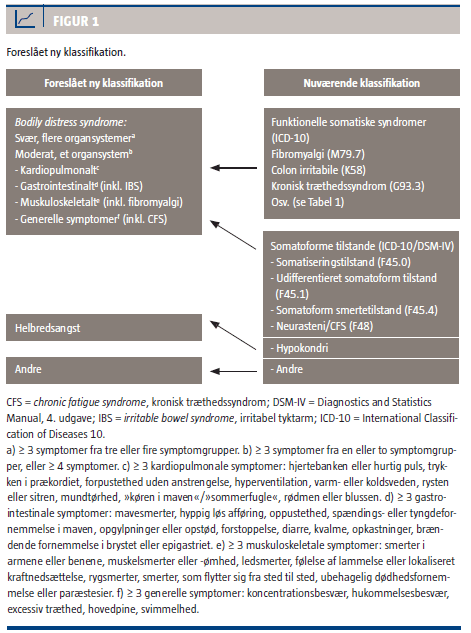
Source Figur 1: http://www.ugeskriftet.dk/LF/UFL/2010/24/pdf/VP02100057.pdf

Danish Journal paper Fink P

Fink: Proposed New Classification

+++
References

1. WHO considers further extension to ICD-11 development timeline

2. Committee for the Coordination of Statistical Activities, Twenty-second Session 4-6 September 2013, Items for discussion and decision: Item 8 of the provisional agenda, 3 September 2013 Full document in PDF format

3. Slide presentation: ICD Revision: Where are we? What remains to be done? Shall we have ICD WHA submission in 2015 or later? Bedirhan Ustun, World Health Organization Classifications, Terminologies, Standards, ICD Revision: Quality Safety Meeting 2013, September 9-10, 2013 http://www.slideshare.net/ustunb/icd-2013-qs-tag-26027668

4. Goldberg, D. Guest editorial. A revised mental health classification for use in general medical settings: the ICD11–PHC 1. International Psychiatry, Page 1, February 2011. http://www.rcpsych.ac.uk/pdf/IPv8n1.pdf

5. Goldberg DP. Comparison Between ICD and DSM Diagnostic Systems for Mental Disorders. In: Sorel E, (Ed.) 21st Century Global Mental Health. Jones & Bartlett Learning, 2012: 37-53. Free PDF, Sample Chapter Two: http://samples.jbpub.com/9781449627874/Chapter2.pdf

Compiled by Suzy Chapman for Dx Revision Watch
Media coverage: Karina Hansen now detained six months against her will in Hammel Neurocenter, Denmark

Post #273 Shortlink: http://wp.me/pKrrB-3kV

Update at September 9: According to reports linked to by ME Forenginen, Danmark, on Facebook:

The Hansen parents had a court hearing on September 5, 2013, to challenge the legality of Karina’s guardianship. Karina’s removal from her home by the authorities and her continued detention at Hammel Neurocenter was not scheduled to be covered during the court proceedings.

The Danish Aktion Karina/Term group that has been protesting outside Hammel Neurocenter and the Aarhus Research Clinic for Functional Disorders (the clinic that is advising Hammel Neurocenter on Ms Hansen’s treatment), are planning a new demonstration in front of the Ministry of Health. The event is scheduled for September 26, in Copenhagen.

For more information on this event: https://www.facebook.com/events/536076826466062/

Update at August 30: It is understood that a meeting between the Hansen parents and physicians at Hammel Neurocenter took place on Tuesday, August 28; that Dr Gerdes and lawyer, Mr Tørnes, were not permitted to attend this meeting and that the parents were denied access to visit their daughter.* I will post further information if and when an official update is released.

*Source: https://www.facebook.com/meforeningen.dk

There have been further protests staged, this week, at Hammel Neurocenter:

Aktion Karina – Myalgisk Encephalomyelitis (ME) Aktion 2, Dag 1:

http://www.youtube.com/watch?v=lFfilet_upo

Update: According to ME Forenginen, Danmark, on Facebook, the Hansen parents have been called to a meeting in the next couple of weeks with Merete Stubkjær Christensen, chief physician, Regionshospitalet, Hammel Neurocenter. Doctor Stig Gerdes and lawyer, Paul Tørnes, have sent a further letter to the Aarhus Research Clinic for Functional Disorders (that is advising Hammel Neurocenter on Ms Hansen’s treatment), following a telephone conversation with the Clinic. It is understood that Dr Gerdes and Mr Tørnes were hoping to attend this anticipated meeting with Merete Stubkjær Christensen to support the parents.

Update: YouTube: Danish Aktion Karina/Term group protest (Day 5):
http://www.youtube.com/watch?v=0tAAJvJmhH4

Update: YouTube: Danish Aktion Karina/Term group protest Hammel Neurocenter (Day 4): http://www.youtube.com/watch?v=OqDUJworpaY

Update: New article, August 14: Dagbladet Holstebro (Subscription required for access)

http://dagbladet-holstebro-struer.dk/holstebro/beskyldte-mor-for-alvorlige-svigt-af-syg-datter

Beskyldte mor for alvorlige svigt af syg datter (Accused mother of serious failure of sick daughter)

Update: YouTubes: Danish Aktion Karina/Term group protests about Karina Hansen’s treatment (Days 1 to 5):

Aktion Karina Day 1: http://www.youtube.com/watch?v=zDBhlnw6DMo

Aktion Karina Day 2: http://www.youtube.com/watch?v=yAf2fH8qhuQ

Aktion Karina Day 3: http://www.youtube.com/watch?v=vpCd9ZGAEY8

Aktion Karina Day 4: http://www.youtube.com/watch?v=OqDUJworpaY

Aktion Karina Day 5: http://www.youtube.com/watch?v=0tAAJvJmhH4

“Karina er en 24 årig ME-syg kvinde, som er blevet tvangsindlagt på Hammel Sygehus, underkastet regler for psykiatrien og hun er under psykiaterne på Forskning klinikken for de såkaldte funktionelle lidelsers bestemmelser og fulde kontrol.

“Karinas telefon er gået død, og er ikke mere i brug. Karina har ikke adgang til en PC. Familiens advokat har fået at vide, at han ikke er Karinas advokat. Karina må ikke modtage besøg.

“Karinas retssikkerhed er alvorligt truet. Karina udsættes for fysisk træning, hvilket ofte skader Me-patienter. Karina har ikke set sine forældre siden indlæggelsen for over 100 dage siden. Psykiaterne på Forskningsklinikken for de såkaldte funktionelle lidelser har fået ansvaret for ME-syge i DK, selvom udenlandske og indlandske eksperter mener, at ME er en neurologisk eller en immunologisk sygdom og ikke en psykiatrisk sygdom. Psykiaterne har voldsomt brug for en succeshistorie, da de har fået ansvaret for et helt nyt ME-videns-center, som fremover skal have ansvaret for ME-syge i DK. Psykiaterne på Forskningsklinikken vil ikke samarbejde med specialister i ME, men kun med andre psykiatere.”

Aktion Karina/Term site – https://www.facebook.com/events/214896588665066/

Update: New article, August 14: Ekstra Bladet

http://ekstrabladet.dk/nationen/article2066198.ece

Voldsomt: 5 betjente tvangsindlægger 24-årig  (Violently: 5 cops forced hospitalization of 24-year-old)

Lige nu demonstrerer ca. 20 borgere mod tvangsindlæggelsen af 24-årige karina, der blev fjernet fra hjemmet – uden forældrenes accept Af: Thomas Harder

(Right now, around 20 citizens demonstrate against forced admission of 24 year old Karina, who was removed from home – without parental consent By Thomas Harder)

“De har taget hende og har gjort hende til en psykiarisk sygdom – men hun er fysisk syg, og vi er meget bekymrede for hende”

(“They have taken her and assigned her a psychiatric illness – but she is physically ill, and we are very concerned for her”)

As previously posted on August 14

+++

“…They have not seen their adult daughter for almost six months, after she was forcibly hospitalized in Hammel Neurocenter. Against her parents’ wishes. Against her own wishes. Not even their daughter’s lawyer can get an explanation…”

+++

KHBW2On 12 February, 24 year old Karina Hansen of Holstebro, Denmark, was removed from her home by five policemen, two doctors, two social workers and a locksmith, who threatened to break down the door to the family home.
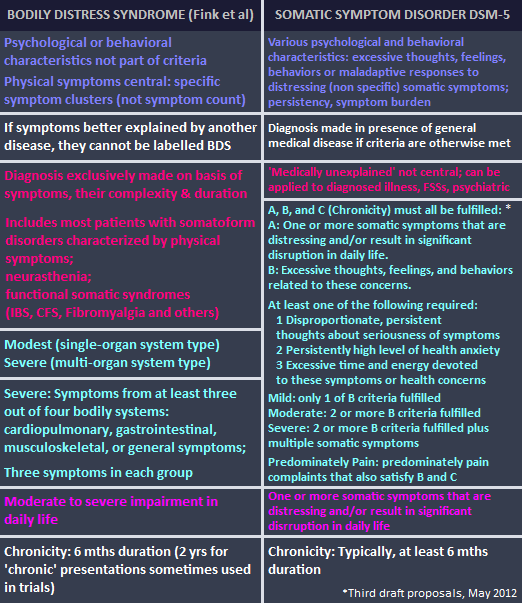
She was taken, against her will, to Hammel Neurocenter. For six months, now, Karina has remained in hospital and is denied visits from her parents, Per and Ketty Hansen.

Karina is unable to access her legal representative because the hospital and health authorities refuse to acknowledge the lawyer whom she engaged to represent her, in 2012.

The authorities have appointed a guardian over the heads of Karina and her parents, who held power of attorney for their daughter, pictured on the left.

Rebecca Hansen, chairman, ME Foreningen, Danmark (ME Association, Denmark), who is not a relative, has been acting as lay advocate to the Hansen family. The most recent update on Karina’s situation was published here on Dx Revision Watch, in June.

For links to translations of Update 2: Human Rights denied: Something rotten in the state of Denmark: Karina Hansen’s story in Danish, German and Dutch go here.

Professor Per Fink, Aarhus Research Clinic for Functional Disorders is advising Hammel Neurocenter on Karina’s treatment – a treatment regime she has made plain she does not wish to receive, in a setting she does not wish to be detained in.

Her rights, as a patient, to determine where and by what means and for how long she is treated, to receive documentation and a treatment plan and access to her family and her lawyer, are being denied by Danish Health authorities.

For information on Aarhus Research Clinic and Per Fink et al’s construct of Bodily Distress Syndrome, see Part Two of Dx Revision Watch Post: ICD-11 Beta draft and Bodily Distress Disorders; Per Fink and Bodily Distress Syndrome

+++

National media coverage of the case

On August 10, four reports were published by the newspaper, BT, Danmark (a Danish national tabloid):

http://www.bt.dk/danmark/foraeldre-naegtet-at-se-syg-datter-mor-hvordan-skal-jeg-komme-vaek-herfra

Forældre nægtet at se syg datter: ’Mor, hvordan skal jeg komme væk herfra?’

(Parents are refused [visits] to see sick daughter: ‘Mom, how do I get out of here?’)

by Morten Eggert

also

http://www.bt.dk/danmark/derfor-blev-24-aarige-k-fjernet-fra-sine-foraeldre

Derfor blev 24-årige K fjernet fra sine forældre

(Why was 24 year old K removed from her parents?)

also

http://www.bt.dk/danmark/24-aarig-patient-i-slaar-mig-ihjel

24-årig patient: I slår mig ihjel

(24 year old patient: “You are killing me”)

(As I don’t speak Danish and since this is a very sensitive case, I prefer not to provide imperfect and potentially inaccurate auto translations or summaries; the gist of these reports can be roughly auto translated via Google, Bing or other translators.)

also

[Image] http://xa.yimg.com/kq/groups/86982676/219750998/name/BT

Politiker: De må ikke tvangsindlægge

(Politician: They don’t forcibly hospitalize)

“Liselott Blixt, health spokesperson for Dansk Folkeparti (The Danish People’s Party) and Chairman of the Folketing § 71-supervision, which keeps an eye on the use of coercion, has now prompted a statement from Region Midtjylland on this deeply unhappy case…”

+++

Local media coverage

A local paper (Dagbladet Holstebro-Struer) also reported on the case, last week, on 10 August, with a four page interview with Per and Ketty Hansen. Subscribers can read the interview with Karina’s parents, in Danish, online, here:

http://dagbladet-holstebro-struer.dk/holstebro/de-tog-vores-datter

They took our daughter

+++
From ME Forenginen, Danmark’s Facebook page: https://www.facebook.com/meforeningen.dk

On August 13, BT published an interview with ME Forenginen, Danmark’s, Vice-Chair, Cathrine Engsig, about the treatment of Karina Hansen and her parents:

[Image] https://fbcdn-sphotos-b-a.akamaihd.net/hphotos-ak-frc3/p480x480/995990_412997052143731_905956157_n.jpg

+++

Demonstrations

According to ME Forenginen, Danmark’s, Facebook page, a non-affiliated Danish group has started a 5 day demonstration in Aarhus and Hammel to raise awareness of Karina’s plight.

A series of demonstrations started on Monday, 12 August, and ends on Friday, 16 August, in the afternoon.

More information here: https://www.facebook.com/events/214896588665066

+++

Initiatives

According to ME Forenginen, Denmark’s Facebook page, doctor Stig Gerdes and lawyer Stig Tornaes have contacted psychiatrist, Professor Per Fink, Aarhus Research Clinic for Functional Disorders, who is advising Hammel Neurocenter on Karina’s treatment. A copy of their letter can be read, in Danish, on ME Forenginen, Danmark’s, Facebook page, here:

https://www.facebook.com/meforeningen.dk

I will update when further official updates or media coverage become available.

Clarification
Reports and updates on Dx Revision Watch site on the Hansen family’s situation are being published as provided by, and in consultation with, Rebecca Hansen, Chairman, ME Foreningen, Danmark (ME Association, Denmark), or edited from reports as provided. Dx Revision Watch site has no connection with any petitions or initiatives, or with any websites, social media platforms or other platforms set up to promote petitions or initiatives, or to otherwise raise awareness of the Hansen family’s situation. All enquiries in relation to any petitions or other initiatives, or platforms associated with them should be addressed directly to the organizers, sponsors or owners responsible for them.

+++

Previous posts

Something rotten in the state of Denmark: Karina Hansen’s story: http://wp.me/pKrrB-2Xc

Human Rights denied: Something rotten in the state of Denmark: Karina Hansen’s story: Update 1: http://wp.me/pKrrB-35o

Update 2: Human Rights denied: Something rotten in the state of Denmark: Karina Hansen’s story: http://wp.me/pKrrB-390

+++

Links

Website for ME Foreningen, Danmark www.me-foreningen.dk

Official petition launched and sponsored by the ME Association of Denmark, and approved by the Hansen family: http://www.ipetitions.com/petition/postcardtokarina/
For more information on the ME Association of Denmark’s postcard campaign go here on Facebook
For information on Bodily Distress Syndrome see Part Two of Dx Revision Watch Post: ICD-11 Beta draft and BDD, Per Fink and Bodily Distress Syndrome
Opdater 2: Menneskerettighederne nægtet: Noget råddent i staten Danmark: Karina Hansen: http://wp.me/pKrrB-390
Update 2: Human Rights denied: Something rotten in the state of Denmark: Karina Hansen’s story: http://wp.me/pKrrB-390
Update 2: Ontkenning van mensenrechten: Iets verrot in de staat van Denemarken: Het verhaal van Karina Hansen: http://wp.me/pKrrB-390
Update 2: Menschenrechtsverstoß: Etwas ist faul in Dänemark: Karina Hansens Geschichte: http://wp.me/pKrrB-390
Update 2: Droits de l’Homme: Il y a quelque chose de pourri au royaume du Danemark: l’histoire de Karina Hansen: http://wp.me/pKrrB-390

Translations for Update 2: Human Rights denied: Something rotten in the state of Denmark: Karina Hansen’s story

Post #269 Shortlink: http://wp.me/pKrrB-3hQ

Translations of June 19, 2013 report by Rebecca Hansen, chairman, ME Foreningen, Danmark (ME Association, Denmark).

KHBW2

Karina Hansen has now been detained in Hammel Neurocenter against her will for 6 months

If there is a Norwegian translation or other languages other than those below, I’d be pleased to have links to add to this page. You can contact me via the Contact form.


English: http://wp.me/pKrrB-390 Update 2: Human Rights denied: Something rotten in the state of Denmark: Karina Hansen’s story

You are killing me.” Experimental treatment forced on a severely ill ME patient


Dansk: http://wp.me/pKrrB-3gj Opdater 2: Menneskerettighederne nægtet: Noget råddent i staten Danmark: Karina Hansen

”I slår mig ihjel.” Svært ME syg patient tvinges til eksperimentel behandling


Deutsch  | UFOCOMES-blog

Ihr bringt mich um.” Schwer an ME erkrankte Patientin wird zu experimenteller Behandlung gezwungen


Nederlandse  |  ME|cvs Vereniging   |  PDF Nederlandse vertaling

“Jullie vermoorden mij.” Ernstig zieke ME-patiënte gedwongen tot een experimentele behandeling


For earlier posts:

May 11, 2013: Something rotten in the state of Denmark: Karina Hansen’s story: http://wp.me/pKrrB-2Xc

May 25, 2013: Human Rights denied: Something rotten in the state of Denmark: Karina Hansen’s story: Update 1: http://wp.me/pKrrB-35o

May 25, 2013: Menneskerettighederne nægtet: Noget råddent i staten Danmark: Karina Hansen: Opdater 1: http://wp.me/pKrrB-36e

Information on ME Foreningen postcard campaign and petition on Facebook or here: www.me-foreningen.dk

For information on Bodily Distress Syndrome see Part Two Dx Revision Watch Post: ICD-11 Beta draft and BDD, Per Fink and Bodily Distress Syndrome

BDS, BDDs, BSS, BDD unscrambled

Post #268 Shortlink: http://wp.me/pKrrB-3fA

BDS, BDDs, BSS, BDD and ICD-11, unscrambled

There are two WHO convened working groups charged with making recommendations for the revision of ICD-10’s Somatoform Disorders: the Primary Care Consultation Group (known as the PCCG) and the Expert Working Group on Somatic Distress and Dissociative Disorders (known as the S3DWG).

The revision of ICD-11 is being promoted as an open and transparent process. But to date, neither working group has published progress reports for stakeholder consumption and neither group has published its emerging proposals in public access journals.

Content populated in the public version of the ICD-11 Beta drafting platform sheds little light on proposals.

Consequently, there is considerable confusion around what is being recommended for the revision of ICD-10’s Somatoform Disorders, whether consensus between the two working groups has been reached, and what proposals will progress to field testing during the next two years.

ICD-11 Revision has been asked to clarify when it intends to define and characterize its current proposals within the Beta drafting platform.

The notes below set out some of what is known about the two working groups’ emerging proposals, how they diverge and how they compare with DSM-5’s Somatic Symptom Disorder and with Fink et al’s Bodily Distress Syndrome.

Caveat: the proposals of the two ICD-11 working groups may have undergone revision and refinement since emerging proposals were published, in July and December, last year; the two groups may or may not have reached consensus over how this proposed new ICD construct should be defined and characterized, its inclusions, exclusions and differential diagnoses, or what name it should be given.

What is Bodily Distress Syndrome (BDS)?

+++

Bodily Distress Syndrome is the name given to a disorder construct developed by Per Fink and colleagues, Aarhus University, that is already in use in Danish research studies and in clinical settings [1].

BDS is described by its authors as “a unifying diagnosis that encompasses a group of closely related conditions such as somatization disorder, fibromyalgia, irritable bowel syndrome and chronic fatigue syndrome.”

Per Fink and colleagues are lobbying for BDS to be integrated into forthcoming classification systems and adopted as a diagnosis by primary care practitioners.

Their proposal is for reclassifying somatoform disorders, pain disorder, neurasthenia and the so-called functional somatic syndromes, including fibromyalgia, irritable bowel syndrome and chronic fatigue syndrome, under a new classification, Bodily Distress Syndrome.

They consider these should be treated and managed as subtypes of the same disorder with CBT, GET, “mindfulness therapy” and in some cases, antidepressants.

The PDF format slide presentation in reference [2] will give an overview of BDS and there is more information and links in an earlier post, in reference [3].

Is Fink et al’s Bodily Distress Syndrome construct the same as DSM-5’s SSD?

+++

No, Bodily Distress Syndrome is a different construct to DSM-5’s Somatic Symptom Disorder.

Psychological or behavioural characteristics, central for the diagnosis of SSD, do not form part of the BDS criteria.

For BDS, physical symptoms are central to the diagnosis, which is based on identification of symptom patterns (not symptom count) from four body systems:

Cardiopulmonary/autonomic arousal; Gastrointestinal arousal; Musculoskeletal tension; General symptoms.

There is a “Modest” BDS (single-organ type) and a “Severe” BDS (multi-organ type).

If the symptoms are better explained by another disease, they cannot be labelled BDS.

The graphic below compares mutli-organ Bodily Distress Syndrome with Somatic Symptom Disorder, as the DSM-5 draft criteria had stood, in May 2012.

Note the defining characteristics of the DSM-5 SSD construct: the SSD definition calls for positive psychobehavioural characteristics (excessive or maladaptive responses or associated health concerns) in response to persistent distressing somatic symptoms; the requirement that the symptoms are “medically unexplained” is not central to the diagnosis and the symptoms may or may not be associated with a well-recognised medical condition.

The SSD diagnosis can be made in the presence of one or more unspecified, somatic symptoms associated with general medical conditions and diagnosed disease, like multiple sclerosis, cancer, diabetes or angina, or in the so-called “functional somatic syndromes” (for example, IBS, CFS or fibromyalgia) or in complaints with unclear etiology.

Compare Fink et al’s BDS with DSM-5’s SSD, in the table, below:

Depending on screen size/resolution, graphic may not display in full. Click on the image and the image file will load. Graphic: Suzy Chapman

Bodily Distress Syndrome comparison with Somtatic Symptom Disorder

Continued on Page 2