Reminder: Next meeting of ICD-10-CM/PCS Coordination and Maintenance Committee: March 19-20, 2014

Post #290 Shortlink: http://wp.me/pKrrB-3F1

Update at February 15, 2014:

Tentative diagnosis agenda posted for March 19–20, 2014 meeting on CDC site:

This list of tentative diagnosis agenda topics is not final. The final topics material will be available electronically from the NCHS web site prior to the meeting.

If you are unable to attend the meeting in person there will be conference lines available on the day of the meeting. Individuals do not need to register on line for the meeting if planning to dial in.

NCHS/CMS will be broadcasting the meeting live via Webcast at: http://www.cms.gov/live/

The next meeting of the ICD-10-CM/PCS Coordination and Maintenance Committee is scheduled for March 19–20, 2014. If you are planning to attend the meeting in person you will need to register, online, by March 14.

ICD-10-CM/PCS Coordination and Maintenance Committee Meeting

Public forum to discuss proposed changes to ICD-10-CM and ICD-10-PCS

Wednesday, March 19, 2014 – Thursday, March 2o, 2014

CMS Auditorium, Baltimore, MD

Agendas for the meeting will be posted in February 2014.

If phone lines and live webinar are made available the information will be posted closer to the meeting date.

Day One | Time: 03/19/2014 9:00 AM – 5:00 PM CMS Auditorium

Session: ICD-10-CM/PCS Coordination and Maintenance Committee Meeting
The first day of the meeting, March 19, 2014, will be devoted to procedure code issues.

Day Two | Time: 03/20/2014 9:00 AM – 5:00 PM CMS Auditorium

Session: ICD-10-CM/PCS Coordination and Maintenance Committee Meeting
The second day of the meeting, March 20, 2014 will be devoted to diagnosis code topics.

+++
The National Center for Health Statistics (NCHS) and the Centers for Medicare and Medicaid Services (CMS) are the U.S. governmental agencies responsible for overseeing all changes and modifications to the ICD-9-CM and draft ICD-10-CM/PCS.

NCHS is also responsible for the development of ICD-10-CM, adapted from the WHO’s ICD-10 for U.S. specific use.

The 2014 release of the draft ICD-10-CM (which replaces the July 2013 release) can be viewed or downloaded here.

ICD-10-CM is scheduled for implementation on October 1, 2014. Until that time the codes in ICD-10-CM are not valid for any purpose or use.

New concepts are added to ICD-10-CM based on the established update process for ICD-9-CM (the ICD-9-CM Coordination and Maintenance Committee) and the World Health Organization’s ICD-10 (the Update and Revision Committee).

Meetings of the Coordination and Maintenance Committee are co-chaired by a representative from NCHS and from CMS. Responsibility for  maintenance of the ICD-9-CM is divided between these two agencies, with classification of diagnoses by NCHS and procedures by CMS.

The name of the Committee will change to the ICD-10-CM/PCS Coordination and Maintenance Committee with the March meeting, as the last updates to ICD-9-CM/PCS took place on October 1, 2013.

Meetings are held twice yearly, in public, at CMS headquarters in Baltimore, MD. The next meeting is scheduled for March 19–20, 2014. The fall meeting is scheduled for September 23–24, 2014.

+++

Coordination and Maintenance Committee

The Committee provides a public forum to discuss proposed modifications, code changes, updates and corrections to the diagnosis codes in ICD-10-CM and procedural codes in ICD-10-PCS.

Public participation can also take place via phone conference link and live webinar. (Details for both in the Agenda documents.)

Agendas are posted approximately one month prior to the meetings. Diagnostic and procedural proposal Topic Packets, meeting materials, hand outs and presentation slides are posted on the CDC and CMS websites shortly before a meeting.

Up until 2011, transcripts of meeting proceedings were provided. Provision of transcripts is now replaced with videocasts for the full, two-day proceedings, available from the CMS website and posted on YouTube, and a brief Meeting Summary report, available from the CDC site shortly after the meeting.

For attendance in person, prior registration is required, via the CMS meeting registration website. Registration opens approximately one month  prior to a meeting and closes a few days before Day One of a meeting.

+++

Proposals for modifications, additions, corrections

Suggestions for modifications to ICD-10-CM/PCS come from both the public and private sectors. Since the draft ICD-10-CM is adapted from the WHO’s ICD-10, which is subject to an annual update process, some proposed modifications to ICD-10-CM may reflect updates to the ICD-10.

Interested parties (requestors) must submit proposals for modifications prior to a scheduled meeting and by a specific date. Proposals should be consistent with the structure and conventions of the classification. See Submission of Proposals for submission requirements and proposal samples.

Once proposals have been reviewed, requestors are contacted as to whether their proposal has been approved for presentation at the next Coordination and  Maintenance Committee meeting or not.

Approved proposals are presented at the meetings by representatives for professional bodies, advocacy organizations, clinicians, other professional stakeholders or members of the public with an interest, or are sometimes presented by an NCHS/CMS representative on behalf of a requestor.

No decisions on proposed modifications are made at the meetings. Recommendations and comments are reviewed and evaluated, once the comment period has closed, before final decisions are made.

The Coordination and Maintenance Committee’s role is advisory. All final decisions are made by the Director of NCHS and Administrator of CMS.

Final decisions are made at the end of the year and become effective October 1 of the following year.

+++

Submitting written comment on proposals presented at meetings

Comments on proposals are invited, at the meeting, at the end of each presentation, or may be submitted in writing following the meeting, during a one to two month duration public comment period.

Addresses for submitting comments are included in the Agenda Topic Packets published before the meetings. NCHS/CMS state that electronic submissions are greatly preferred over snail mail in order to ensure timely receipt of responses.

+++

Partial code freeze and timing of proposals

According to the Summary of Diagnosis Presentations for the September 18–19, 2013 meeting (for which the comment period closed on November 15):

“Except where noted, all topics are being considered for implementation on October 1, 2015. The addenda items are being considered for implementation prior to October 1, 2014.”

(“ICD-10-CM TABULAR OF DISEASES – PROPOSED ADDENDA” Tabular and Index modification proposals are set out on Diagnosis Agenda Pages 60-66.)

Note that some proposals in the Diagnosis Agenda were requested for insertion in October 2014 as Inclusion Terms to existing codes, with new codes proposed to be created for October 2015, notably, the 6 proposals to insert new DSM-5 disorders into ICD-10-CM presented by Darrel Regier, MD, on behalf of the American Psychiatric Association (Diagnosis Agenda Pages 32-44).

Whether the 17 modifications proposed on Pages 45-46 under “Additional Tabular List Inclusion Terms for ICD-10-CM” which were presented en masse by CDC’s, Donna Pickett, (which include the proposals to add the new DSM-5 “Somatic symptom disorder” and “Illness anxiety disorder” as Inclusion Terms to existing ICD-10-CM F45.x codes) are intended for implementation in October 2014 or in October 2015 is not explicit in the Diagnosis Agenda.

For the September 18–19, 2013 meeting, when submitting written comments, responders were asked to consider the following:

Whether they agree with a proposal, disagree (and why), or have an alternative proposal to suggest. But were also invited to comment on the timing of those proposals that were being requested for approval for October 2014:

Does a request for a new diagnosis or procedure code meet the criteria for implementation in October 2014 during a partial code freeze* based on the criteria of the need to capture a new technology or disease; or should consideration for approval be deferred to October 2015? And separately, to comment on the creation of a specific new code for the condition effective from October 1, 2015 (where requested).

Any code requests that do not meet the criteria [for inclusion during a partial freeze] will be evaluated for implementation within ICD-10-CM on and after October 1, 2015 once the partial freeze has ended and regular (at least annual) updates to ICD-10-CM/PCS resume.

*Partial Code Freeze of Revisions to ICD-9-CM and ICD-10-CM/PCS

  • October  1, 2011 is the last major update of ICD-9-CM. Any further revisions to ICD-9-CM will only be  for a new disease and/or a  procedure  representing new technology.  Revisions will  be posted on this website as addenda (revisions to procedures are posted on  the CMS website).
  • After  October 1, 2011 there will be no further release of ICD-9-CM on CD-ROM.
  • October  1, 2011 is the last major update of ICD-10-CM/PCS until October 1, 2015.
  • Between  October 1, 2011 and October 1, 2015 revisions to ICD-10-CM/PCS will be for new  diseases/new technology procedures, and any minor revisions to correct reported errors in these classifications.
  • Regular (at least annual) updates to ICD-10-CM/PCS will resume on October 1, 2015.

+++
Public comments not made public

Note that written public comments received by NCHS (Diagnosis) and CMS (Procedural) on proposals requested via these meetings are not aggregated and made publicly accessible. Nor are the names of organizations, professional bodies, individuals or others who have submitted comments listed publicly. It is not possible to scrutinize the number, provenance or substance of the comments received in support of, or in opposition to requests for modifications to ICD-10-CM presented via these meetings. Nor are NCHS/CMS’s rationales for the approval or rejection of requests for modifications to diagnosis or procedural codes on public record.

+++

September 18–19, 2013 meeting

A substantial number of modifications were proposed via the September 2013 meeting for both procedural and diagnosis codes. These are set out in the Agenda/Topic Packet PDF documents:

Diagnosis Codes Agenda

Procedural Codes Agenda

Meeting Materials

Videocasts for full two day meeting proceedings and Meeting Materials (collated on Dx Revision Watch site)

Summary of Diagnosis Presentations 

The ICD-9-CM timeline (for the remainder of its life) and the ICD-10-CM/PCS timeline are set out on Pages 3-8 of the Diagnosis Agenda.

+++

Key dates for the forthcoming March 19–20, 2014 meeting

January 17, 2014: deadline for submitting topics to be discussed at the March 19–20, 2014 ICD-10-CM/PCS Coordination and Maintenance Committee (reached).

February 14: registration for attendance opens.

March 14: deadline for registration.

Go here for registration details. (CMS confirmed to me via email on 01.23.13 that the deadline for registration is March 14, not February 14, as incorrectly published in the Diagnosis Agenda timeline.)

April 18, 2014: deadline for receipt of public comments on proposed codes and modifications tabled for March meeting. (Note there is only a 4 week period following this meeting during which written comments can be submitted.)

+++

Key ICD-10-CM/PCS Timeline dates extracted from full timeline, Pages 3-8, September 18-19, 2013 Diagnosis Agenda

March 19–20, 2014: ICD-10-CM/PCS Coordination and Maintenance Committee meeting.

April 1, 2014: There will be no new ICD-9-CM codes to capture new diseases or technology on April 1, 2014, since the last updates to ICD-9-CM will take place on October 1, 2013.

April 2014: Notice of Proposed Rulemaking to be published in the Federal Register as mandated by Public Law 99-509. This notice will include references to the complete and finalized FY 2015 ICD-10-CM diagnosis and ICD-10-PCS procedure codes. It will also include proposed revisions to the MS-DRG system based on ICD-10-CM/PCS codes on which the public may comment. The proposed rule can be accessed at: http://www.cms.gov/Medicare/Medicare-Fee-for-Service-Payment/AcuteInpatientPPS/index.html?redirect=/AcuteInpatientPPS/IPPS/list.asp

April 18, 2014: Deadline for receipt of public comments on proposed code [at March meeting.]

June 2014: Final addendum posted on web pages as follows:

Diagnosis addendumhttp://www.cdc.gov/nchs/icd/icd10cm.htm

Procedure addendumhttp://cms.hhs.gov/Medicare/Coding/ICD10/index.html

September 23–24, 2014: ICD-10-CM/PCS Coordination and Maintenance Committee 2014 meeting.

October 1, 2014: New and revised ICD-10-CM and ICD-10-PCS codes go into effect along with DRG changes. Final addendum posted on web pages as follows:

Diagnosis addendumhttp://www.cdc.gov/nchs/icd/icd9cm_addenda_guidelines.htm

Procedure addendumhttp://www.cms.gov/Medicare/Coding/ICD9ProviderDiagnosticCodes/addendum.html

November 2014: Any new ICD-10 codes required to capture new technology that will be implemented on the following April 1 will be announced. Information on any new codes to be implemented April 1, 2015 will be posted on the following websites:

http://www.cms.gov/Medicare/Coding/ICD9ProviderDiagnosticCodes/addendum.html
http://www.cdc.gov/nchs/icd/icd9cm_addenda_guidelines.htm

WHO Collaborating Centre confirms Revision Steering Group seriously considering extension to ICD-11 timeline

Post #289 Shortlink: http://wp.me/pKrrB-3E8

Update at January 30, 2014:

ICD-11 Revision has confirmed that a decision has now been taken to postpone ICD-11 by a further two years, from 2015 to 2017.

From WHO site: “The International Classification of Diseases 11th Revision is due by 2017”

+++
Information in this report relates to the development of the World Health Organization’s ICD-11. It does not apply to the forthcoming US specific, NCHS developed, clinical modification of ICD-10, known as ICD-10-CM.

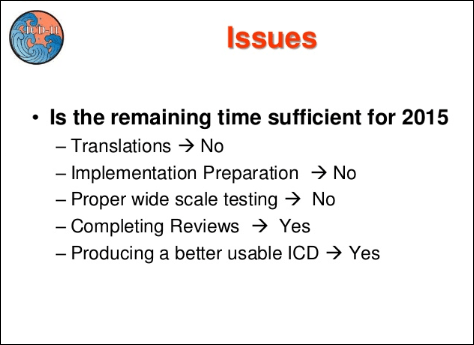
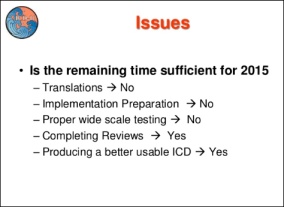
Ustun 34

Source: Slide 34: Where are we? What remains to be done? Shall we have ICD WHA submission in 2015 or later? B Üstün, World Health Organization Classifications, Terminologies, Standards ICD Revision: Quality Safety Meeting, September 2013

+++
The December newsletter of the WHO Collaborating Centre for the Family of International Classifications (FIC) in the Netherlands reports that ICD-11 Revision Steering Group (RSG) is reviewing options for a further extension to the ICD-11 development timeline [1]:

Newsletter on the WHO-FIC, Volume 11, Number 2, 2013, Latest News, Page 3 [PDF]

The Revision Steering Group and WHO Secretariat seriously consider amending the timeline of submitting the ICD-11 for endorsement by the World Health Assembly to allow more time for field testing in multiple countries and settings, and following up on resulting edits. WHO currently discusses options and scenarios with stakeholders.

This announcement from WHO-FIC’s Marijke de Kleijn-de Vrankrijker reinforces information and resources provided in my September report (WHO considers further extension to ICD-11 development timeline) – that ICD-11 Revision is failing to meet development targets and delaying submission of ICD-11 for WHA for approval until 2016, or alternatively, extending the timeline by a further two years, for WHA approval in 2017, is under consideration.

+++

ICD-11 already four years behind original targets

The revision of ICD-10 and development of the structure for ICD-11 began in 2007. WHO’s original goal had been to complete the revision and release of ICD-11 by 2011-12, Archived documents [2] [3].

By 2009, the date for submission of ICD-11 for WHA approval had been extended to 2014. The launch of the public version of the Beta drafting platform was later postponed from May 2011 to May 2012.

The current projection for submission of ICD-11 for approval to WHA is May 2015, with dissemination in 2015+ [4].

Mayo’s Christopher Chute, MD, chairs the ICD-11 Revision Steering Group. According to Chute, in this paper published in March 2012, publication of ICD-11 is “expected around 2016″:

Chute CG, Huff SM, Ferguson JA, Walker JM, Halamka JD. There Are Important Reasons For Delaying Implementation Of The New ICD-10 Coding System. Health Aff March 2012 DOI: 10.1377/hlthaff.2011.1258
+++

ICD Revision considers its options

In September, WHO posted this meeting materials document [5] and this slide presentation [6]. The document summarized, inter alia, ICD-11’s progress, current development status, timelines for finalization date and approval by WHO Governing Bodies, and rationales and options for a further shift in the timeline.

You can read extracts from the document and view slides setting out the options currently under consideration in this report: WHO considers further extension to ICD-11 development timeline, selected of which I am appending to this post.

The earliest ICD-11 might be ready for dissemination is late 2015/16 – which may require some further scaling back of the project’s goals.

But if ICD-11 Revision Steering Group does elect to postpone submission for World Health Assembly approval until May 2017, dissemination of ICD-11 may not be viable before 2018.

I will update this post if and when WHO or ICD-11 Revision Steering Group publish a statement of clarification on the WHO website or issue a news release, or if other information becomes available that confirms a revision to the timeline.

Implementation date

I’ve noted some confusion in reporting and comments around ICD-11 approval by WHA and dissemination and implementation dates.

Unlike the U.S. specific ICD-10-CM, there is no mandatory date by which Member States must switch from using ICD-10 to ICD-11.

World Health Assembly adoption of ICD-11 and ICD-11 implementation dates are separate. WHA adoption enables official use for countries who wish to move on to the next edition. But Member States using ICD-10 will transition to the next version at their own convenience [6].

Once approved, prepared for implementation and released, global adoption of ICD-11 isn’t going to happen overnight. It may take several years before WHO Member States transition from ICD-10 to ICD-11. Low resource and developing countries may take longer to prepare for and transition to the new edition.

The annual update process for ICD-10 will continue during the creation of ICD-11.

Extracts from document [5] setting out the rationale and options for postponement of WHA Approval:

[…]

3. Progress and Current Status of ICD Revision:

[…]

BETA PHASE:

At this point in time, 1 September 2013, an ICD2013 Beta version has been produced for review purposes and field trials after 6 years of drafting phases.

The current ICD 2013 Beta version has relatively stable classification lists (i.e. linearizations) for Mortality and Morbidity recording. It will be reviewed by the specific Mortality Reference Group and the Morbidity Reference Group to see how well it fits the purpose and proposed transition from ICD‐10.

In addition, the Beta version has planned processes for:

(i) Systematic international scientific peer review (ii) Submission of additional proposals from public groups and scientists (iii) Conducting field trials for its applicability and reliability (iv) Production support in multiple languages (translations) starting with WHO official languages (v) Preparations for transitions from ICD‐10 to ICD‐11.

[…]

6. Timelines

The current ICD Revision Process timeline foresees that the ICD is submitted to the WHA in 2015 May and could then be implemented. Between now and 2015, there remains 20 months to conduct the remaining tasks summarized above as: 1. Reviews, 2. Additional Proposals, 3. Field Trials, 4. Translations, and 5. Transition Preparations.

Given the technical requirements these steps could be expedited in the next 20 months. The experience obtained thus far, however, suggests that this timeframe will be extremely tight for paying due diligence to the work especially in terms of: appropriate consultations with expert groups; communication and dissemination with stakeholders; and sufficient time for field testing in multiple countries and settings, and carrying out the resulting edits.

WHO Secretariat would like to discuss this with all stakeholders and evaluate the possible options:

a. Keep ICD submission to WHA to 2015 as originally planned and implementation / adoption date may be free by any Member State (current position – no change).

b. Postpone submission to WHA to a later year to allow longer time for field trials and other transition preparations.

[…]

In conclusion:

(a) WHO Secretariat could produce an ICD 2015 ready including Mortality and Morbidity Linearizations, Reference Guide and Index with the appropriate resolution to go to the World Health Assembly. This timeframe, however, is extremely tight for paying due diligence to the work especially in terms of: appropriate consultations with expert groups; and sufficient time for field testing in multiple countries and settings, and carrying out the resulting edits

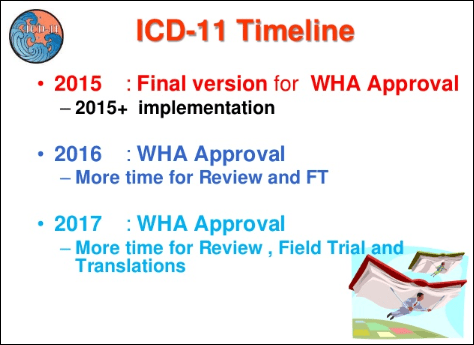
(b) If the timeline is advanced to 2016, there will be more time to have ICD 2016 version with more translations and incorporations of some field tests results.

(c) If the timeline is advanced to 2017, ICD 2017 will be ready with most Field Test results incorporated and maintenance scheme tested.

[…]

Slide presentation: B Üstün, World Health Organization Classifications, Terminologies, Standards, ICD Revision: Quality Safety Meeting 2013 September 9-10

Where are we? What remains to be done? Shall we have ICD WHA submission in 2015 or later?

Slide 34:

Ustun 34rule

Slide 35: [WHA Approval timeline – options under consideration]

Ustun 35rule

+++

References:

1. Newsletter on the WHO-FIC, Volume 11, Number 2, 2013, Latest News, Page 3. WHO Collaborating Centre for the Family of International Classifications (FIC) in the Netherlands.

2. IUPsyS Mar 08 Agenda Item 25 ICD-10 International Union of Psychological Science COMMITTEE ON INTERNATIONAL RELATIONS ACTION, March 28–30, 2008, Agenda Item No. 25: Revision of the International Classification of Diseases (ICD-10) and Involvement of Psychology.

3.  Exhibit 1 WHO Letter Aug 07 Letter Saxena, WHO, to Ritchie, IUPsyS (International Union for Psychological Science), August 2007.

4. ICD-11 Timeline: http://www.who.int/classifications/icd/revision/timeline/en/index.html

5. Committee for the Coordination of Statistical Activities, Twenty-second Session 4-6 September 2013, Items for discussion and decision: Item 8 of the provisional agenda, 3 September 2013, Pages 8-10: http://unstats.un.org/unsd/accsub/2013docs-22nd/SA-2013-12-Add1-Health-WHO.pdf

6. Slide presentation: ICD Revision: Where are we? Bedirhan Üstün, World Health Organization Classifications, Terminologies, Standards, ICD Revision: Quality Safety Meeting 2013, September 9-10, 2013, Slides 29-35: http://www.slideshare.net/ustunb/icd-2013-qs-tag-260276686

Clarification: Coalition for Diagnostic Rights website

Post #288 Shortlink: http://wp.me/pKrrB-3Dn

Clarification: Coalition for Diagnostic Rights

A website called Coalition for Diagnostic Rights has recently been launched.

The site includes references to Suzy Chapman and to Dx Revision Watch.

Suzy Chapman/Dx Revision Watch is not associated with or affiliated to the Coalition for Diagnostic Rights website or with any registered or unregistered organization associated with that site, and has no responsibility for content published on that site, or published in the name of that site on other platforms.

Suzy Chapman
Dx Revision Watch

Omissions in commentary: “Diagnostic Ethics: Harms vs Benefits of Somatic Symptom Disorder”

Post #287 Shortlink: http://wp.me/pKrrB-3Ch

On December 16, Allen Frances, MD, who led the task force responsible for the development of DSM-IV, published a new commentary at Huffington Post titled: Diagnostic Ethics: Harms vs Benefits of Somatic Symptom Disorder.

This commentary is also published at Saving Normal (hosted by Psychology Today) under the title: Diagnostic Ethics: Harms/Benefits- Somatic Symptom Disorder: Advice to ICD 11-don’t repeat DSM 5 mistakes.

There are a two important oversights in this commentary around ICD and DSM-5’s controversial new diagnostic category, Somatic Symptom Disorder (SSD).

Dr Frances writes:

“…The DSM-5 damage is done and will not be quickly undone. The arena now shifts to the International Classification of Diseases 11 which is currently being prepared by the World Health Organization and is due to be published in 2016. The open question is whether ICD 11 will mindlessly repeat the mistakes of DSM-5 or will it correct them?”

But Dr Frances omits to inform his readers that in September, a proposal was snuck into the Diagnosis Agenda for the fall meeting of the NCHS/CMS ICD-9-CM Coordination and Management Committee to insert Somatic Symptom Disorder as an inclusion term into the U.S.’s forthcoming ICD-10-CM*.

*ICD-10-CM has been adapted by NCHS from the WHO’s ICD-10 and will replace ICD-9-CM as the U.S.’s official mandated code set, following implementation on October 1, 2014.

+++
A foot in the door of ICD

APA has been lobbying CDC, NCHS and CMS to include new DSM-5 terms in the ICD-10-CM.

If NCHS rubber stamps the addition of Somatic Symptom Disorder as an official codable diagnostic term within ICD-10-CM, it could leverage the future replacement of several existing ICD-10-CM Somatoform disorders categories with this new, poorly validated, single diagnostic construct, bringing ICD-10-CM in line with DSM-5.

There are implications for ICD-11, too.

Once SSD is inserted into ICD-10-CM, the presence of this term within the U.S. adaptation of ICD-10 may make it easier for ICD-11 Revision Steering Group to justify the replacement of several existing ICD-10 Somatoform disorders categories with a single, new ICD construct contrived to incorporate SSD-like characteristics and facilitate harmonization between ICD-11 and DSM-5 disorder terms and diagnostic criteria.

Yet Dr Frances, so vocal since December 2012 on the perils of the new Somatic Symptom Disorder construct, has written nothing publicly about this move to insinuate the SSD term into ICD-10-CM and curiously, makes no mention of this important U.S. development in his latest commentary.

Emerging proposals for the Beta draft of ICD-11 do indeed demand close scrutiny. But U.S. professionals and patient groups need to be warned that insertion of Somatic Symptom Disorder into the forthcoming ICD-10-CM is currently under consideration by NCHS and to consider whether they are content to let this barrel through right under their noses and if not, and crucially, what courses of political action might be pursued to oppose this development.

+++
Only half the story

A second omission: Dr Frances’ commentary references the deliberations of the WHO Expert Working Group on Somatic Distress and Dissociative Disorders (a 17 member group chaired by O Gureje) which published a paper, in late 2012, reviewing the classification of the somatoform disorders, as currently defined, and discussing the group’s emerging proposals for ICD-11 [1].

But as Dr Frances is aware, this is not the only working group that is making recommendations for the revision of ICD-10’s Somatoform disorders.

The WHO Department of Mental Health and Substance Abuse has appointed a Primary Care Consultation group (PCCG) to lead the development of the revision of the mental and behavioural disorders for the ICD-11 primary care classification (known as the ICD-11-PHC), which is an abridged version of the core ICD classification.

The PCCG reports to the International Advisory Group for the Revision of ICD-10 Mental and Behavioural Disorders and comprises a 12 member group of primary care professionals and mental health specialists representing both developed and low and middle-income countries.

The group is chaired by Prof, Sir David Goldberg, professor emeritus at the Institute of Psychiatry, London (a WHO Collaborating Centre), who has a long association with WHO, Geneva, and with the development of primary care editions of ICD.

The PCCG members are: SWC Chan, AC Dowell, S Fortes, L Gask, D Goldberg (Chair), KS Jacob, M Klinkman (Vice Chair), TP Lam, JK Mbatia, FA Minhas, G Reed, and M Rosendal.

(Dr Reed is Senior Project Officer for the International Advisory Group for the Revision of ICD-10 Mental and Behavioural Disorders; Dr Klinkman is Chair, WONCA International Classification Committee; Dr Rosendal is a member of WONCA International Classification Committee.)

The PCCG has been charged with developing and field testing the full set of disorders for inclusion in ICD-11-PHC, in preparation for worldwide adoption. It is anticipated that for the next edition, 28 mental disorder categories commonly managed within primary care will be included.

For all new and revised disorders included in the next ICD Primary Care version there will need to be an equivalent disorder in the ICD-11 core classification and the two versions are being developed simultaneously.

The group will be field testing the replacement for ICD-10-PHC’s F45 Unexplained somatic symptoms over the next couple of years and multi-centre focus groups have already reviewed the PCCG‘s proposals [2].

+++
The PCCG’s alternative construct – a BDS/SSD mash-up

As set out in several previous Dx Revision Watch posts, according to its own 2012 paper, the Primary Care Consultation Group has proposed a new disorder category, tentatively named, in 2012, as “Bodily stress syndrome” (BSS) which differed in both name and construct to the emerging proposals of the WHO Expert Working Group on Somatic Distress and Dissociative Disorders.

So we have two working groups advising ICD-11 and two sets of proposals.

The defining characteristics of the PCCG’s proposed new disorder, Bodily stress syndrome (as set out in its 2012 paper), draw heavily on the characteristics, criteria and illness model for Per Fink et al’s Bodily Distress Syndrome – a divergent construct to SSD – onto which the PCCG has tacked a tokenistic nod towards selected of the psychobehavioural features that define DSM-5’s Somatic symptom disorder.

Whereas in late 2012, the emerging construct of the other working group advising on the revision of ICD-10’s Somatoform disorders, the WHO Expert Working Group on Somatic Distress and Dissociative Disorders, was much closer to a “pure” SSD construct.

Neither proposed construct may survive the ICD-11 field trials or ICD-11 Revision Steering Group approval.

Fink and colleagues (one of whom, M Rosendal, sits on the Primary Care Consultation Group) are determined to see their Bodily Distress Syndrome construct adopted by primary care clinicians, incorporated into new management guidelines and integrated into the revisions of several European classification systems.

Their aim is to replace ICD-10’s F45 somatoform disorders, pain disorder, neurasthenia (ICD-10 F48), and the so-called “functional somatic syndromes”: Fibromyalgia (ICD-10 M79.7), IBS (ICD-10 K58) and CFS (indexed to ICD-10 G93.3), with their own single, unifying “Bodily Distress Syndrome” diagnosis, a disorder construct that is already in use in research and clinical settings in Denmark.

It remains unknown whether the two groups making recommendations for the revision of ICD-10’s Somatoform disorders have since reached consensus over what disorder name, definition and criteria WHO intends to submit to international field testing over the next year or two.

It’s not yet clear whether this proposed new BDD/BSS/WHATEVER diagnosis for the ICD-11 primary care and core version construct will have greater congruency with DSM-5’s SSD, or with Fink et al’s already operationalized BDS, or would combine elements from both; nor is it known which patient populations the new ICD construct is intended to include and exclude.

(In its 2012 proposed criteria, the PCCG does not specify FM, IBS, CFS or ME as Exclusion terms or Differential diagnoses to its BSS diagnosis.)

If WHO Revision favours the field testing and progression of an SSD-like construct for ICD-11 there will be considerable implications for all patient populations with persistent diagnosed bodily symptoms or with persistent bodily symptoms for which a cause has yet to be established.

If WHO Revision favours the progression of a Fink et al BDS-like construct and illness model, such a construct would shaft patients with FM, IBS and CFS and some other so-called “functional somatic syndromes.”

But Dr Frances says nothing at all in his commentary about the deliberations of the Primary Care Consultation Group despite the potential impact the adoption of a Fink et al BDS-like disorder construct would have on the specific FM, IBS, CFS and ME classifications that are currently assigned discrete codes outside the mental disorder chapter of ICD-10.

In sum:

The proposal to insert SSD into the U.S.’s forthcoming ICD-10-CM needs sunlight, continued monitoring and opposition at the political level by professionals and advocacy groups. Exclusive focus on emerging proposals for ICD-11 obscures the September 2013 NCHS/CMS proposals for ICD-10-CM.

The deliberations of both working groups that are making recommendations for the revision of the Somatoform Disorders for the ICD-11 core and primary care versions demand equal scrutiny, monitoring and input by professional and advocacy organization stakeholders.

It is disconcerting that whilst several paragraphs in Dr Frances’ commentary are squandered on apologia for those who sit on expert working groups, these two crucial issues have been sidelined.

+++
References

1. Creed F, Gureje O. Emerging themes in the revision of the classification of somatoform disorders. Int Rev Psychiatry. 2012 Dec;24(6):556-67. http://www.ncbi.nlm.nih.gov/pubmed/23244611 [Full text behind paywall]

2. Lam TP, Goldberg DP, Dowell AC, Fortes S, Mbatia JK, Minhas FA, Klinkman MS: Proposed new diagnoses of anxious depression and bodily stress syndrome in ICD-11-PHC: an international focus group study. Fam Pract 2012 Jul 28. http://www.ncbi.nlm.nih.gov/pubmed/22843638 [Full text behind paywall]

3. Further reading: BDS, BDDs, BSS, BDD and ICD-11, unscrambled

4. ICD-9-CM/PCS Coordination and Maintenance Committee Meeting September 18-19, 2013:
http://www.cdc.gov/nchs/icd/icd9cm_maintenance.htm

September meeting Diagnostic Agenda/Proposals document [PDF – 342 KB]:
http://www.cdc.gov/nchs/data/icd/icd_topic_packet_sept_181913.pdf

Compiled by Suzy Chapman for Dx Revision Watch

ICD-11 December Round up #1

Post #286 Shortlink: http://wp.me/pKrrB-3AJ

“The current ICD Revision Process timeline foresees that the ICD is submitted to the WHA in 2015 May and could then be implemented…experience obtained thus far, however, suggests that this timeframe will be extremely tight for paying due diligence to the work especially in terms of: appropriate consultations with expert groups; communication and dissemination with stakeholders; and sufficient time for field testing in multiple countries and settings, and carrying out the resulting edits.”   B Üstün, September 2013

In this September posting, I reported that a further extension to the ICD-11 timeline is under consideration.

This document and this slide presentation (Slides 29 thru 35) indicate that ICD-11 Revision is failing to meet development targets.

In a review of progress made, current status and timelines (document Pages 5 thru 10), Dr Bedirhan Üstün, Coordinator, Classification, Terminology and Standards, World Health Organization, sets out the options for postponement and discusses whether submission of ICD-11 for World Health Assembly approval should be delayed until 2016, or possibly 2017.

I will update as further information on any decision to extend the timeline emerges.

+++
Round up of ICD-11 related materials:

Slide presentation: PDF format, mostly in German

58. GMDS-Jahrestagung, Lübeck, 1.-5.9.2013: Symposium, Medizinische, Klassificationen und Termiologien Vortrag Üstün und Jakob, 5.9.2013

ICD-11 Übersicht Üstün und Jakob

Slide presentation: Slideshare format, in English

Regional Conference of the International Society for Adolescent Psychiatry and Psychology (ISAPP)

Diagnostic Classifications in the 21st Century: how can we capture developmental details Bedirhan Üstün, Coordinator, World Health Organization, November 24, 2013

Multisystem diseases and terms with multiple parents:

In 2010, ICD-11 Revision posted this Discussion Document: Multisystem Disorders, Aymé, Chalmers, Chute, Jakob.

The text sets out the feasibility, rationale for and possible scope of a new multisystem disorders chapter for ICD-11 for diseases that might belong to or affect multiple body systems.

A more recent working document (WHO ICD Revision Information Note, R Chalmers, MS docx editing format, dated 29 January 2013) updates the discussion and concludes that a majority of ICD Revision Topic Advisory Groups and experts did not agree with the recommendation to create a new Multisystem Disease Chapter for ICD-11 and that other options for accommodating diseases which straddle multiple chapters were being considered.

According to ICD-11 Beta drafting platform, the ICD-11 Foundation Component will allow for a single concept to be represented in a Multisystem Disease linearization and appear in more than one logically appropriate location. In the linearizations (e.g. Morbidity), a single concept has a single preferred location and references [to the term] from elsewhere [within the same chapter or within a different chapter] are greyed out but link to the preferred location.

For example, skin tumour is both a skin disease and a neoplasm and for ICD-11 is located under two chapters. Other diseases that are proposed to be assigned multiple parents include some eye diseases resulting from diabetes; tuberculosis meningitis (as both an infectious and a nervous system disease) and Premenstrual dysphoric disorder (PMDD), currently proposed to be dual coded under Chapter 15 Diseases of the genitourinary system under parent term, Premenstrual tension syndrome but also listed under Chapter 5 Mental and behavioural disorders under Depressive disorders.

While previous versions of ICD did not support multiple inheritance, there are already over 450 terms with multiple parents within ICD-11.

Editorial commentary, ICD-11 Neurological disorders:

J Neurol Neurosurg Psychiatry doi:10.1136/jnnp-2013-307093

The classification of neurological disorders in the 11th revision of the International Classification of Diseases (ICD-11)

Sanjeev Rajakulendran¹, Tarun Dua², Melissa Harper², Raad Shakir¹

1 Imperial College NHS Healthcare Trust, Charing Cross Hospital, London, UK; 2 Department of Mental Health and Substance Abuse, World Health Organization, Geneva, Switzerland

Published Online First 18 November 2013 [Full text behind paywall]

Abstract: http://www.ncbi.nlm.nih.gov/pubmed/24249782

Single page extract as image: http://jnnp.bmj.com/content/early/2013/11/18/jnnp-2013-307093.extract

(If a single page text file fails to load at the above link, try pasting the editorial title into a search engine and access the page from the search engine link.)

Primary Care version of ICD-11 (ICD-11-PHC):

The ICD-10-PHC is an abridged version of the ICD-10 core classification for use in primary care and low resource settings. A new edition (ICD-11-PHC) is being developed simultaneously with the core ICD-11.

For all new and revised disorders included in the ICD-11 Primary Care version there will need to be an equivalent disorder in the ICD-11 core classification.

The Mental and behavioural disorders section of ICD-11-PHC is expected to list 28 mental and behavioural disorders most commonly managed within primary care settings, as opposed to over 400 disorders in Chapter 5 of the core version.

The following ICD-10-PHC disorders are proposed to be dropped for ICD-11-PHC:

F40 Phobic disorders; F42.2 Mixed anxiety and depression; F43 Adjustment disorder;
F45 Unexplained somatic symptoms; F48 Neurasthenia; Z63 Bereavement, Source [4].

A list of the 28 proposed disorders for ICD-11-PHC, as they stood in 2012*, can be found on Page 51 of Source [5].

*This list may have undergone revision since the source published.

A new disorder term “Anxious depression” is proposed to be field tested for inclusion in ICD-11-PHC and is discussed in this recent paper by Prof, Sir David Goldberg, who chairs the Primary Care Consultation Group (PCCG) charged with the development of the primary care classification of mental and behavioural disorders for ICD-11:

Abstract: http://onlinelibrary.wiley.com/doi/10.1002/da.22206/abstract

Depression and Anxiety

DOI: 10.1002/da.22206

Review ANXIOUS FORMS OF DEPRESSION

David P. Goldberg

Article first published online: 27 NOV 2013 [Full text behind paywall]

There are further commentaries on the proposed new diagnoses of “anxious depression” and “bodily stress syndrome” in this 2012 paper:

Lam TP, Goldberg DP, Dowell AC, Fortes S, Mbatia JK, Minhas FA, Klinkman MS: Proposed new diagnoses of anxious depression and bodily stress syndrome in ICD-11-PHC: an international focus group study. Fam Pract 2012 Jul 28. http://www.ncbi.nlm.nih.gov/pubmed/22843638 [Full text behind paywall]

According to this earlier paper, the Primary Care Consultation Group (PCCG) was still refining a construct and criteria for its proposed new disorder category, which the group had tentatively named as “Bodily stress syndrome” (BSS).

BSS would replace ICD-10-PHC’s Unexplained somatic symptoms and Neurasthenia categories and would be located under a new disorder group section heading called “Body distress disorders,” under which would sit three other discrete disorders. See Page 51 of Source [5].

The characteristics of new disorder 15: Bodily stress syndrome (as they appeared in the paper) might be described as a mash-up between selected of the psychobehavioural characteristics that define DSM-5’s new Somatic symptom disorder (SSD) and selected of the characteristics and criteria for Fink et al’s Bodily Distress Syndrome – rather than a mirror or near mirror of one or the other.

In order to facilitate harmonization between ICD-11 and DSM-5 mental and behavioural disorders, we might envisage pressure on the group to align with or accommodate DSM-5’s new Somatic symptom disorder within any framework proposed to replace the existing ICD Somatoform disorders.

But DSM-5’s SSD and Fink et al’s BDS are acknowledged by Creed, Henningsen and Fink as divergent constructs, so this presents the groups advising ICD Revision with a dilemma if they are also being influenced to recommend a BDS-like construct.

You can compare how these two constructs differ and appreciate why it may be proving difficult to convince ICD Revision of the utility of the PCCG’s BSS construct (and the potential for confusion where different constructs bear very similar names) in my table at the end of Page 1 of this Dx Revision Watch post:

BDS, BDDs, BSS, BDD and ICD-11, unscrambled

Marianne Rosendal (member of the ICD-11 Primary Care Consultation Group; member of WONCA International Classification Committee), Fink and colleagues are eager to see their Bodily distress syndrome construct adopted by primary care clinicians and incorporated into management guidelines and revisions of European classification systems to replace ICD-10’s F45 somatoform disorders, pain disorder, neurasthenia (ICD-10 F48), and the so-called “functional somatic syndromes,”  Fibromyalgia (ICD-10 M79.7), IBS (ICD-10 K58) and CFS (indexed to ICD-10 G93.3). See graphics at end of post.

While Fink et al’s BDS construct seeks to capture somatoform disorders, pain disorder, neurasthenia and the so-called functional somatic syndromes under a single, unifying diagnosis, it is unclear from the 2012 Lam et al paper whether and how the so-called functional somatic syndromes are intended to fit into the Primary Care Consultation Group’s proposed ICD-11 framework.

While the paper does list some exclusions and differential diagnoses, it lists no specific exclusions or differential diagnoses for FM, IBS or CFS and it is silent on the matter of which of the so-called functional somatic syndromes the group’s proposed new BSS diagnosis might be intended to be inclusive of, or might intentionally or unintentionally capture.

Nor is it discussed within the paper what the implications would be for the future classification and chapter location of several currently discretely coded ICD-10 entities, if Bodily stress syndrome (or whatever new term might eventually be agreed upon) were intended to capture all or selected of FM, IBS, CFS and (B)ME – the sensitivities associated with any such proposal would not be lost on Prof Goldberg which possibly accounts for the lacunae in this paper.

Lack of consensus between the two groups advising ICD-11:

The second working group advising ICD-11 on the revision of ICD-10’s Somatoform disorders is the WHO Expert Working Group on Somatic Distress and Dissociative Disorders (S3DWG).

In late 2012, their emerging construct (also published behind a paywall) had considerably more in common with DSM-5’s SSD construct than with Fink et al’s BDS (see: BDS, BDDs, BSS, BDD and ICD-11, unscrambled).

But the S3DWG’s construct Bodily distress disorder (BDD) and Severe bodily distress disorder are yet to be defined and characterised in the public version of the ICD-11 Beta draft.

It remains unknown whether the two groups making recommendations for the revision of ICD-10’s Somatoform disorders have reached consensus over what definition and criteria WHO intends to field trial over the next year or two and what this proposed new diagnosis should be called; whether their proposed BDD/BSS/WHATEVER construct will have greater congruency with DSM-5’s SSD or with Fink et al’s BDS, or what patient populations this new ICD construct is intended to include and exclude.

The absence of information on proposals within the Beta draft, itself, and the lack of working group progress reports placed in the public domain presents considerable barriers for stakeholder comment on the intentions of these two groups and renders threadbare ICD-11’s claims to be an “open” and “transparent” and “inclusive” collaborative process.

Two further papers relating to “Medically unexplained symptoms,” “Bodily distress syndrome” and “Somatoform disorders”:

http://www.sciencedirect.com/science/article/pii/S0163834313002533

General Hospital Psychiatry

Psychiatric–Medical Comorbidity

Is physical disease missed in patients with medically unexplained symptoms? A long-term follow-up of 120 patients diagnosed with bodily distress syndrome

Elisabeth Lundsgaard Skovenborg, B.Sc., Andreas Schröder, M.D., Ph.D.

The Research Clinic for Functional Disorders and Psychosomatics, Aarhus University Hospital, Denmark

Available online 22 October 2013 In Press, Corrected Proof [Full text behind paywall]

http://www.systematicreviewsjournal.com/content/2/1/99

Systematic Reviews 2013, 2:99 doi:10.1186/2046-4053-2-99

Barriers to the diagnosis of somatoform disorders in primary care: protocol for a systematic review of the current status

Alexandra M Murray¹²*, Anne Toussaint¹², Astrid Althaus¹² and Bernd Löwe¹²

1 Department of Psychosomatic Medicine and Psychotherapy, University Medical Center Hamburg-Eppendorf, Hamburg, Germany

2 University Hospital of Psychosomatic Medicine and Psychotherapy, Schön Clinic Hamburg-Eilbek, Hamburg, Germany

Published: 8 November 2013

[Open access article distributed under the terms of the Creative Commons Attribution License]

Finally, brief summaries of selected of the workshops held at the European Association for Consultation-Liaison Psychiatry and Psychosomatics (EACLPP) 2012 Conference, including workshops on “functional disorders and syndromes” and “Bodily distress,” one of which included:

http://www.eaclpp-ecpr2012.dk/Home/DownloadWorkshop

“…brief presentations which describe the present state of the proposed changes to Primary care classifications (ICPC and ICD for primary care) (MR) and DSM-V and ICD-11 (FC).”

where presenter “MR” is Marianne Rosendal; “FC” is Francis Creed, member of the ICD-11 Expert Working Group on Somatic Distress and Dissociative Disorders (S3DWG).

Note: ICPC-2 used in primary care is also under revision.

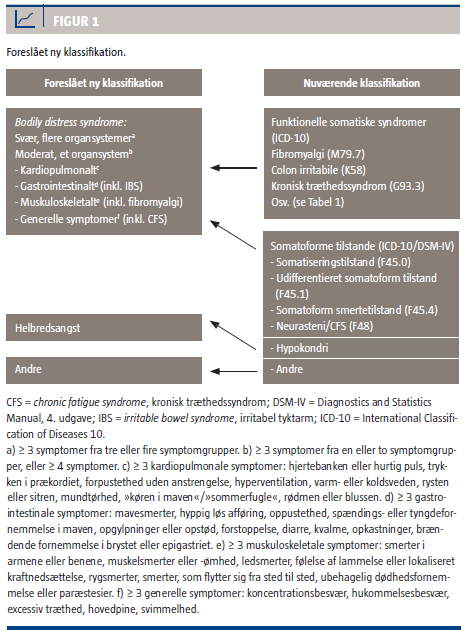
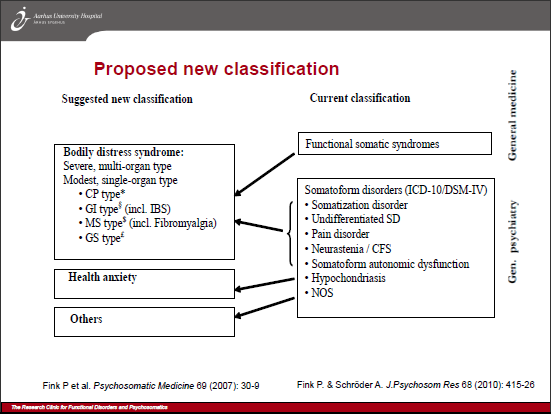
Foreslået ny klassifikation (Suggested new classification, Fink et al): 

Source Figur 1: http://www.ugeskriftet.dk/LF/UFL/2010/24/pdf/VP02100057.pdf

Danish Journal paper Fink P

Fink: Proposed New Classification

+++
References

1. WHO considers further extension to ICD-11 development timeline

2. Committee for the Coordination of Statistical Activities, Twenty-second Session 4-6 September 2013, Items for discussion and decision: Item 8 of the provisional agenda, 3 September 2013 Full document in PDF format

3. Slide presentation: ICD Revision: Where are we? What remains to be done? Shall we have ICD WHA submission in 2015 or later? Bedirhan Ustun, World Health Organization Classifications, Terminologies, Standards, ICD Revision: Quality Safety Meeting 2013, September 9-10, 2013 http://www.slideshare.net/ustunb/icd-2013-qs-tag-26027668

4. Goldberg, D. Guest editorial. A revised mental health classification for use in general medical settings: the ICD11–PHC 1. International Psychiatry, Page 1, February 2011. http://www.rcpsych.ac.uk/pdf/IPv8n1.pdf

5. Goldberg DP. Comparison Between ICD and DSM Diagnostic Systems for Mental Disorders. In: Sorel E, (Ed.) 21st Century Global Mental Health. Jones & Bartlett Learning, 2012: 37-53. Free PDF, Sample Chapter Two: http://samples.jbpub.com/9781449627874/Chapter2.pdf

Compiled by Suzy Chapman for Dx Revision Watch

Which new DSM-5 disorders proposed for inserting into ICD-10-CM are already added to the ICD-11 Beta draft?

Post #280 Shortlink: http://wp.me/pKrrB-3vs

Update to ICD-11 Beta draft at February 3, 2014:

Since my update on January 3, in the ICD-11 Beta draft, Hypochondriasis (illness anxiety disorder) has since been reverted to Hypochondriasis with illness anxiety disorder listed, instead, as an Inclusion term to Hypochondriasis.

Hypochondriasis was subsequently assigned to three parents:

Bodily distress disorders, and psychological and behavioural factors associated with disorders or diseases classified elsewhere; Obsessive-compulsive and related disorders;
Anxiety and fear-related disorders;

At February 3, Hypochondriasis has been removed from parent Bodily distress disorders and is currently assigned dual parentage under:

Obsessive-compulsive and related disorders;
Anxiety and fear-related disorders

Foundation View:

hppt://apps.who.int/classifications/icd11/browse/f/en#/http%3a%2f%2fid.who.int%2ficd%2fentity%2f675329566

Joint Linearization for Mortality and Morbidity Statistics View:

http://apps.who.int/classifications/icd11/browse/l-m/en#/http%3a%2f%2fid.who.int%2ficd%2fentity%2f675329566

The Definition for Hypochondriasis currently displaying in the Beta draft appears to be the legacy Definition, unrevised from ICD-10.

Update to ICD-11 Beta draft at January 3, 2014:

Revision to ICD-11 Beta draft: In the report below, I stated:

ICD-11 public version Beta draft: Illness anxiety disorder is proposed to be dual coded as Hypochondriasis (illness anxiety disorder) under primary parent, Obsessive-compulsive and related disorders and also coded under Bodily distress disorders, and psychological and behavioural factors associated with disorders or diseases classified elsewhere and assigned a unique code.

As the ICD-11 Beta drafting platform now stands, at January 3, 2014, the DSM-5 term “(illness anxiety disorder)” has been removed from the “Hypochondriasis (illness anxiety disorder)” disorder name and the term reverted to Hypochondriasis.

The term “illness anxiety disorder” is now displaying as listed under “Synonyms” to Hypochondriasis in the ICD-11 Beta Foundation View, and listed under “All Index Terms” in the Morbidity Linearization View.

As previously posted on November 6, 2013:

In the previous four posts, I have documented the September 18-19, 2013 meeting of the ICD-9-CM Coordination and Maintenance Committee and reported on American Psychiatric Association (APA) proposals for inserting a number of new DSM-5 terms into the forthcoming US specific ICD-10-CM.

I also set out how public and professional stakeholders can submit comment or objections on any of the proposals requested at this meeting before the November 15 deadline.

At the September meeting, Darrel Regier, MD, APA Director of Research, presented six diagnoses that are new to DSM-5 for inclusion within ICD-10-CM, with proposals for assigning unique new codes to these disorders for October 2015 [1].

Some of the DSM-5 disorders, below, presented for consideration for inclusion in ICD-10-CM are already entered into the ICD-11 Beta drafting platform and in some cases, entered into the draft over a year or more ago.*

*Caveat: The ICD-11 Beta draft is not approved by WHO or WHA. The Beta draft is a work in progress over the next two to three years. The Beta draft is updated on a daily basis: parent terms, category terms, sorting codes and descriptive content are subject to change as chapter reorganization progresses. This post reflects the Beta draft as it stood on November 6, 2013. ICD-11 Beta Draft Caveats

Binge eating disorder (BED)

(Rationale: Page 32, Diagnosis Agenda: Page 6, Diagnosis Presentations Summary)

Proposal for ICD-10-CM for October 1, 2014: add Binge eating disorder (BED) as an inclusion term to F50.8 Other eating disorders.

Proposal for ICD-10-CM for October 1, 2015: that a unique new code is created for F50.81 Binge eating disorder.

ICD-11 public version Beta draft: Binge eating disorder currently proposed to be coded under Feeding and eating disorders and assigned a unique ICD-11 code. No ICD-11 Definition or other “Content Model” descriptive parameters have yet been populated for Binge eating disorder.

——————————

Gender Identity Disorder in Adolescence and Adulthood

(Rationale: Page 34, Page 6, Diagnosis Presentations Summary)

Proposal for ICD-10-CM for October 1, 2014: that ICD-10-CM change the code for Gender identity disorder in adolescents and adulthood to F64.0 and that “gender dysphoria in adolescents and adults” is added as an inclusion term for this entry.

ICD10CM5

Source: September 2013 Diagnosis Agenda, Page 34

[See Page 34 of Diagnosis Agenda for discussion of proposed coding changes.]

——————————

Disruptive mood dysregulation disorder (DMDD)

(Rationale: Page 35, Diagnosis Agenda; Page 6, Diagnosis Presentations Summary)

Proposal for ICD-10-CM for October 1, 2014: add Disruptive mood dysregulation disorder (DMDD) as an inclusion term under F34.8: Other persistent mood [affective] disorders.

Proposal for ICD-10-CM for October 1, 2015: that unique new codes are created at F34.81 Disruptive mood dysregulation disorder and F34.89 Other specified persistent mood disorders.

ICD-11 public version Beta draft: Disruptive mood dysregulation disorder (DMDD) is not currently listed.

——————————

Social (Pragmatic) Communication Disorder

(Rationale: Page 37, Diagnosis Agenda; Page 6, Diagnosis Presentations Summary)

Proposal for ICD-10-CM for October 1, 2014: add Social (Pragmatic) Communication Disorder as an inclusion term under F80.89 Other developmental disorders of speech and language.

Proposal for ICD-10-CM for October 1, 2015: that a unique new code is created at F80.82 Social pragmatic communication disorder.

Excludes1: Asperger’s syndrome (F84.5)

Autistic disorder (F84.0)

ICD-11 public version Beta draft: Social (Pragmatic) Communication Disorder is not currently listed.

——————————

Hoarding disorder

(Rationale: Page 39, Diagnosis Agenda; Page 7, Diagnosis Presentations Summary)

Proposal for ICD-10-CM for October 1, 2014: add Hoarding disorder as an inclusion term to F42 Obsessive Compulsive Disorder.

Proposal for ICD-10-CM for October 1, 2015: that a unique new code is created at F42 for F42.2 for Obsessive Compulsive Disorder and F42.3 for Hoarding Disorder in future revisions. (Ms. Pickett stated that new code proposal starting at F42.2 is due to F42.0 and F42.1 deactivation by WHO.)

F42 Obsessive compulsive disorder

New code F42.2 Mixed obsessional thoughts and acts
New code F42.3 Hoarding disorder
New code F42.8 Other obsessive compulsive disorder
New code F42.9 Obsessive-compulsive disorder, unspecified

ICD-11 public version Beta draft: Hoarding disorder currently proposed to be coded under parent Obsessive-compulsive and related disorders and assigned a unique code. No ICD-11 Definition or other “Content Model” descriptive parameters have yet been populated for Hoarding disorder.

——————————

Excoriation (skin picking) disorder

(APA Rationale: Page 41, Diagnosis Agenda, Page 7, Diagnosis Presentations Summary)

Proposal for ICD-10-CM for October 1, 2014: add Excoriation (skin-picking) disorder as an inclusion term to L98.1 Factitial dermatitis (Dermatology section).

Proposal for ICD-10-CM for October 1, 2015: that a unique new code is created at F42 for F42.4 Excoriation (skin-picking) disorder.

Excludes1: Factitial dermatitis (L98.1)

Other specified behavioral and emotional disorders with onset usually occurring in early childhood and adolescence (F98.8)

ICD-11 public version Beta draft: Excoriation disorder (skin-picking disorder) currently proposed to be coded under Obsessive-compulsive and related disorders under parent Body-focused repetitive behaviour disorders and assigned a unique code. No ICD-11 Definition or other “Content Model” descriptive parameters have yet been populated for Excoriation (skin-picking) disorder.

——————————

Premenstrual dysphoric disorder (PMDD)

(APA Rationale: Page 43, Diagnosis Agenda; Page 7, Diagnosis Presentations Summary)

APA considers that placing PMDD outside the recurrent depressive disorder category is less than optimal for differentiating it from ICD-10-CM N94.3 Premenstrual Tension Syndrome, which is generally less severe than PMDD, and does not require psychiatric treatment. If an alternative code in the F32 series is possible, APA would prefer to modify the code in that section in future revisions.

Proposal for ICD-10-CM for October 1, 2014: add Premenstrual dysphoric disorder as an inclusion term to N94.3 Premenstrual tension syndrome (Chapter 15 Diseases of the genitourinary system).

Proposal for ICD-10-CM for October 1, 2015: that a unique new code is created under Chapter 5 F32.8 Other depressive episodes.

New code F32.81 Premenstrual dysphoric disorder

Excludes1: premenstrual tension syndrome (N94.3)

ICD-11 public version Beta draft: Premenstrual dysphoric disorder (PMDD) currently proposed to be dual coded under Chapter 15 Diseases of the genitourinary system > Premenstrual tension syndrome and also coded under Chapter 5 Depressive disorders and assigned a unique code. A draft ICD-11 Definition has been populated for PMDD but no other ICD-11 “Content Model” descriptive parameters have been populated.

——————————

Somatic symptom disorder and Illness anxiety disorder

ICD10CM 4

Source: September 2013 Diagnosis Agenda, Page 45

Somatic symptom disorder:

(No rationale provided: Page 45, Diagnosis Agenda) Requester unspecified

Proposal for ICD-10-CM: add Somatic symptom disorder under F45 Somatoform Disorders as inclusion term to F45.1 Undifferentiated somatoform disorder.

ICD-11 public version Beta draft: There is no Somatic symptom disorder in the ICD-11 Beta draft either as a unique new ICD-11 entity code or as an inclusion term or Synonym to an existing ICD-11 code.

For ICD-11 Core version: the current proposal for the F45 Somatoform disorders is for a proposed new construct, Bodily distress disorder, to replace a number of existing ICD-10 categories under Bodily distress disorders, and psychological and behavioural factors associated with disorders or diseases classified elsewhere. Two specifiers: Bodily distress disorder and Severe Bodily distress disorder have yet to be defined or characterized within the Beta draft and no “Content Model” parameters have yet been populated. ICD-11 plans to field test this proposed new ICD-11 construct.

The Definition for Bodily distress disorders, and psychological and behavioural factors associated with disorders or diseases classified elsewhere currently displaying in the Beta draft appears to be the legacy Somatoform disorders Definition imported from ICD-10 and does not reflect any proposed structural reorganization or construct revision for the ICD Somatoform disorders categories.

——————————

Illness anxiety disorder

(No rationale provided: Page 45, Diagnosis Agenda) Requester unspecified

Proposal for ICD-10-CM: add Illness anxiety disorder under F45 Somatoform disorders as inclusion term to F45.21 Hypochondriasis.

ICD-11 public version Beta draft: Illness anxiety disorder is proposed to be dual coded as Hypochondriasis (illness anxiety disorder) under primary parent, Obsessive-compulsive and related disorders and also coded under Bodily distress disorders, and psychological and behavioural factors associated with disorders or diseases classified elsewhere and assigned a unique code.

The Definition for Hypochondriasis (illness anxiety disorder) currently displaying in the Beta draft appears to be the legacy Definition imported from ICD-10 and does not reflect any proposed structural reorganization or construct revision for the ICD Somatoform disorders categories.

Submitting comments

If you have comments or objections to any of the proposals requested at the September ICD-9-CM C & M Committee meeting, the deadline for submissions is November 15, by email, to Donna Pickett: nchsicd9CM@cdc.gov

+++

References for key documents:

1. Article: ICD Codes for Some DSM-5 Diagnoses Updated, Mark Moran, Psychiatric News, October 07, 2013:
http://psychnews.psychiatryonline.org/newsarticle.aspx?articleID=1750103

2. ICD-9-CM/PCS Coordination and Maintenance Committee Meeting September 18-19, 2013:
http://www.cdc.gov/nchs/icd/icd9cm_maintenance.htm#public_meetings

September meeting Proposals [PDF – 342 KB]
http://www.cdc.gov/nchs/data/icd/icd_topic_packet_sept_181913.pdf

September meeting Summary of Diagnosis Presentations PDF file [PDF – 347 KB]:
http://www.cdc.gov/nchs/data/icd/icd_summary_sept_181913.pdf

3. ICD-9-CM/PCS Coordination and Maintenance Committee Meeting Sept 18-19, 2013 meeting materials and four YouTubes of proceedings:
http://www.cms.gov/Medicare/Coding/ICD9ProviderDiagnosticCodes/ICD-9-CM-C-and-M-Meeting-Materials-Items/2013-09-18-MeetingMaterials.html

4. September 19, 2013 Meeting Day Two: ICD-9-CM Coordination and Maintenance Committee Meeting Part 4 videocast:
http://www.youtube.com/watch?v=G-pYdKyr_NE

5. ICD-11 Beta drafting platform (public version):
http://apps.who.int/classifications/icd11/browse/f/en