New paper by Wolfe et al on reliability and validity of SSD diagnosis in patients with Rheumatoid Arthritis and Fibromyalgia

Post #295 Shortlink: http://wp.me/pKrrB-3LP

This post is an update to Post #284, November 17, 2013, titled:

Correspondence In Press in response to Dimsdale et al paper: Somatic Symptom Disorder: An important change in DSM

In December 2013, Journal of Psychosomatic Research published four letters in response to the Dimsdale el al paper including concerns from Winfried Häuser and Frederick Wolfe for the reliability and validity of DSM-5’s new Somatic symptom disorder:  The somatic symptom disorder in DSM 5 risks mislabelling people with major medical diseases as mentally ill.

A new paper has been published by PLOS One on February 14, 2014:

Symptoms, the Nature of Fibromyalgia, and Diagnostic and Statistical Manual 5 (DSM-5) Defined Mental Illness in Patients with Rheumatoid Arthritis and Fibromyalgia Frederick Wolfe, Brian T. Walitt, Robert S. Katz, Winfried Häuser

The paper is published under Open Access and includes the full SSD criteria in Table S1

The paper’s references include the following commentaries and an article by science writer, Michael Gross:

Frances A, Chapman S (2013) DSM-5 somatic symptom disorder mislabels medical illness as mental disorder. Australian and New Zealand Journal of Psychiatry 47: 483–484. doi: 10.1177/0004867413484525 [PMID 23653063]

Frances A (2013) The new somatic symptom disorder in DSM-5 risks mislabeling many people as mentally ill. BMJ: British Medical Journal 346. doi: 10.1136/bmj.f1580 [PMID 23511949]

Gross M (2013) Has the manual gone mental? Current biology 23: R295–R298. doi: 10.1016/j.cub.2013.04.009 Full text

Full paper, Tables and Figures in text or PDF format:

Symptoms, the Nature of Fibromyalgia, and Diagnostic and Statistical Manual 5 (DSM-5) Defined Mental Illness in Patients with Rheumatoid Arthritis and Fibromyalgia Frederick Wolfe, Brian T. Walitt, Robert S. Katz, Winfried Häuser

Text version

PDF version

Abstract

Purpose

To describe and evaluate somatic symptoms in patients with rheumatoid arthritis (RA) and fibromyalgia, determine the relation between somatization syndromes and fibromyalgia, and evaluate symptom data in light of the Diagnostic and Statistical Manual-5 (DSM-5) criteria for somatic symptom disorder.

Methods

We administered the Patient Health Questionnaire-15 (PHQ-15), a measure of somatic symptom severity to 6,233 persons with fibromyalgia, RA, and osteoarthritis. PHQ-15 scores of 5, 10, and 15 represent low, medium, and high somatic symptom severity cut-points. A likely somatization syndrome was diagnosed when PHQ-15 score was ≥10. The intensity of fibromyalgia diagnostic symptoms was measured by the polysymptomatic distress (PSD) scale.

Results

26.4% of RA patients and 88.9% with fibromyalgia had PHQ-15 scores ≥10 compared with 9.3% in the general population. With each step-wise increase in PHQ-15 category, more abnormal mental and physical health status scores were observed. RA patients satisfying fibromyalgia criteria increased from 1.2% in the PHQ-15 low category to 88.9% in the high category. The sensitivity and specificity of PHQ-15≥10 for fibromyalgia diagnosis was 80.9% and 80.0% (correctly classified = 80.3%) compared with 84.3% and 93.7% (correctly classified = 91.7%) for the PSD scale. 51.4% of fibromyalgia patients and 14.8% with RA had fatigue, sleep or cognitive problems that were severe, continuous, and life-disturbing; and almost all fibromyalgia patients had severe impairments of function and quality of life.

Conclusions

All patients with fibromyalgia will satisfy the DSM-5 “A” criterion for distressing somatic symptoms, and most would seem to satisfy DSM-5 “B” criterion because symptom impact is life-disturbing or associated with substantial impairment of function and quality of life. But the “B” designation requires special knowledge that symptoms are “disproportionate” or “excessive,” something that is uncertain and controversial. The reliability and validity of DSM-5 criteria in this population is likely to be low.


Final post on Dx Revision Watch

Post #294 Shortlink: http://wp.me/pKrrB-3L2

This will be the final post on Dx Revision Watch.

As from today, I am stepping back from advocacy work and from monitoring and reporting via this site.

Dx Revision Watch will remain online for the foreseeable future as a resource. Other than updating some existing posts, no new postings or reports will be added.

Before using this site or republishing content please read the Disclaimer Notes

Suzy Chapman
Dx Revision Watch

“He that reads and grows no wiser seldom suspects his own deficiency, but complains of hard words and obscure sentences, and asks why books are written which cannot be understood.”  Samuel Johnson

+++

Update on classification of the ICD-10 G93.3 categories within the ICD-11 Beta draft

Post #293 Shortlink: http://wp.me/pKrrB-3IX

Update on February 25, 2014:

See updates on this post for Annette Brooke MP’s Parliamentary Oral Question concerning ICD-11 and ME, CFS on February 25, and the Oral Response from The Parliamentary Under-Secretary of State for Health (Jane Ellison).

Update on February 12, 2014:

Following some confusion in the media, WHO posted this disclaimer via @WHO on Twitter on February 12:

WHO ‏@WHO 

ME/CFS are not included as Mental & Behavioural Disorders in ICD-10, there is no proposal to do so for ICD-11

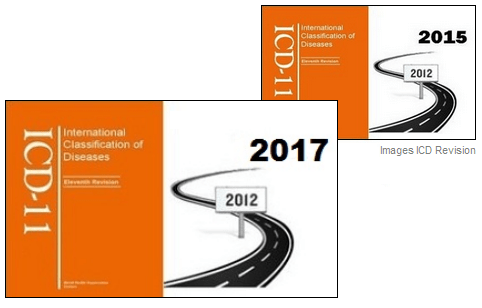
Towards the end of January, ICD Revision confirmed a decision to postpone presentation of ICD-11 for World Health Assembly approval by a further two years, from May 2015 to May 2017, to allow more time for development and field studies.

Caveats: The ICD-11 Beta draft is not a static document. As a work in progress, the Beta draft is subject to daily revisions and additions of textual content, to field test evaluation, and to approval by the International Advisory Group for the Revision of ICD-10 Mental and Behavioural Disorders, ICD-11 Revision Steering Group, and WHO classification experts.

Black Hole Milkyway

In an earlier post (Between a Rock and a Hard Place: ICD-11 Beta draft: Definition added for “Bodily distress disorder”) I reported on what is publicly known about the current status of proposals for the revision of ICD-10’s Somatoform disorders for ICD-11.

PVFS, BME, CFS

This post updates on the status of the three ICD-10 G93.3 categories, Postviral fatigue syndrome, Benign myalgic encephalomyelitis and Chronic fatigue syndrome within the ICD-11 Beta drafting platform.

Information in this report is derived entirely from the public versions of the iCAT > Alpha > Beta drafting platforms, not the collaborative editing platforms used by ICD Revision, to which the public has no access.

Within ICD-10, the three terms are coded or indexed to the Diseases of the nervous system chapter.

In ICD-10, the Mental and behavioural disorders chapter (codes F00-F99) is numbered Chapter V.
The Diseases of the nervous system chapter (codes G00-G99) is numbered Chapter VI.

For ICD-11 Beta draft, the order and numbering of chapters has undergone some reorganization, currently:

Mental and behavioural disorders chapter remains numbered as Chapter 05;
A Sleep-wake disorders chapter has been inserted at Chapter 06;
Diseases of the nervous system chapter has been renumbered to Chapter 07.

Chapter 07 can be viewed in the ICD-11 Beta drafting platform Foundation Component View, here:

http://apps.who.int/classifications/icd11/browse/f/en#/http://id.who.int/icd/entity/1296093776

and in the Joint Linearization for Mortality and Morbidity Statistics View, here:

http://apps.who.int/classifications/icd11/browse/l-m/en#/http://id.who.int/icd/entity/1296093776

(Clicking on the small grey arrows at the beginning of category terms will open drop down parent, child and grandchildren hierarchies.)

+++
Timeline charting progression of the three ICD-10 G93.3 categories, Postviral fatigue syndrome, Benign myalgic encephalomyelitis, and Chronic fatigue syndrome (ICD-10 Index only) within the public version of the ICD-11 drafting platform:

[Click on links for my archived screenshots from the iCAT, Alpha draft and Beta draft.]

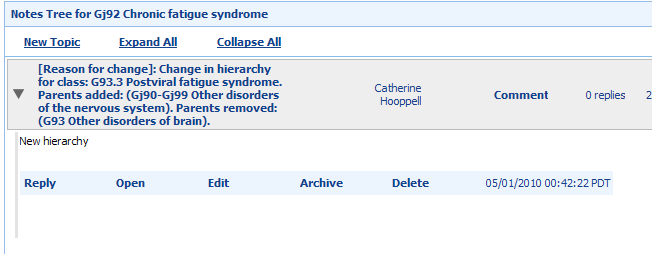
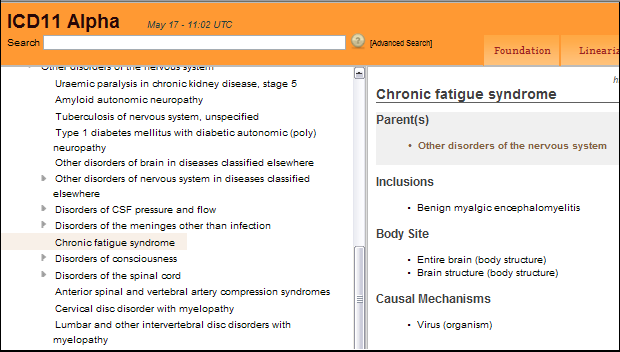
May 2010: iCAT preliminary drafting platform: For the chapter Diseases of the nervous system, this iCAT Discussion Note records a change in hierarchy for class: G93.3 Postviral fatigue syndrome. Its parent: G93 Other disorders of brain is being removed. New parent added: Other disorders of the nervous system.

Additionally, this Change History note records that ICD Title term: Postviral fatigue syndrome is being replaced by new ICD Title term: Chronic fatigue syndrome.

A Definition is inserted for new ICD Title: Chronic fatigue syndrome.

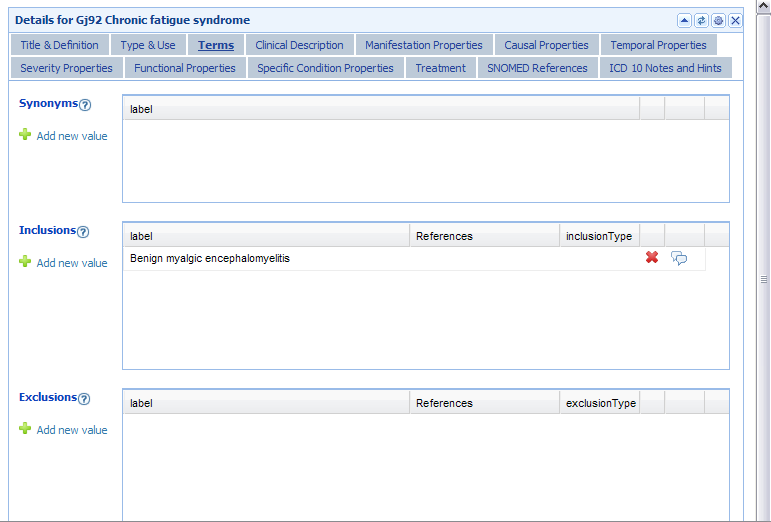
Benign myalgic encephalomyelitis is listed as an Inclusion term to new ICD Title: Chronic fatigue syndrome.

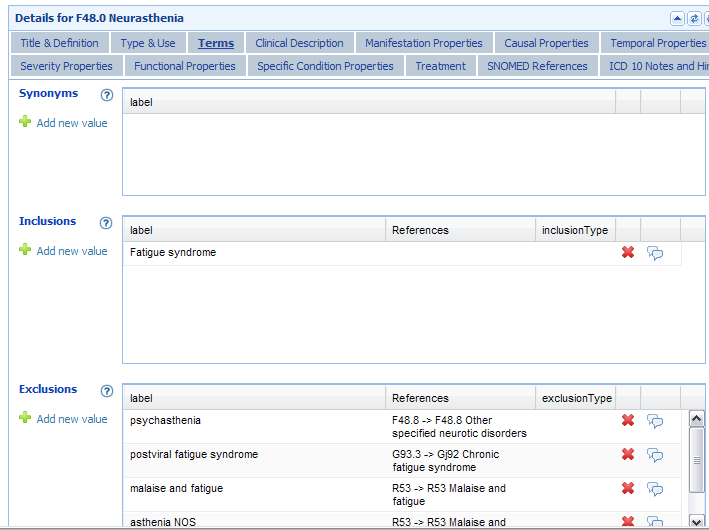
At this point, there is no listing of Postviral fatigue syndrome under Synonyms or Inclusions to ICD Title: Chronic fatigue syndrome, nor elsewhere within the iCAT draft, other than remaining listed as an Exclusion term to F48.0 Neurasthenia and R53 Malaise and fatigue.

May 2011: Alpha drafting platform launches: New ICD Title: Chronic fatigue syndrome remains coded under parent class Other disorders of the nervous system. “Virus (organism)” is listed under the Content Model parameter for “Causal Mechanisms.”

Benign myalgic encephalomyelitis remains listed as an Inclusion term to ICD Title: Chronic fatigue syndrome.

The term Postviral fatigue syndrome remains unaccounted for.

May 2012: Beta drafting platform launches

July 2012: Beta draft: ICD Title: Chronic fatigue syndrome can no longer be found as a child category directly under parent class: Other disorders of the nervous system.

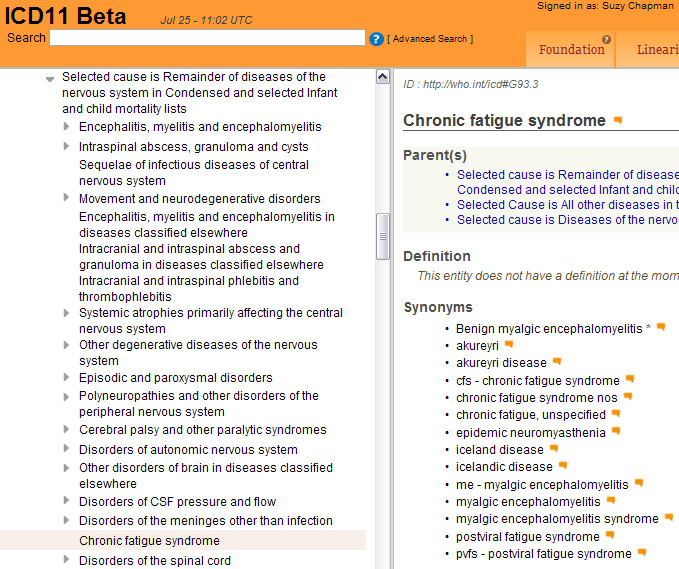
If searched for, the term displays instead under a new “Selected Cause” section, which displays as a kind of subset or sub linearization within the Foundation Component View. It displays with three parents:

Selected cause is Remainder of diseases of the nervous system in Condensed and selected Infant and child mortality lists
Selected Cause is All other diseases in the Selected General mortality list
Selected cause is Diseases of the nervous system

as here, in this July 25, 2012 screenshot.

A large number of terms from other chapters are now also grouped under this “Selected Cause” subset within the Foundation Component. There is no explanation in the public version of the Beta draft what the purpose of the “Selected Cause” subset is or how the categories now listed under it relate to the parent classes under which they were previously coded as child categories. (These “Selected Cause” listings are later dispensed with, at least in the public version of the Beta draft, or are possibly disabled from being generated.)

Other changes: The Definition field for Chronic fatigue syndrome is now blanked.

Benign myalgic encephalomyelitis is listed under Synonyms and specified as an Inclusion term in the linearizations.

13 additional terms are now listed under Synonyms, including Postviral fatigue syndrome, and two terms imported from ICD-10-CM (the ICD-10-CM Chapter 18 R codes: chronic fatigue syndrome nos and chronic fatigue, unspecified).

November 2012: Beta draft: As above, but a brief, revised Definition for Chronic fatigue syndrome has now been inserted by ICD-11 Revision. It reads as follows:

Chronic fatigue syndrome is characterized by extreme chronic fatigue of an indeterminate cause, which is disabling andt [sic] does not improve with rest and that is exacerbated by physical or mental activity.

I have sourced this Definition to this ICD Revision Rare Diseases internal document titled: “Import_RD_definitions” (the Definition text is listed in this .txt file at “1983|Chronic fatigue syndrome|http://who.int/icd#G93.3…”).

Spring 2013: Beta draft:

Since early 2013, no listing can be found in any chapter of the public version of the ICD-11 Beta draft, under any linearization, for any of the terms, Postviral fatigue syndrome, Benign myalgic encephalomyelitis or Chronic fatigue syndrome, as discrete ICD Title terms, or as Inclusion terms or under Synonyms to Title terms, or in the ICD-11 Beta Index.

However, Postviral fatigue syndrome remains listed in the Beta draft as an Exclusion term to Chapter 19: Fatigue and Benign myalgic encephalomyelitis remains listed as an Exclusion term to Chapter 01: Encephalitis, myelitis and encephalomyelitis.*

*In ICD-10, the Title term, G93.3 Postviral fatigue syndrome is also an Exclusion term to F48.0 Neurasthenia. But for ICD-11 and ICD-11-PHC (the primary health care version), the proposal is to eliminate F48.0 Neurasthenia or subsume it under a new, single, “Bodily stress syndrome” (BSS) or “Bodily distress disorder” (BDD) category, in Chapter 05, which is proposed to replace a number of existing ICD-10 Somatoform disorders.

+++

A Beta draft black hole?

June 2013–February 2014: During this period I have contacted several key ICD-11 Revision personnel and the Chair of the Topic Advisory Group for Neurology, directly, with polite requests for clarification of ICD-11 Revision’s current intentions for the chapter classification, coding and hierarchical relationship for these three ICD-10 G93.3 entities.

I have also submitted, via the public version of the Beta drafting platform, a number of requests for clarification and an explanation for their current absence from the draft. At the time of publishing, I have received no clarification from any quarter, either directly, or via the Beta platform.

If the (now 12 month long) absence of these three terms is due to administrative error or oversight, then ICD Revision has had around a dozen opportunities, since last June, to respond to me with an explanation or to restore these three terms to the Beta draft.

It appears this is an issue that no-one involved in the development of the Beta draft is prepared to be accountable for.

I have asked for clarification for the following:

(…) Currently, no entry for any of the terms, Chronic Fatigue Syndrome; Benign Myalgic encephalomyelitis; or Postviral fatigue syndrome, under any hierarchy, can be found within any chapter of ICD-11 Beta, in either the Foundation or Morbidity Linearization views, the PDF print version, or the PDF of the Index.

1. Under which chapter and parent categories are the three ICD-10 G93.3 entities

Chronic Fatigue Syndrome;
Benign Myalgic encephalomyelitis;
Postviral fatigue syndrome

currently proposed to be classified within ICD-11?

2. What is the current proposed hierarchy or relationship within ICD-11 between these three entities, in terms of Title term, Inclusion term, Synonym, and which of these three terms are proposed to be assigned a Definition and other “Content Model” parameters?

3. What is the reason for these three terms not currently displaying in the public version of the Beta drafting platform?

+++
So why have these three ICD-10 terms disappeared and why is ICD Revision reluctant to respond?

The reports on this site are evidence based: in the absence of clarifications directly from ICD Revision, or documentary evidence from reliable sources, I prefer, in general, not to speculate but here are some speculative reasons which might account for the current absence of these three terms from the public version of the Beta draft:

There has been no significant change to proposals in the last 12 months, but the terms have been removed from the draft in order to mitigate controversy over the proposed change of hierarchy (i.e. whether a term is included as a Title term, coded for and assigned a Definition and other Content Model descriptions, or specified as an Inclusion Term to a coded term, or listed under Synonyms to a coded term) and/or over the wording of any proposed Definition or other Content Model descriptive text.

 Topic Advisory Group (TAG) for Neurology intends to retain these three terms under Chapter 07, under an existing parent class that is still undergoing reorganization, and has taken these three terms out of the linearizations in the meantime.

TAG Neurology intends to locate the terms under a new Chapter 07 parent class which does not currently display in the linearizations in the public version of the Beta, or which does display but for which child categories have yet to be populated.

TAG Neurology intends to locate one or more of these terms under a parent class within a subset or sub linearization that cannot currently be generated within the public version of the Beta, for technical reasons.

Unlike ICD-10, multiple parents are allowable under ICD-11: TAG Neurology may intend to assign one or more or these terms to multiple parents within the same chapter, or to code to parents located under more than one chapter, for example, under parent classes, Symptoms, signs and clinical findings involving the nervous and musculoskeletal system or Functional disorders of the nervous system (located under both Chapter 07 and Chapter 19), and has removed the terms in the meantime in order to avoid controversy.

Many categories within ICD-11 are already coded under multiple parents where a disease overlaps two chapters, with the term in black text under the primary parent location and in grey text for the secondary or tertiary location(s), e.g. a skin tumor is both a skin disease and a neoplasm; diseases of the eye as a result of diabetes, or as a result of developmental anomalies.

At one point, ICD Revision was discussing a proposal for a Multisystem Diseases Chapter. This has been rejected in favour of potentially assigning diseases that affect multiple body systems to multiple parents across overlapping chapters, or creating a specific linearization for multisystem diseases as a virtual chapter within the electronic version of ICD-11.

TAG Neurology proposes to retire one or more of these three terms (despite earlier assurances by senior WHO classification experts):

TAG Neurology and TAG Mental Health may be under pressure from the Primary Care Consultation Group to adopt a proposed replacement for the ICD-10 Somatoform disorders that draws heavily on the Per Fink et al construct, “Bodily Distress Syndrome” (BDS). BDS is a single, unifying diagnosis that is inclusive of the somatoform disorders, and the so-called “functional somatic syndromes,” FM, CFS and IBS (which are currently discretely coded or indexed, within ICD-10, in chapters outside the mental and behavioural disorders chapter).

If consensus has not yet been reached about whether the proposed replacement for ICD-10’s Somatoform disorders will more closely mirror DSM-5’s “Somatic symptom disorder” or will incorporate elements of Fink et al’s “Bodily Distress Syndrome,” the three terms, Chronic Fatigue Syndrome, Benign Myalgic encephalomyelitis and Postviral fatigue syndrome may have been removed from the public version of the Beta draft in order to avoid controversy. (It is not yet known which of the two advisory groups’ proposals will be progressing to field testing, this year.)

TAG Neurology may have removed these terms from the public version of the Beta draft in order to avoid controversies surrounding the development of CFS and ME case definitions, for example, the issue of the HHS contract with U.S. Institute of Medicine (IOM) to develop “evidence-based clinical diagnostic criteria for ME/CFS” and to “recommend whether new terminology for ME/CFS should be adopted.”

Whatever the reason, ICD Revision has repeatedly dodged accountability and transparency for its actions.

Having “disappeared” these three ICD terms from the Beta draft, with no explanation, WHO and the ICD Revision Steering Group are disenfranchising professional and advocacy stakeholders from scrutiny of, and participation in the revision process.

Compiled by Suzy Chapman | Dx Revision Watch
Image | Wikimedia Commons courtesy Ute Kraus, Physics education group Kraus, Universität Hildesheim, Space Time Travel, (background image of the milky way: Axel Mellinger)

Extension to timeline official: ICD-11 rescheduled for 2017

Post #292 Shortlink: http://wp.me/pKrrB-3H9

Update at February 8, 2014: ICD Revision has now updated its Timeline page:

May 2017 Present the ICD-11 to the World Health Assembly”

ICD-11_20177

In the last day or so, edited text on two WHO webpages confirms a decision by ICD Revision to postpone release of ICD-11 by a further two years, from 2015 to 2017.

From WHO site: “The International Classification of Diseases 11th Revision is due by 2017”

Also ICD Information Sheet: “…The development phase will continue for three years and ICD-11 will be finalized in 2017.”

And from a note accompanying a slide presentation: “…Now ICD 11 is scheduled in 2017 and ICD-10-CM can be made as a National Linearization.” Bedirhan Üstün, January 29, 2014 [1]

ICD-11 Revision has yet to issue a formal announcement or news release or update its Timeline page to reflect this decision.

There are no reports on the revised schedule on ICD-11 on Facebook or Twitter @WHOICD11 – all very low key.

Delaying the release of ICD-11 has been under consideration for several months.

+++
Slipping targets

The development process for ICD-11 began in April 2007, with ICD-11 scheduled for dissemination by 2012 and the timelines for the development of ICD-11 and DSM-5 running more or less in parallel [2,3].

Early on in the revision process, the ICD-11 dissemination date was extended. By 2009, the final draft was scheduled for World Health Assembly (WHA) approval in 2014. The WHA approval date was subsequently shunted to 2015 – four years later than originally planned.

ICD-11 is now scheduled for finalization in 2017.

Rationales for extending the timeline:

Pages 8-10: Committee for the Coordination of Statistical Activities, Twenty-second Session 4-6 September 2013, Items for discussion and decision: Item 8 of the provisional agenda, 3 September 2013 [4].

Slide presentation, Bedirhan Üstün, September 9-10, 2013, Slides 29-35: [5].

+++
Related reports from Dx Revision Watch

January 22, 2014: WHO Collaborating Centre confirms Revision Steering Group seriously considering extension to ICD-11 timeline: http://wp.me/pKrrB-3E8

September 15, 2013: WHO considers further extension to ICD-11 development timeline: http://wp.me/pKrrB-3sc

+++
References

1. Slideshare: AHIMA ICD-10 ICD-11 switch to ICD-10-CM in the USA, presentation note, Bedirhan Üstün, Coordinator at World Health Organization, January 29, 2014

2. Agenda Item No. 25: Revision of the International Classification of Diseases (ICD-10) and Involvement of Psychology International Union of Psychological Science Committee on International Relations Action, March 28–30, 2008
IUPsyS Mar 08 Agenda Item 25 ICD-10

3. Letter Saxena, WHO, to Ritchie, IUPsyS (International Union for Psychological Science), August 2007
Exhibit 1 WHO Letter Aug 07

4. Committee for the Coordination of Statistical Activities, Twenty-second Session 4-6 September 2013, Items for discussion and decision: Item 8 of the provisional agenda, 3 September 2013, Pages 8-10:
http://unstats.un.org/unsd/accsub/2013docs-22nd/SA-2013-12-Add1-Health-WHO.pdf

5. Slide presentation: ICD Revision: Where are we? Bedirhan Üstün, World Health Organization Classifications, Terminologies, Standards, ICD Revision: Quality Safety Meeting 2013, September 9-10, 2013, Slides 29-35:
http://www.slideshare.net/ustunb/icd-2013-qs-tag-260276686

Between a Rock and a Hard Place: ICD-11 Beta draft: Definition added for “Bodily distress disorder”

Post #291 Shortlink: http://wp.me/pKrrB-3Gl

Update on February 2, 2014:

Since publishing my report, below, the Chapter 5 parent class:

“Bodily distress disorders, and psychological and behavioural factors associated with disorders or diseases classified elsewhere”

has been reverted by ICD-11 Revision to read, “Bodily distress disorders”.

The category, 5C70 Psychological and behavioural factors associated with disorders or diseases classified elsewhere [F54 in ICD-10], which had been, and remains listed as an Exclusion to class “Bodily distress disorders”, is now coded towards the end of the list of Chapter 5 Mental and behavioural disorders categories, rather than listed as a hierarchical child category under:

“Bodily distress disorders, and psychological and behavioural factors associated with disorders or diseases classified elsewhere”.

Note that the Definition and Inclusions for “5C70 Psychological and behavioural factors associated with disorders or diseases classified elsewhere” are legacy text carried over from ICD-10. The Fxx codes listed under “Exclusions” for this category have not yet been updated to reflect the new ICD-11 coding structure.

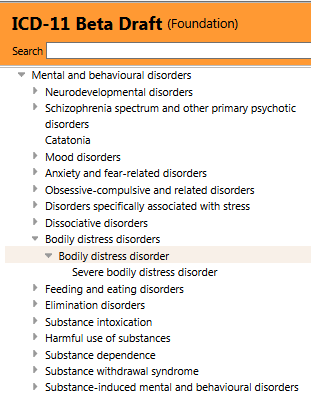
This section of Chapter 5 now displays as in this screenshot, immediately below, when viewed in the ICD-11 Beta drafting platform Foundation View, at February, 2, 2014:

http://apps.who.int/classifications/icd11/browse/f/en#/http%3a%2f%2fid.who.int%2ficd%2fentity%2f1472866636
BDD at 02.02.14

A change also for Hypochondriasis – which has also been removed from under parent class, Bodily distress disorders, and is currently assigned dual parentage under: Obsessive-compulsive and related disorders; and Anxiety and fear-related disorders.

This means that the only categories currently coded under parent term “Bodily distress disorders” (previously, “Bodily distress disorders, and psychological and behavioural factors associated with disorders or diseases classified elsewhere”) are “Bodily distress disorder” and “Severe bodily distress disorder

Update on February 1, 2014:

In June 2013, Prof David Goldberg co-authored a paper: Bodily distress syndrome (BDS): the evolution from medically unexplained symptoms (MUS) in Mental Health in Family Medicine. Co-author, Gabriel Ivbijaro, is Editor in Chief, Mental Health in Family Medicine and a past Chair of the Wonca Working Party on Mental Health. Mental Health in Family Medicine is the official journal of The World Organization of Family Doctors (Wonca) Working Party on Mental Health. I don’t have access to this paper, which is currently embargoed, but it should be free in PMC on June 1, 2014 [5].

+++
BDDJan_28_14

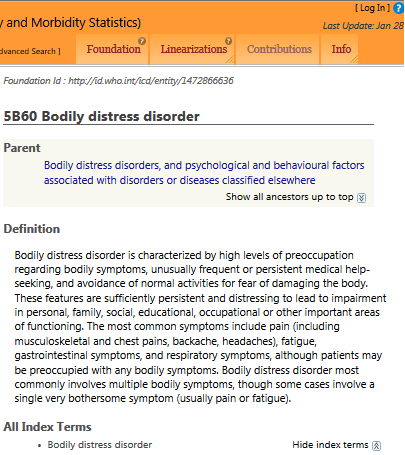
Screenshot: Chapter 5, ICD-11 Beta drafting platform, public version: January 29, 2014

+++

Between a Rock and a Hard Place

A definition for “Bodily distress disorder” has very recently been entered into the public version of the ICD-11 Beta drafting platform by ICD-11 Revision.

You can view the definition text, as it stands at January 29, in the public version of the Beta drafting platform, here:

Joint Linearization for Mortality and Morbidity Statistics view

Bodily distress disorder

Parent(s)

Bodily distress disorders, and psychological and behavioural factors associated with disorders or diseases classified elsewhere

Definition

Bodily distress disorder is characterized by high levels of preoccupation regarding bodily symptoms, unusually frequent or persistent medical help-seeking, and avoidance of normal activities for fear of damaging the body. These features are sufficiently persistent and distressing to lead to impairment in personal, family, social, educational, occupational or other important areas of functioning. The most common symptoms include pain (including musculoskeletal and chest pains, backache, headaches), fatigue, gastrointestinal symptoms, and respiratory symptoms, although patients may be preoccupied with any bodily symptoms. Bodily distress disorder most commonly involves multiple bodily symptoms, though some cases involve a single very bothersome symptom (usually pain or fatigue).

All Index Terms

  • Bodily distress disorder

Or here, in the Beta Foundation view

—————-

Only the ICD-11 Short (100 word) Definition for this proposed new ICD category has been inserted. At this point, no Inclusion Terms, Exclusions, Synonyms, Narrower Terms, Diagnostic Criteria or other potential Content Model descriptors have been populated.

No Definition or severity characteristics have yet been assigned to Severe bodily distress disorder to differentiate between the two coded severities: “Bodily distress disorder” and “Severe bodily distress disorder.” (Unique codes for a “Mild bodily distress disorder” and a “Moderate bodily distress disorder” were dropped in mid 2013.)

In order to place this development into context here are some notes:

It’s important to understand that there are two working groups reporting to the International Advisory Group for the Revision of ICD-10 Mental and Behavioural Disorders that are charged with making recommendations on the revision of the Somatoform Disorders for the primary care version and core version of ICD-11:

The 12 member Primary Care Consultation Group (PCCG) leads the development and field testing of the revision of all 28 mental and behavioural disorders for inclusion in the next ICD primary care classification (ICD-11-PHC), an abridged version of the core ICD classification. The PCCG is chaired by Prof Sir David Goldberg. Per Fink’s colleague, Marianne Rosendal, is a member of this group.

The 17 member Expert Working Group on Somatic Distress and Dissociative Disorders (S3DWG) is advising on the revision of ICD-10’s Somatoform Disorders. The S3DWG is chaired by Prof Oye Gureje. DSM-5 Somatic Symptom Disorder work group member, Prof Francis Creed, is a member of this group.

In 2011, the Primary Care Consultation Group’s proposals for a replacement for the “Unexplained somatic symptoms/medically unexplained symptoms” category were put out for review and evaluation in primary care settings to nine  international focus groups* in seven countries [1].

*Austria, Brazil, Hong Kong, New Zealand, Pakistan, Tanzania and United Kingdom.

The PCCG anticipated refining their recommendations in the light of focus group responses before progressing to field testing the new disorder.

New disorders that survive the primary care field tests must have an equivalent disorder in the main ICD-11 classification.

Since any new primary care disorder concept will need to integrate into the ICD-11 core version, one might expect some cross-group collaboration between these two advisory committees.

But in their respective 2012 journal papers, the groups presented divergent constructs and neither group refers to the work being undertaken by the other group, or sets out how the two groups relate to each other, or how the primary care group relates to the overall revision process for the Somatoform Disorders.

The specific tasks of the S3DWG include, among others:

“3. To provide drafts of the content (e.g. definitions, descriptions, diagnostic guidelines) for somatic distress and dissociative disorder categories in line with the overall ICD revision requirements.

“4. To propose entities and descriptions that are needed for classification of somatic distress and dissociative disorders in different types of primary care settings, particularly in low- and middle-income countries.”

It is unclear how ICD-11 Revision is co-ordinating the input from the two groups, that is, will it be the PCCG’s revised recommendations that progress to field testing, this year, and if so, how would a divergent set of proposals, developed in parallel by the S3DWG group, relate to the field testing and to the overall revision of the SDs?

Or, will ICD-11 Revision require the PCCG group and the S3DWG group to agree on what to call any proposed, single disorder replacement for six or seven SD categories and to reach consensus over what construct, definition, characteristics and criteria will go forward to ICD-11 field testing, and if so, has consensus now been reached?

Field tests are expected to start this year. Currently, there is no publicly available information on the finalized characteristics, diagnostic guidelines, criteria, inclusions, exclusions, differential diagnoses etc. that are planned to be used for the field tests which would provide the level of detail lacking in this Beta draft definition.

It has been crafted with sufficient elasticity to allow either group’s construct to be shoehorned into it.

ICD-11 Revision is possibly hedging its bets depending on the outcome of its field tests. But the devil’s in the detail and without the detail, it isn’t clear whether this definition describes the construct favoured by the S3DWG in late 2012, or by the PCCG in mid 2012, or a more recent revision by one of the groups, or a compromise between the two.

The definition wording is based – in some places verbatim – on the construct descriptions presented in the Gureje, Creed (S3DWG) “Emerging themes…” paper, published in late 2012 [2].

Extract, Creed F, Gureje O. Emerging themes in the revision of the classification of somatoform disorders. Int Rev Psychiatry. 2012:

“…At the time of preparing this review, a major highlight of the proposals of the S3DWG for the revision of the ICD-10 somatoform disorders is that of subsuming all of the ICD-10 categories of F45.0 – F45.9 and F48.0 under a single category with a new name of ‘bodily distress disorder’ (BDD).

“In the proposal, BDD is defined as ‘A disorder characterized by high levels of preoccupation related to bodily symptoms or fear of having a physical illness with associated distress and impairment. The features include preoccupation with bothersome bodily symptoms and their significance, persistent fears of having or developing a serious illness or unreasonable conviction of having an undetected physical illness, unusually frequent or persistent medical help-seeking and avoidance of normal activities for fear of damaging the body. These features are sufficiently persistent and distressing to lead to impairment of functioning or frequent seeking of reassurance.'”

This 2012 paper goes on to say that the S3DWG’s emerging proposals specify a much simplified set of criteria for a diagnosis of Bodily distress disorder (BDD) that requires the presence of: 1. High levels of preoccupation with a persistent and bothersome bodily symptom or symptoms; or unreasonable fear, or conviction, of having an undetected physical illness; plus 2. The bodily symptom(s) or fears about illness are distressing and are associated with impairment of functioning.

And that in doing away with the “unreliable assumption of its causality” the diagnosis of BDD does not exclude the presence of depression or anxiety, or of a co-occurring physical health condition.

Which is a disorder construct into which DSM-5’s “Somatic Symptom Disorder” (SSD) could be integrated, thus facilitating harmonization between ICD-11 and DSM-5.

But without clarification from ICD-11 Revision (or further published papers, reports or sight of the field test protocol) I do not think one can safely extrapolate that it is the current proposals of the S3DWG group that are going forward to field testing, this year, in preference to a construct and criteria favoured by the PCCG group.

With the caveat that proposals by both groups are likely to have been modified since publication of their respective 2012 papers, or may have since converged into a consensus concept, to recap briefly:

In mid 2012, the Goldberg led PCCG primary care group was proposing a new term called “Bodily stress syndrome (BSS),” to replace ICD’s primary care category, “F45 Unexplained somatic symptoms.” This single BSS category would also absorb F48 Neurasthenia, which is proposed to be eliminated for ICD-11-PHC.

In late 2012, the S3DWG group was proposing to subsume the six ICD-10 categories F45.0 – F45.9, plus F48.0 Neurasthenia, under a single disorder category, but under the disorder name, “Bodily distress disorder” (BDD).

So at that point, the two groups differed on what term should be used for this new disorder.

The two group’s proposed constructs, criteria and exclusions also diverged, with the PCCG group incorporating characteristics of Fink et al’s “Bodily Distress Syndrome” [3] construct, and based on the “autonomic arousal” (or “over-arousal”) illness model, with symptom clusters or symptom patterns from one or more body systems, but also requiring some SSD-like psychobehavioural responses to meet the diagnosis. But, “If the symptoms are accounted for by a known physical disease this is not BSS.”

While the emerging proposals of the S3DWG group leaned more towards a “pure” DSM-5 SSD-like construct that could be diagnosed in patients with persistent “excessive” psychobehavioural responses to bodily symptoms in the presence of any diagnosed disease, patients with so-called “functional somatic syndromes” and patients with somatic symptoms of unclear etiology, but with no evident requirement for specific symptom counts, or for symptom clusters from one or more body systems or for the symptoms to be “medically unexplained.” [4]

What wasn’t explicitly set out in the PCCG’s 2012 paper was whether the group intended to mirror the Fink et al BDS construct to the extent of extending the diagnosis to be inclusive of the so-called “functional somatic syndromes,” FM, CFS and IBS (which are currently discretely coded or indexed within ICD-10 in chapters outside the mental and behavioural disorders chapter).

This 2013 paper, below, interprets that it is the intention of the Primary Care Consultation Group to capture FM, CFS and IBS:

http://www.ncbi.nlm.nih.gov/pubmed/24295235

Free PDF: http://www.uam.es/becarios/jbarrada/papers/hads.pdf

Psychol Assess. 2013 Dec 2. [Epub ahead of print] Bifactor Analysis and Construct Validity of the HADS: A Cross-Sectional and Longitudinal Study in Fibromyalgia Patients. Luciano JV, Barrada JR, Aguado J, Osma J, García-Campayo J.

“[…] In the upcoming primary healthcare version of the ICD-11 (ICD-11-PHC), FM will be classified as part of bodily stress syndrome (BSS; Lam et al., 2013). This new diagnosis will group patients who might have previously been considered different (e.g., those with FM, chronic fatigue syndrome, irritable bowel syndrome, and so on). Frontline clinicians (e.g., GPs) will need reliable tools to identify possible/probable clinical cases of anxiety (i.e., cognitive over-arousal) among patients with BSS who are characterised by elevated somatic over-arousal…”

Prof Tony Dowell, New Zealand, is a member of the PPCG. In this slide presentation Prof Dowell lists IBS, Fibromylagia and CFS under “Bodily Stress Syndromes.” Prof Dowell is already promoting the use of the BSS construct, in New Zealand, despite its current lack of validation:

Slide presentation

Slide 29

Bodily Stress Syndromes

• Gastroenterology – IBS, Non ulcer dyspepsia
• Rheumatology – Fibromyalgia
• Cardiology – Non cardiac chest pain
• Respiratory – hyperventilation
• Dental – TMJ syndrome
• Neurology – ‘headache’
• Gynaecology – chronic pelvic pain
• Psychiatry – somatiform [sic] disorders
• Chronic fatigue Syndrome

Reading the responses of the focus groups, as reported in the Lam et al paper [1], it is evident that some focus group participants understood the proposed BSS construct as a diagnosis under which IBS, Fibromylagia and CFS patients could potentially be assigned; though one of the New Zealand focus groups noted there was quite a strong feeling that CFS did not fit the paradigm as well as other [FSS] disorders, particularly when there was a good history of preceding viral infection.

Whilst a number of diseases are listed in the PCCG criteria, as proposed in 2012, under “Differential diagnoses,” including multiple sclerosis, hyperparathyroidism, systemic lupus erythematosus and Lyme disease – IBS, Fibromylagia, CFS and ME are omitted from the list of “Differential diagnoses” examples.

In June 2013, Prof David Goldberg co-authored a paper: Bodily distress syndrome (BDS): the evolution from medically unexplained symptoms (MUS) in Mental Health in Family Medicine. Co-author, Gabriel Ivbijaro, is Editor in Chief, Mental Health in Family Medicine and a past Chair of the Wonca Working Party on Mental Health. Mental Health in Family Medicine is the official journal of The World Organization of Family Doctors (Wonca) Working Party on Mental Health.

I don’t have access to this paper, which is currently embargoed, but it should be free in PMC on June 1, 2014 [5].

—————-

When viewing the Beta drafting platform, note that the descriptive text for the ICD-11 Beta draft parent term, “Bodily distress disorders, and psychological and behavioural factors associated with disorders or diseases classified elsewhere,” which can be viewed here: ICD-11 Beta drafting platform Foundation view is the legacy text from the beginning of the ICD-10 Somatoform Disorders section (compare in ICD-10 here):

This F45 section introduction text has not yet been revised to reflect the proposed dismantling and reorganization of the ICD-10 Somatoform Disorders section for ICD-11.

Caveat: The ICD-11 Beta draft is not a static document – it is a work in progress, subject to daily revisions and refinements and to approval by the International Advisory Group for the Revision of ICD-10 Mental and Behavioural Disorders, the ICD-11 Revision Steering Group, and WHO classification experts. Proposals for some new or revised disorders may be subject to re-evaluation and revision following ICD-11 field testing.

References:

1. Lam TP, Goldberg DP, Dowell AC, Fortes S, Mbatia JK, Minhas FA, Klinkman MS: Proposed new diagnoses of anxious depression and bodily stress syndrome in ICD-11-PHC: an international focus group study. Fam Pract Feb 2013 [Epub ahead of print July 2012]. http://www.ncbi.nlm.nih.gov/pubmed/22843638 [Full text behind paywall]

2. Creed F, Gureje O. Emerging themes in the revision of the classification of somatoform disorders. Int Rev Psychiatry. 2012 Dec;24(6):556-67. http://www.ncbi.nlm.nih.gov/pubmed/23244611 [Full text behind paywall]

3. Fink et al’s Bodily Distress Syndrome

Per Fink and colleagues are lobbying for their “Bodily Distress Syndrome” (BDS) construct to be integrated into forthcoming classification systems and adopted as a diagnosis by primary care practitioners. They propose the reclassification of the somatoform disorders, pain disorder, neurasthenia and the so-called functional somatic syndromes, including fibromyalgia (FM), irritable bowel syndrome (IBS) and chronic fatigue syndrome (CFS), under a single, unifying diagnosis, “Bodily Distress Syndrome,” already in use in clinical and research settings in Denmark.

4. BDS, BDDs, BSS, BDD unscrambled

5. Ivbijaro G, Goldberg D. Bodily distress syndrome (BDS): the evolution from medically unexplained symptoms (MUS). Ment Health Fam Med. 2013 Jun;10(2):63-4. No abstract available. [PMID: 24427171] Currently embargoed: Free in PMC on June 1, 2014. PMC Archives

G Ivbijaro is Editor in Chief, Mental Health in Family Medicine and a past Chair of the Wonca Working Party on Mental Health. D Goldberg chairs the Primary Care Consultation Group (PCCG) leading the development and field testing of the next ICD primary care classification (ICD-11-PHC).

6. General information on ICD-11 Field Tests:

2012 Annual Report of the International Union of Psychological Science to the American Psychological Association Revision of World Health Organization’s ICD-10 Mental and Behavioural Disorders, Pierre L.-J. Ritchie, Ph.D, January, 2013, Pages 8-11

Click to access icd-report-2012.pdf

WHO ICD Revision Information Note: Field Trials, 23 January 2013

Click to access 15.Field_Trials.pdf

Reminder: Next meeting of ICD-10-CM/PCS Coordination and Maintenance Committee: March 19-20, 2014

Post #290 Shortlink: http://wp.me/pKrrB-3F1

Update at February 15, 2014:

Tentative diagnosis agenda posted for March 19–20, 2014 meeting on CDC site:

This list of tentative diagnosis agenda topics is not final. The final topics material will be available electronically from the NCHS web site prior to the meeting.

If you are unable to attend the meeting in person there will be conference lines available on the day of the meeting. Individuals do not need to register on line for the meeting if planning to dial in.

NCHS/CMS will be broadcasting the meeting live via Webcast at: http://www.cms.gov/live/

The next meeting of the ICD-10-CM/PCS Coordination and Maintenance Committee is scheduled for March 19–20, 2014. If you are planning to attend the meeting in person you will need to register, online, by March 14.

ICD-10-CM/PCS Coordination and Maintenance Committee Meeting

Public forum to discuss proposed changes to ICD-10-CM and ICD-10-PCS

Wednesday, March 19, 2014 – Thursday, March 2o, 2014

CMS Auditorium, Baltimore, MD

Agendas for the meeting will be posted in February 2014.

If phone lines and live webinar are made available the information will be posted closer to the meeting date.

Day One | Time: 03/19/2014 9:00 AM – 5:00 PM CMS Auditorium

Session: ICD-10-CM/PCS Coordination and Maintenance Committee Meeting
The first day of the meeting, March 19, 2014, will be devoted to procedure code issues.

Day Two | Time: 03/20/2014 9:00 AM – 5:00 PM CMS Auditorium

Session: ICD-10-CM/PCS Coordination and Maintenance Committee Meeting
The second day of the meeting, March 20, 2014 will be devoted to diagnosis code topics.

+++
The National Center for Health Statistics (NCHS) and the Centers for Medicare and Medicaid Services (CMS) are the U.S. governmental agencies responsible for overseeing all changes and modifications to the ICD-9-CM and draft ICD-10-CM/PCS.

NCHS is also responsible for the development of ICD-10-CM, adapted from the WHO’s ICD-10 for U.S. specific use.

The 2014 release of the draft ICD-10-CM (which replaces the July 2013 release) can be viewed or downloaded here.

ICD-10-CM is scheduled for implementation on October 1, 2014. Until that time the codes in ICD-10-CM are not valid for any purpose or use.

New concepts are added to ICD-10-CM based on the established update process for ICD-9-CM (the ICD-9-CM Coordination and Maintenance Committee) and the World Health Organization’s ICD-10 (the Update and Revision Committee).

Meetings of the Coordination and Maintenance Committee are co-chaired by a representative from NCHS and from CMS. Responsibility for  maintenance of the ICD-9-CM is divided between these two agencies, with classification of diagnoses by NCHS and procedures by CMS.

The name of the Committee will change to the ICD-10-CM/PCS Coordination and Maintenance Committee with the March meeting, as the last updates to ICD-9-CM/PCS took place on October 1, 2013.

Meetings are held twice yearly, in public, at CMS headquarters in Baltimore, MD. The next meeting is scheduled for March 19–20, 2014. The fall meeting is scheduled for September 23–24, 2014.

+++

Coordination and Maintenance Committee

The Committee provides a public forum to discuss proposed modifications, code changes, updates and corrections to the diagnosis codes in ICD-10-CM and procedural codes in ICD-10-PCS.

Public participation can also take place via phone conference link and live webinar. (Details for both in the Agenda documents.)

Agendas are posted approximately one month prior to the meetings. Diagnostic and procedural proposal Topic Packets, meeting materials, hand outs and presentation slides are posted on the CDC and CMS websites shortly before a meeting.

Up until 2011, transcripts of meeting proceedings were provided. Provision of transcripts is now replaced with videocasts for the full, two-day proceedings, available from the CMS website and posted on YouTube, and a brief Meeting Summary report, available from the CDC site shortly after the meeting.

For attendance in person, prior registration is required, via the CMS meeting registration website. Registration opens approximately one month  prior to a meeting and closes a few days before Day One of a meeting.

+++

Proposals for modifications, additions, corrections

Suggestions for modifications to ICD-10-CM/PCS come from both the public and private sectors. Since the draft ICD-10-CM is adapted from the WHO’s ICD-10, which is subject to an annual update process, some proposed modifications to ICD-10-CM may reflect updates to the ICD-10.

Interested parties (requestors) must submit proposals for modifications prior to a scheduled meeting and by a specific date. Proposals should be consistent with the structure and conventions of the classification. See Submission of Proposals for submission requirements and proposal samples.

Once proposals have been reviewed, requestors are contacted as to whether their proposal has been approved for presentation at the next Coordination and  Maintenance Committee meeting or not.

Approved proposals are presented at the meetings by representatives for professional bodies, advocacy organizations, clinicians, other professional stakeholders or members of the public with an interest, or are sometimes presented by an NCHS/CMS representative on behalf of a requestor.

No decisions on proposed modifications are made at the meetings. Recommendations and comments are reviewed and evaluated, once the comment period has closed, before final decisions are made.

The Coordination and Maintenance Committee’s role is advisory. All final decisions are made by the Director of NCHS and Administrator of CMS.

Final decisions are made at the end of the year and become effective October 1 of the following year.

+++

Submitting written comment on proposals presented at meetings

Comments on proposals are invited, at the meeting, at the end of each presentation, or may be submitted in writing following the meeting, during a one to two month duration public comment period.

Addresses for submitting comments are included in the Agenda Topic Packets published before the meetings. NCHS/CMS state that electronic submissions are greatly preferred over snail mail in order to ensure timely receipt of responses.

+++

Partial code freeze and timing of proposals

According to the Summary of Diagnosis Presentations for the September 18–19, 2013 meeting (for which the comment period closed on November 15):

“Except where noted, all topics are being considered for implementation on October 1, 2015. The addenda items are being considered for implementation prior to October 1, 2014.”

(“ICD-10-CM TABULAR OF DISEASES – PROPOSED ADDENDA” Tabular and Index modification proposals are set out on Diagnosis Agenda Pages 60-66.)

Note that some proposals in the Diagnosis Agenda were requested for insertion in October 2014 as Inclusion Terms to existing codes, with new codes proposed to be created for October 2015, notably, the 6 proposals to insert new DSM-5 disorders into ICD-10-CM presented by Darrel Regier, MD, on behalf of the American Psychiatric Association (Diagnosis Agenda Pages 32-44).

Whether the 17 modifications proposed on Pages 45-46 under “Additional Tabular List Inclusion Terms for ICD-10-CM” which were presented en masse by CDC’s, Donna Pickett, (which include the proposals to add the new DSM-5 “Somatic symptom disorder” and “Illness anxiety disorder” as Inclusion Terms to existing ICD-10-CM F45.x codes) are intended for implementation in October 2014 or in October 2015 is not explicit in the Diagnosis Agenda.

For the September 18–19, 2013 meeting, when submitting written comments, responders were asked to consider the following:

Whether they agree with a proposal, disagree (and why), or have an alternative proposal to suggest. But were also invited to comment on the timing of those proposals that were being requested for approval for October 2014:

Does a request for a new diagnosis or procedure code meet the criteria for implementation in October 2014 during a partial code freeze* based on the criteria of the need to capture a new technology or disease; or should consideration for approval be deferred to October 2015? And separately, to comment on the creation of a specific new code for the condition effective from October 1, 2015 (where requested).

Any code requests that do not meet the criteria [for inclusion during a partial freeze] will be evaluated for implementation within ICD-10-CM on and after October 1, 2015 once the partial freeze has ended and regular (at least annual) updates to ICD-10-CM/PCS resume.

*Partial Code Freeze of Revisions to ICD-9-CM and ICD-10-CM/PCS

  • October  1, 2011 is the last major update of ICD-9-CM. Any further revisions to ICD-9-CM will only be  for a new disease and/or a  procedure  representing new technology.  Revisions will  be posted on this website as addenda (revisions to procedures are posted on  the CMS website).
  • After  October 1, 2011 there will be no further release of ICD-9-CM on CD-ROM.
  • October  1, 2011 is the last major update of ICD-10-CM/PCS until October 1, 2015.
  • Between  October 1, 2011 and October 1, 2015 revisions to ICD-10-CM/PCS will be for new  diseases/new technology procedures, and any minor revisions to correct reported errors in these classifications.
  • Regular (at least annual) updates to ICD-10-CM/PCS will resume on October 1, 2015.

+++
Public comments not made public

Note that written public comments received by NCHS (Diagnosis) and CMS (Procedural) on proposals requested via these meetings are not aggregated and made publicly accessible. Nor are the names of organizations, professional bodies, individuals or others who have submitted comments listed publicly. It is not possible to scrutinize the number, provenance or substance of the comments received in support of, or in opposition to requests for modifications to ICD-10-CM presented via these meetings. Nor are NCHS/CMS’s rationales for the approval or rejection of requests for modifications to diagnosis or procedural codes on public record.

+++

September 18–19, 2013 meeting

A substantial number of modifications were proposed via the September 2013 meeting for both procedural and diagnosis codes. These are set out in the Agenda/Topic Packet PDF documents:

Diagnosis Codes Agenda

Procedural Codes Agenda

Meeting Materials

Videocasts for full two day meeting proceedings and Meeting Materials (collated on Dx Revision Watch site)

Summary of Diagnosis Presentations 

The ICD-9-CM timeline (for the remainder of its life) and the ICD-10-CM/PCS timeline are set out on Pages 3-8 of the Diagnosis Agenda.

+++

Key dates for the forthcoming March 19–20, 2014 meeting

January 17, 2014: deadline for submitting topics to be discussed at the March 19–20, 2014 ICD-10-CM/PCS Coordination and Maintenance Committee (reached).

February 14: registration for attendance opens.

March 14: deadline for registration.

Go here for registration details. (CMS confirmed to me via email on 01.23.13 that the deadline for registration is March 14, not February 14, as incorrectly published in the Diagnosis Agenda timeline.)

April 18, 2014: deadline for receipt of public comments on proposed codes and modifications tabled for March meeting. (Note there is only a 4 week period following this meeting during which written comments can be submitted.)

+++

Key ICD-10-CM/PCS Timeline dates extracted from full timeline, Pages 3-8, September 18-19, 2013 Diagnosis Agenda

March 19–20, 2014: ICD-10-CM/PCS Coordination and Maintenance Committee meeting.

April 1, 2014: There will be no new ICD-9-CM codes to capture new diseases or technology on April 1, 2014, since the last updates to ICD-9-CM will take place on October 1, 2013.

April 2014: Notice of Proposed Rulemaking to be published in the Federal Register as mandated by Public Law 99-509. This notice will include references to the complete and finalized FY 2015 ICD-10-CM diagnosis and ICD-10-PCS procedure codes. It will also include proposed revisions to the MS-DRG system based on ICD-10-CM/PCS codes on which the public may comment. The proposed rule can be accessed at: http://www.cms.gov/Medicare/Medicare-Fee-for-Service-Payment/AcuteInpatientPPS/index.html?redirect=/AcuteInpatientPPS/IPPS/list.asp

April 18, 2014: Deadline for receipt of public comments on proposed code [at March meeting.]

June 2014: Final addendum posted on web pages as follows:

Diagnosis addendumhttp://www.cdc.gov/nchs/icd/icd10cm.htm

Procedure addendumhttp://cms.hhs.gov/Medicare/Coding/ICD10/index.html

September 23–24, 2014: ICD-10-CM/PCS Coordination and Maintenance Committee 2014 meeting.

October 1, 2014: New and revised ICD-10-CM and ICD-10-PCS codes go into effect along with DRG changes. Final addendum posted on web pages as follows:

Diagnosis addendumhttp://www.cdc.gov/nchs/icd/icd9cm_addenda_guidelines.htm

Procedure addendumhttp://www.cms.gov/Medicare/Coding/ICD9ProviderDiagnosticCodes/addendum.html

November 2014: Any new ICD-10 codes required to capture new technology that will be implemented on the following April 1 will be announced. Information on any new codes to be implemented April 1, 2015 will be posted on the following websites:

http://www.cms.gov/Medicare/Coding/ICD9ProviderDiagnosticCodes/addendum.html

http://www.cdc.gov/nchs/icd/icd9cm_addenda_guidelines.htm