One Last Chance For APA To Make DSM 5 Safer: Allen Frances, M.D.

One Last Chance For APA To Make DSM 5 Safer: Allen Frances, M.D.

Post #215 Shortlink: http://wp.me/pKrrB-2Ae

Psychology Today Blogs | DSM5 in Distress | Allen Frances, M.D.

One Last Chance For APA To Make DSM 5 Safer

Other wise there will likely be a buyer’s revolt.

Allen J. Frances, M.D. | December, 16 2012

Two weeks ago the Trustees of the American Psychiatric Association made the serious mistake of approving and rushing to press a DSM 5 that has many unsafe and untested suggestions.

The reaction has been unexpectedly heated: dozens of extremely negative news stories, many highly critical blogs, and a number of calls for a DSM 5 boycott in the US, England, France, Australia, Spain, and Italy…

Round up of recent DSM-5 media

The Daily Beast

The DSM’s Controversial Update

December 9, 2012

New Scientist

Magazine issue 2895.

Target faulty brain circuits to treat mental illness

Peter Aldhous | December 12, 2012

“Some critics argue that it’s time to rip up the manual and start again – with wider input. In the coming weeks, organisers of a petition to reform DSM-5 backed by 14,000 mental health professionals plan to launch an online forum to debate a new diagnostic system…”

Related material

Mislabeling Medical Illness As Mental Disorder  Allen J Frances MD, December 9, 2012

Somatic Symptom Disorder could capture millions more under mental health diagnosis 

Submission to Somatic Symptom Disorder Work Group in response to third draft proposals

Mislabeling Medical Illness As Mental Disorder: The Eleventh DSM 5 Mistake: Allen Frances, MD

Mislabeling Medical Illness As Mental Disorder: The eleventh DSM 5 mistake needs an eleventh hour correction by Allen Frances, MD

Post #214 Shortlink: http://wp.me/pKrrB-2zk

Update: Responses to Psychology Today commentary

Huffington Post
Huff Po Science

Allen Frances, Professor Emeritus, Duke University; Chair, Task Force for DSM-IV

Mislabeling Medical Illness As Mental Disorder: The Eleventh DSM-5 Mistake

Allen Frances MD | December 12, 2012

http://www.madinamerica.com/

Featured Blogs

Boycott The DSM-5: Anachronistic Before Its Time

Jack Carney, DSW | December 10, 2012

When plans for the DSM-5 were first announced about ten years ago, most folks’ reaction was “Why?”. Many of us asked that same question several times as the publication date for the new tome kept on getting pushed back. Finally, the curtain enshrouding the DSM-5 Task Force and its several committees began to part and proposed revisions/additions began to appear on its website. To our dismay, we found our question answered…

Beyond Meds

DSM‘s Somatoform Disorders: millions more might be diagnosed (those with withdrawal syndrome are high risk for such misdiagnosis)

Monica Cassani | December 10, 2012

1 Boring Old Man

1 Boring Old Man | December 09, 2012

Danger! Danger!…

Today, Allen Frances, MD, who chaired the Task Force for DSM-IV, publishes his considerable concern for potential harm to all illness groups if DSM-5 Somatic Symptom Disorder (SSD) criteria go ahead in their current form.

Psychology Today blogs

DSM5 in Distress

The DSM’s impact on mental health practice and research

Allen Frances, M.D., was chair of the DSM-IV Task Force and is currently professor emeritus at Duke.

http://www.psychologytoday.com/blog/dsm5-in-distress/201212/mislabeling-medical-illness-mental-disorder

Mislabeling Medical Illness As Mental Disorder

The eleventh DSM 5 mistake needs an eleventh hour correction.

Allen J Frances MD | December 9, 2012

Allen Frances said, “…Adding to the woes of the medically ill could be one of the biggest problems caused by DSM 5. It will do this in two ways: 1) by encouraging a quick jump to the erroneous conclusion that someone’s physical symptoms are ‘all in the head’; and 2) by mislabeling as mental disorders what are really just the normal emotional reactions that people understandably have in response to a medical illness…”

Suzy Chapman said, “…the requirement of ‘medically unexplained’ symptoms is replaced by much looser and more subjective ‘excessive thoughts, behaviors and feelings’ and the clinician’s perception of “dysfunctional illness belief’ or ‘excessive preoccupation’ with the bodily symptom.

“That, and a duration of at least six months, is all that is required to tick the box for a bolt-on diagnosis of a mental health disorder – Colorectal cancer + SSD; Angina + SSD; Type 2 diabetes + SSD; IBS + SSD…”

Read full commentary here on Psychology Today

All patient groups stand to be hurt by this new DSM-5 disorder

In the DSM-5 field trials, one in six patients with serious diseases like cancer, heart disease and diabetes met the criteria for an additional diagnosis of “Somatic Symptom Disorder”.  Over 25% of the “functional somatic” field trial study group (irritable bowel and chronic widespread pain patients) were coded with ‘SSD’.

The new SSD category (which would replace four categories under the DSM-IV Somatoform Disorders) de-emphazises “medically unexplained symptoms” as the defining feature of this disorder group.

Instead, focus shifts to the subjective perceptions of the patient’s “excessive thoughts, behaviors and feelings” about the seriousness of distressing and persistent bodily symptoms, which may or may not accompany diagnosed general medical conditions, and the extent to which “illness preoccupation” is perceived to have come to “dominate” or “subsume” the patient’s life.

Families with children with chronic medical illness will also be vulnerable, as the proposals, as they stood at the third draft, allow for assigning a diagnosis of “SSD” to parents perceived as being “over-involved” in their child’s illness and symptomatology or encouraging the maintenance of “sick role behavior.”

The elderly, with higher rates of cancer, heart disease and age-onset diabetes, will also be vulnerable – all three diseases are cited by the SSD Work Group as candidates for an additional diagnosis of a mental health disorder + a diagnosed illness – if the patient is considered to also meet the criteria for ‘SSD’.

The DSM-5 manual texts have not yet been finalized for the publishers: it’s not too late to put pressure on the Work Group to reconsider damaging proposals that are likely to increase rates of mental health diagnosis and add to the burden of ill health in diverse patient populations.

Please click through now to Dr Frances’ blog to demonstrate to the SSD Work Group and DSM-5 Task Force the high level of concern that continues for the implications of these SSD criteria.

And please circulate the link for Dr Frances’ opposition to these criteria on forums, Facebook, Twitter, blogs and websites and all health and patient advocacy platforms. 

The most recent proposals for new category “J 00 Somatic Symptom Disorder”

IASP and the Classification of Pain in ICD-11  Prof. Dr. Winfried Rief, University of Marburg,

Slide 9

Ed: Note that the requirement for “at least two from the B type criteria” was reduced to “at least one from the B type criteria” for the third iteration of draft proposals. This lowering of the threshold is presumably in order to accommodate the merging of the previously proposed “Simple Somatic Symptom Disorder” category into the “Complex Somatic Symptom Disorder” category, a conflation now proposed to be renamed to “Somatic Symptom Disorder,” also the disorder section name. A revised “Rationale/Validity” PDF document was not issued for the third and final draft. A brief, revised “Rationale” text was published on a Tab Page for the Somatic Symptom Disorder proposal and criteria but is no longer accessible.

Proposals, criteria and rationales, as posted for the third draft in May 2012, were removed from the DSM-5 Development website on November 15, 2012 and placed behind a non public log in. Criteria as they had stood for the third draft can no longer be viewed but are set out on Slide 9 in this presentation, which note, does not include three, optional Severity Specifiers that were included with the third draft criteria.


Related material

Somatic Symptom Disorder could capture millions more under mental health diagnosis

Submission to Somatic Symptom Disorder Work Group in response to third draft proposals

Slide presentation: Per Fink: Somatoform disorders – functional somatic syndromes – Bodily distress syndrome (EACLPP lecture, June 2012)

Slide presentation: Per Fink: Somatoform disorders – functional somatic syndromes – Bodily distress syndrome (EACLPP lecture, June 2012)

Post #197 Shortlink: http://wp.me/pKrrB-2pN

Slide presentation: Per Fink: Somatoform disorders – functional somatic syndromes – Bodily distress syndrome (EACLPP lecture, June 2012)

23 slides in PDF format (i.e. no PowerPoint viewer required)

       EACLPP Per Fink Somatoform Disorders

Aarhus University Hospital

The Research Clinic for Functional Disorders and Psychosomatics

Somatoform disorders – functional somatic syndromes – Bodily distress syndrome.

Need for care and organisation of care in an international perspective – EACLPP Lecture

Prof. Per Fink

MD, Ph.D, Dr.Med.Sc.

www.functionaldisorders.dk

+++

June 2012 EACLPP Annual Conference*

*The European Association of Consultation-Liaison Psychiatry and Psychosomatics (EACLPP) and the European Network of Psychosomatic Medicine (ECPR) have recently merged the two associations to create a new society – the European Association of Psychosomatic Medicine (EAPM).

The Annual Scientific Meeting of the European Association for Consultation-Liaison Psychiatry and Psychosomatics (EACLPP) and the European Conference on Psychosomatic Research (ECPR) was entitled

“Towards a New Agenda: Cross-disciplinary Approach to Psychosomatic Medicine”

The conference was held in the city of Aarhus, Denmark, on 27 – 30 June 2012.

For last year’s conference, a report was published. I will post any report coming out of this year’s conference.

A Conference Abstract document be accessed here:

http://www.eaclpp-ecpr2012.dk/Home/DownloadOral

Selected Extracts:

Page 61 Nagel A

Department of Psychosomatic Medicine and Psychotherapy, University Medical Center Hamburg-Eppendorf & Schön Klinik Hamburg-Eilbek, Germany, Voigt K Department of Psychosomatic Medicine and Psychotherapy, University Medical Center Hamburg- Eppendorf & Schön Klinik Hamburg-Eilbek, Germany

Diagnostic validity of Complex Somatic Symptom Disorder: Which combination of psychological criteria is best suited for DSM-5?

Page 17 Budtz-Lilly A

The Research Unit for General Practice, School of Public Health, Aarhus University, Denmark

Bodily Distress Syndrome: A new diagnosis for functional disorders in primary care

Page 19 Escobar J

Robert Wood Johnson Medical School, New Brunswick, NJ, USA

An Update on DSM-5

Page 32 Fjorback L

Aarhus University Hospital, Research Clinic for Functional Disorders and Psychosomatics

Mindfulness Therapy for Bodily Distress Syndrome – randomized trial, one-year follow-up, active control

+++

Notes on Fink et al and Bodily Distress Syndrome (BDS)

According to Fink and colleagues, Bodily Distress Syndrome is a unifying diagnosis that encompasses somatization disorder, so-called “medically unexplained symptoms” (MUS), fibromyalgia, irritable bowel syndrome and chronic fatigue syndrome and some other conditions which they consider to be closely related, with a likely shared underlying aetiology.

See paper: Fink P, Schröder A. One single diagnosis, bodily distress syndrome, succeeded to capture 10 diagnostic categories of functional somatic syndromes and somatoform disorders J Psychosom Res. 2010 May;68(5):415-26.

See article: Per Fink,a Marianne Rosendal b Understanding and Management of Functional Somatic Symptoms in Primary Care: The Concept of Functional Somatic Symptoms

aResearch Clinic for Functional Disorders and Psychosomatics, Aarhus University Hospital, Denmark
bResearch Unit for General Practice, University of Aarhus, Denmark

See Per Fink’s clinical trial for BDS: http://clinicaltrials.gov/ct2/show/NCT01518647

See BDS clinician/patient manual: Specialised Treatment for Severe Bodily Distress Syndromes (STreSS)

According to a June 2012 EACLPP Conference Abstract, the concept of Bodily Distress Syndrome (BDS) “is expected to be integrated into the upcoming versions of classification systems.”

The potential for inclusion of Bodily Distress Disorder/Syndrome within ICD-11 could have significant implications for patients, globally, who are diagnosed with one of the so-called “functional somatic syndromes.” These proposals require very close monitoring by patient organizations in those countries that will be implementing ICD-11, post 2015.

Research and clinical professionals, patient organizations and their professional advisors can register now with ICD Revision for input into the ongoing drafting process and urge organizations and professionals to engage in this process.

Abstracts, oral presentations, EACLPP Conference: 27 – 30 June 2012, Aarhus University Campus, Aarhus – Denmark

http://www.eaclpp-ecpr2012.dk/Home/DownloadOral

Extracts

Page 17 Budtz-Lilly A

The Research Unit for General Practice, School of Public Health, Aarhus University, Denmark

Bodily Distress Syndrome: A new diagnosis for functional disorders in primary care

Aim: Medically unexplained or functional symptoms and disorders are common in primary care. Empirical research has proposed specific criteria for a new unifying diagnosis for functional disorders and syndromes: Bodily Distress Syndrome (BDS). This new concept is expected to be integrated into the upcoming versions of classification systems.

And from Page 31 of the Conference Abstracts:

Fjorback L

Aarhus University Hospital, Research Clinic for Functional Disorders and Psychosomatics

Mindfulness Therapy for Bodily Distress Syndrome – randomized trial, one-year follow-up, active control

Objective: To conduct a feasibility and efficacy trial of mindfulness therapy in somatization disorder and functional somatic syndromes such as fibromyalgia, irritable bowel syndrome, and chronic fatigue syndrome, defined as bodily distress syndrome (BDS)…

+++

References and related material:

1] Patients with medically unexplained symptoms and somatisation – a challenge for European health care systems: A white paper of the EACLPP Medically Unexplained Symptoms study group by Peter Henningsen and Francis Creed: http://www.eaclpp.org/working_groups.html
http://www.eaclpp.org/documents/Patientswithmedicallyunexplainedsymptomsandsomatisation_000.doc

2] Creed F, Guthrie E, Fink P, Henningsen P, Rief W, Sharpe M and White. Is there a better term than “Medically unexplained symptoms”? J Psychosom Res: Volume 68, Issue 1, Pages 5-8 January 2010) discusses the deliberations of the EACLPP MUS study group. Editorial also includes references to the DSM and ICD revision processes: http://www.ncbi.nlm.nih.gov/pubmed/20004295

3] Fink P, Schröder A. One single diagnosis, bodily distress syndrome, succeeded to capture 10 diagnostic categories of functional somatic syndromes and somatoform disorders. J Psychosom Res. 2010 May;68(5):415-26. The Research Clinic for Functional Disorders and Psychosomatics, Aarhus University Hospital, 8000 Aarhus, Denmark:
http://www.ncbi.nlm.nih.gov/pubmed/20403500

Fink P, Toft T, Hansen MS, Ørnbøl E, Olesen F. Symptoms and syndromes of bodily distress: an exploratory study of 978 internal medical, neurological, and primary care patients. Psychosom Med. 2007 Jan;69(1):30-9.
http://www.ncbi.nlm.nih.gov/pubmed/17244846
Full text: http://www.psychosomaticmedicine.org/content/69/1/30.full

Fink P, Rosendal, M. Recent developments in the understanding and management of functional somatic symptoms in primary care. Current Opinion in Psychiatry 2008, 21:182–188

Rosendal M, Fink P, Falkoe E, Schou Hansen H, Olesen F. Improving the Classification of Medically Unexplained Symptoms in Primary Care. Eur. J. Psychiat. v.21 n.1 Zaragoza ene.-mar. 2007
Text: http://scielo.isciii.es/scielo.php?script=sci_arttext&pid=S0213-61632007000100004
PDF: http://scielo.isciii.es/pdf/ejpen/v21n1/improv3.pdf

4] EURASMUS  http://eurasmus.net/
The multidisciplinary European Research Association for Somatisation and Medically Unexplained Symptoms(EURASMUS) was formed to study the genetic, psychological and physiological mechanisms underlying bodily distress. Co-convenors: Francis Creed, Peter Henningsen

5] Notes from EACLPP Workgroup meeting in Budapest July 2011

EACLPP_WG_Medically_Unexplained_Symptoms_Budapest_2011

Report from Working group meeting on MUS/somatisation/bodily distress, Budapest July 1st 2011

“…We should find out whether the WHO group for classification of somatic distress and dissociative disorders will provide a better diagnostic system for these disorders.”

6] Article: ‘Heartsinks’ and weird symptoms by Tony Dowell, June 15, 2011.

Article Table: Functional somatic syndromes according to medical speciality:
http://www.nzdoctor.co.nz/media/671495/heartsinks.pdf

Proposed new diagnoses of anxious depression and bodily stress syndrome in ICD-11-PHC: an international focus group study

Proposed new diagnoses of anxious depression and bodily stress syndrome in ICD-11-PHC: an international focus group study. [JOURNAL ARTICLE]

Post #196 Shortlink: http://wp.me/pKrrB-2pp

This paper, published on July 28, discusses field testing of two proposed new categories for the forthcoming ICD-11 PHC, “anxious depression” and “bodily stress syndrome (BSS)”.

“Bodily stress syndrome (BSS)” is currently proposed to replace ICD-10 PHC’s “F45 Unexplained somatic complaints” which is the equivalent to ICD-10’s “F45 Somatoform Disorders” section.

For ICD-11 PHC, it is proposed not to include the discrete category “Neurasthenia.”

+++
Full text, subscription required:

Family Practice (2012) doi: 10.1093/fampra/cms037

First published online: July 28, 2012

http://fampra.oxfordjournals.org/content/early/2012/07/20/fampra.cms037.long

http://fampra.oxfordjournals.org/content/early/2012/07/20/fampra.cms037.full.pdf+html

Abstract

http://www.ncbi.nlm.nih.gov/pubmed/22843638

Lam TP, Goldberg DP, Dowell AC, Fortes S, Mbatia JK, Minhas FA, Klinkman MS

Proposed new diagnoses of anxious depression and bodily stress syndrome in ICD-11-PHC: an international focus group study. [JOURNAL ARTICLE]

Fam Pract 2012 Jul 28.

BACKGROUND: The World Health Organization is revising the primary care classification of mental and behavioural disorders for the International Classification of Diseases (ICD-11-Primary Health Care (PHC)) aiming to reduce the disease burden associated with mental disorders among member countries.

OBJECTIVE: To explore the opinions of primary care professionals on proposed new diagnostic entities in draft ICD-11-PHC, namely anxious depression and bodily stress syndrome (BSS).

METHODS: Qualitative study with focus groups of primary health-care workers, using standard interview schedule after draft ICD-11-PHC criteria for each proposed entity was introduced to the participants.

RESULTS: Nine focus groups with 4-15 participants each were held at seven locations: Austria, Brazil, Hong Kong, New Zealand, Pakistan, Tanzania and United Kingdom. There was overwhelming support for the inclusion of anxious depression, which was considered to be very common in primary care settings. However, there were concerns about the 2-week duration of symptoms being too short to make a reliable diagnosis. BSS was considered to be a better term than medically unexplained symptoms but there were disagreements about the diagnostic criteria in the number of symptoms required.

CONCLUSION: Anxious depression is well received by primary care professionals, but BSS requires further modification. International field trials will be held to further test these new diagnoses in draft ICD-11-PHC.

+++

Notes and related posts:

ICD-10 PHC (sometimes written as ICD-10-PHC or ICD10-PHC or ICD-10 PC), is a simplified version of the WHO’s ICD-10 chapter for mental and behavioural disorders for use in general practice and primary health care settings. This system has rough but not exact equivalence to selected of the mental disorders in the core ICD-10 classification.

The ICD-10 PHC includes and describes 26 disorders commonly managed within primary care as opposed to circa 450 classified within Chapter V of ICD-10.

Click here for a chart showing the grouping of categories adapted from the full ICD-10 version for the existing ICD-10 PHC mental health categories

Professor, Sir David Goldberg, M.D., Emeritus Professor, Institute of Psychiatry, King’s College, London, is a member of the DSM-5 Mood Disorders Work Group. Prof Goldberg also chairs the Consultation Group for Classification in Primary Care that is making recommendations for the mental and behavioural disorders for ICD-11 PHC.

Other members of the ICD-11 PHC Consultation Group include Michael Klinkman (GP, United States; Vice Chairman); Sally Chan (nurse, Singapore), Tony Dowell (GP, New Zealand) Sandra Fortes (psychiatrist, Brazil), Linda Gask (psychiatrist, UK), KS Jacob (psychiatrist, India), Tai-Pong Lam (GP, Hong Kong), Joseph Mbatia (psychiatrist, Tanzania), Fareed Minhas (psychiatrist, Pakistan), Marianne Rosendal (GP, Denmark), assisted by WHO Secretariat Geoffrey Reed and Shekhar Saxena.

The majority of patients with mental health problems are diagnosed and managed by general practitioners in primary care – not by psychiatrists and mental health specialists. ICD-10 PHC is used in developed and developing countries in general medical settings and also used in the training of medical officers, nurses and multi purpose health workers.

See also Page 3 of this report:

Changes to ICD-11 Beta drafting platform: Bodily Distress Disorders (1)

Page 3, including Update at July 9: Second list of proposals for ICD-11 PHC

Further information on ICD-10 PHC and proposals for the 28 mental health disorders proposed to be included in ICD-11 PHC can be found in these two documents:

1] Goldberg, D. Guest editorial. A revised mental health classification for use in general medical settings: the ICD11–PHC 1. International Psychiatry, Page 1, February 2011.

http://www.rcpsych.ac.uk/pdf/IPv8n1.pdf

Note: The list of proposed categories in the editorial above has been superseded by the list in Chapter 2 of this book, below. (Source: Prof D Goldberg, who stresses these are draft proposals and subject to revision in the light of field trial results).

2] 21st Century Global Mental Health by Dr Eliot Sorel, Professor, George Washington University, Washington D.C.

Publication date: August, 2012: http://www.jblearning.com/catalog/9781449627874/

Page 51, Sample Chapter 2: http://samples.jbpub.com/9781449627874/Chapter2.pdf

ICD-11 Beta drafting platform: Update (2)

ICD-11 Beta drafting platform: Update (2): Neurasthenia, Postviral fatigue syndrome (PVFS), Benign myalgic encephalomyelitis (ME), Chronic fatigue syndrome (CFS), Fibromyalgia (FM), Irritable bowel syndrome (IBS)

Post #193 Shortlink: http://wp.me/pKrrB-2mC

The information in this report relates to proposals for the World Health Organization’s forthcoming ICD-11, currently scheduled for pilot dissemination in 2015+; it does not apply to the existing ICD-10 or to the forthcoming US specific “clinical modification” of ICD-10, known as ICD-10-CM.

Caveat: The ICD-11 Beta drafting process is a work in progress over the next two to three years. The Beta draft is updated on a daily basis. Parent terms, category terms and sorting codes assigned to categories are subject to change as chapter reorganization progresses. Images and text in this posting may not reflect the most recently assigned categories and codes. This post reflects the Beta draft as it stood at July 25, 2012. Please also read the ICD-11 Beta Draft Caveats.

Post #190 Changes to ICD-11 Beta drafting platform: Bodily Distress Disorders (1) reported on proposals for including three Bodily distress disorder categories in the Somatoform Disorders section of the ICD-11 Beta drafting platform which appear potentially to replace or subsume a number of existing ICD-10 Somatoform Disorder categories.

That post has been revised to reflect clarifications from Professor, Sir David Goldberg, M.D., around the Primary care version of ICD-11 and to include additional material.

The report in this post updates on current proposals for the ICD-11 Beta drafting platform for revision of the following ICD-10 categories: Neurasthenia, Postviral fatigue syndrome (PVFS), Benign myalgic encephalomyelitis (ME), Chronic fatigue syndrome (CFS), Fibromyalgia (FM) and Irritable bowel syndrome (IBS) for the full version of ICD-11.

ICD Revision Steering Group and the various Topic Advisory Groups are developing the ICD-11 Beta draft on a non public access collaborative authoring platform where change histories can be tracked, which looks similar to this:
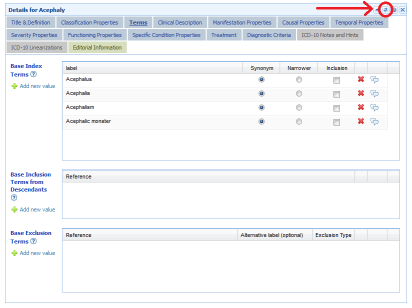
The publicly viewable version of the Beta drafting platform looks like this:
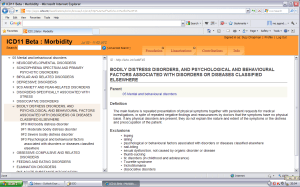
and displays less information. It can be accessed here:

Beta draft Foundation Component (FC) view:

http://apps.who.int/classifications/icd11/browse/f/en

Beta draft Linearization Morbity (LM) view:

http://apps.who.int/classifications/icd11/browse/l-m/en

Increased access to content and interaction with the drafting process can be obtained by registering.
+++
+++
Neurasthenia:

Neurasthenia is not classified in DSM-IV and is not proposed to be classified in DSM-5.

In ICD-10, Neurasthenia is classified in Chapter V Mental and behavioural disorders under parents:

F40-F48 Neurotic, stress-related and somatoform disorders

    F48 Other neurotic disorders
        ›  F48.0 Neurasthenia

+++
For ICD-11 Beta, up until July 3, Neurasthenia was also classified under:

Neurotic, stress-related and somatoform disorders

    9S1 Other neurotic disorders
        ›  9S1.1 Neurasthenia

Inclusions: Fatigue syndrome

Exclusions: psychasthenia
postviral fatigue syndrome
malaise and fatigue
asthenia NOS
burn-out

    9S1.2 Other specified neurotic disorders

Inclusions: Dhat syndrome
Occupational neurosis, including writer’s cramp
Psychasthenia
Psychasthenic neurosis
Psychogenic syncope

     9S1.3 Neurotic disorder, unspecified

Neurosis NOS

+++

On July 4, all child categories classified under parent class, 9S1 Other neurotic disorders, including Neurasthenia and its Inclusion, Fatigue syndrome, were removed from both the FC and LM view and from the PDF for the Chapter 5 Print version and there is currently no listing for any of these categories and child categories under any parent.

As no “Change history” records display in the public version of the Beta draft, it cannot be determined from what information is available whether these categories are temporarily omitted while this section of Chapter 5 is being reorganized, or whether all or selected of these ICD-10 categories are proposed to be retired for ICD-11 or are destined to be subsumed under the proposed Bodily distress disorders categories that ICD Revision has yet to define.

According to the Goldberg February 2011 report, terms included in the ICD11-PHC version of ICD-11 must have an equivalent disorder in the main classification. In February 2011, it was proposed not to include Neurasthenia in the ICD11-PHC version but to subsume under 13 Distress disorder. (It isn’t clear under which disorder group or subcategory Neurasthenia is proposed to be subsumed for the most recently published iteration for ICD11-PHC.)

Neurasthenia remains listed as an Exclusion to Chapter 5 Generalized anxiety disorder and Chapter 18 Malaise and fatigue but these Exclusions may be awaiting attention, if the intention is to retire a number of ICD-10 terms.

I will update when it becomes apparent what the intention is for these currently missing categories.

+++
ICD-11 Chapter 06: Diseases of the nervous system

Postviral fatigue syndrome, Benign myalgic encephalomyelitis, Chronic fatigue syndrome:

In ICD-10, Postviral fatigue syndrome is classified as a Title term within Volume 1: The Tabular List in Chapter VI: Diseases of the nervous system under G00-G99 Other disorders of the nervous system > G93 Other disorders of brain, and coded at G93.3. See: http://apps.who.int/classifications/icd10/browse/2010/en#/G93.3

Benign myalgic encephalomyelitis is also coded in the Tabular List to G93.3 Postviral fatigue syndrome.

Chronic fatigue syndrome is not classified within the Tabular List but is indexed to G93.3 in Volume 3: The Alphabetical Index.

An unauthorised copy of Volume 3: The Alphabetical Index Version for 2006 can be accessed here: (See Page 528)
http://www.scribd.com/doc/7350978/ICD10-2006-Alphabetical-Index-Volume-3 

In indexing Chronic fatigue syndrome to G93.3, ICD-10 does not specify whether it views the term as a synonym, subclass or “best coding guess” to Title term, Postviral fatigue syndrome or to Benign myalgic encephalomyelitis.

Nor does ICD-10 specify the relationship between Postviral fatigue syndrome and Benign myalgic encephalomyelitis.

(For ICD-11, a mechanism will be provided to identify whether an inclusion term is a synonym or a subclass.)

In June 2010, I reported that in May 2010, a change of hierarchy had been recorded in the ICD-11 iCAT Alpha drafting platform “Change History” and “Category Discussion Notes” for class: G93.3 Postviral fatigue syndrome.

See these two screenshots from the original iCAT Alpha drafting platform:

Image 1:

Image 2:

+++
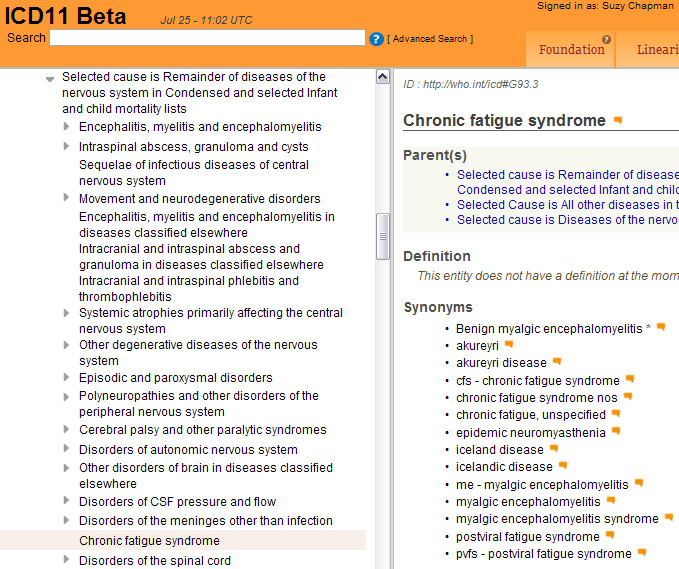
From current information in the Beta draft, it would appear that for ICD-11, the proposal is for a change of hierarchy between Postviral fatigue syndrome and Chronic fatigue syndrome with Chronic fatigue syndrome elevated to an ICD-11 Title term, with a Definition (not currently populated) and with potentially up to 12 other descriptive parameters, populated in accordance with the ICD-11 “Content Model.”

There are a number of terms listed under Synonyms to Title term Chronic fatigue syndrome including Benign myalgic encephalomyelitis and Postviral fatigue syndrome.

Mouse hover over the asterisk at the end of Benign myalgic encephalomyelitis and the following hover text displays, “This term is an inclusion term in the linearizations.”

Also listed under “Synonyms” are “chronic fatigue syndrome nos” and “chronic fatigue, unspecified” (both imported from current proposals for locating Chronic fatigue syndrome in Chapter 18: Symptoms and Signs in the forthcoming US specific, ICD-10-CM).

See this Beta drafting platform page:

http://apps.who.int/classifications/icd11/browse/f/en#/http%3a%2f%2fwho.int%2ficd%23G93
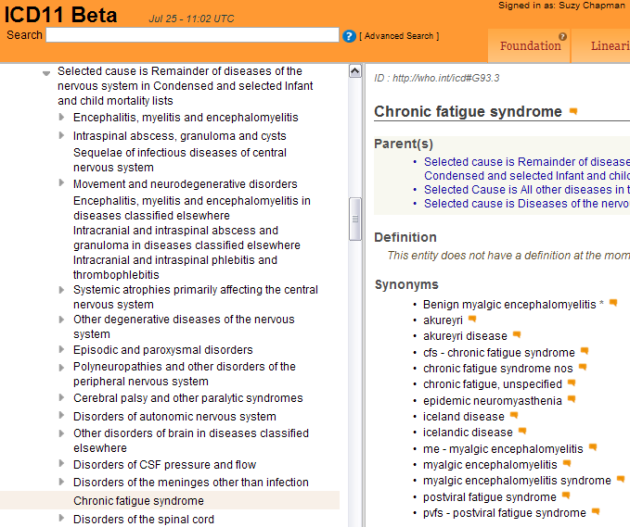
 

There is currently no discrete ICD Title term listed for Postviral fatigue syndrome in either the Foundation Component or Linearization Morbidity view and no discrete ICD Title term for Benign myalgic encephalomyelitis.

It remains unconfirmed, but from the Beta draft as it currently stands, it suggests that for ICD-11:

  • Chronic fatigue syndrome is proposed to become the Chapter 06 Title term
  • Benign myalgic encephalomyelitis is specified as an Inclusion term to CFS under “Synonyms”
  • Postviral fatigue syndrome and a number of other terms are listed under “Synonyms” to CFS

ICD-11 terminology:

For definitions of Synonyms, Inclusions, Exclusions and other ICD-11 terminology see the iCAT Glossary:

http://apps.who.int/classifications/apps/icd/icatfiles/iCAT_Glossary.html

+++
Fibromyalgia (FM):

In ICD-10, Fibromyalgia is classified under:

Chapter XIII: Diseases of the musculoskeletal system and connective tissue > M79 Other soft tissue disorders > M79 Other soft tissue disorders, not elsewhere classified > M79.7 Fibromyalgia 

ICD-10 Version: 2010: http://apps.who.int/classifications/icd10/browse/2010/en#/M79.7

For ICD-11 Beta draft, Fibromyalgia is currently classified under:

Chapter 13: Diseases of the musculoskeletal system and connective tissue > Soft tissue disorders > Other soft tissue disorders > QG6 Other soft tissue disorders, not elsewhere classified > QG6.7 Fibromyalgia

FC: http://apps.who.int/classifications/icd11/browse/f/en#/http%3a%2f%2fwho.int%2ficd%23M79.7
LM: http://apps.who.int/classifications/icd11/browse/l-m/en#/http%3a%2f%2fwho.int%2ficd%23M79.7

+++
Irritable bowel syndrome (IBS):

In ICD-10, Irritable bowel syndrome is classified under:

Chapter XI: Diseases of the digestive system > K55-K63 Other diseases of intestines > K58.0 Irritable bowel syndrome with diarrhoea > K58.9 Irritable bowel syndrome without diarrhoea > Irritable bowel syndrome NOS

ICD-10 Version: 2010: http://apps.who.int/classifications/icd10/browse/2010/en#/K58

For ICD-11 Beta draft, Irritable bowel syndrome is currently classified under:

Chapter 11: Diseases of the digestive system > Functional gastrointestinal disorders > FS6 Irritable bowel syndrome and other functional bowel disorders > FS6.1 Irritable bowel syndrome 

FC: http://apps.who.int/classifications/icd11/browse/f/en#/http%3a%2f%2fwho.int%2ficd%23K58
LM: http://apps.who.int/classifications/icd11/browse/l-m/en#/http%3a%2f%2fwho.int%2ficd%23K58

+++
I shall continue to monitor the Beta drafting process and update on any significant developments for both ICD-11 Chapter 5 and Chapter 6 and for ICD11-PHC for the categories that are the focus of this post and post #190.
+++
+++
References and related material:

1] ICD-10 Version: 2010 Volume 1 Tabular List online:
http://apps.who.int/classifications/icd10/browse/2010/en

2] ICD-11 Beta drafting platform:
http://apps.who.int/classifications/icd11/browse/f/en

3] Goldberg, D. Guest editorial. A revised mental health classification for use in general medical settings: the ICD11–PHC 1. International Psychiatry, Page 1, February 2011.
http://www.rcpsych.ac.uk/pdf/IPv8n1.pdf

4] 21st Century Global Mental Health by Dr Eliot Sorel, Professor, George Washington University, Washington D.C.
Publication date: August, 2012: http://www.jblearning.com/catalog/9781449627874/
Page 51, Sample Chapter 2: http://samples.jbpub.com/9781449627874/Chapter2.pdf

Changes to ICD-11 Beta drafting platform: Bodily Distress Disorders (1)

Changes to ICD-11 Beta drafting platform: Bodily Distress Disorders (1)

Post #190 Shortlink: http://wp.me/pKrrB-2jB


+++

This four page post is a revised version of content first published on July 2, 2012.

Information in this report relates to proposals for the World Health Organization’s forthcoming ICD-11, currently scheduled for pilot dissemination in 2015+; it does not relate to the existing ICD-10 or to the forthcoming US specific “clinical modification” of ICD-10, known as ICD-10-CM.

Caveat: The ICD-11 Beta drafting process is a work in progress over the next two to three years. The Beta draft is updated on a daily basis. Parent terms, category terms and sorting codes assigned to categories are subject to change as work on chapter reorganization progresses. Images and text in this posting may not reflect the most recently assigned categories and codes. This post reflects the Beta draft as it stood at July 24, 2012. Please also read the ICD-11 Beta Draft Caveats.

This report updates on recent changes to the Somatoform Disorders section of the ICD-11 Beta drafting platform. The Beta drafting platform can be accessed here:

Beta draft Foundation view:

http://apps.who.int/classifications/icd11/browse/f/en

Beta draft Linearization view:

http://apps.who.int/classifications/icd11/browse/l-m/en
+++

How do the Somatoform Disorders categories currently stand in ICD-10?

ICD-10 Tabular List Version: 2010 can be accessed here: http://apps.who.int/classifications/icd10/browse/2010/en

ICD-10 Chapter V “Somatoform Disorders”

This is the section of ICD-10 that corresponds with the Somatoform Disorders section in DSM-IV. There is a degree of correspondence between current categories for this section of ICD-10 and for DSM-IV, as set out in the (simplified) table, below.

For clinical descriptions and diagnostic guidelines for ICD-10 Somatoform Disorders see Page 129 of the “Blue book”:

ICD-10 Classification of Mental and Behavioural Disorders: Clinical descriptions and diagnostic guidelines: http://www.who.int/classifications/icd/en/bluebook.pdf

Current DSM-IV Codes and Categories for Somatoform Disorders and ICD-10 Chapter V Equivalents

[Ed: Neurasthenia is not categorized within DSM-IV.]

Source: Mayou R, Kirmayer LJ, Simon G, Kroenke K, Sharpe M: Somatoform disorders: time for a new approach in DSM-V. Am J Psychiat. 2005;162:847–855.
+++
+++
This screenshot shows how the ICD-11 Beta draft had stood at June 24, 2012:

ICD-11 Beta Draft: Morbidity Linearization view


+++

For ICD-11 Beta draft, the proposal in June 2012 had been to rename ICD-10’s F45 Somatoform Disorders parent category to Bodily Distress Disorders.

Three new proposed terms: 9R0 Mild bodily distress disorder; 9R1 Moderate bodily distress disorder; 9R2 Severe bodily distress disorder were inserted above the 9R3 thru 9R8 legacy categories imported from ICD-10.

ID : http://who.int/icd#F45

05 Mental and behavioural disorders [Chapter V in ICD-10]

[…]

BODILY DISTRESS DISORDERS  [F45 Somatoform Disorders > F40-F48 Neurotic, stress-related and somatoform disorders in ICD-10]

9R0 Mild bodily distress disorder  [New term to ICD]
9R1 Moderate bodily distress disorder   [New term to ICD]
9R2 Severe bodily distress disorder  [New term to ICD]
9R3 Somatization disorder  [F45.0 in ICD-10]
9R4 Undifferentiated somatoform disorder  [F45.1 in ICD-10]
9R5 Somatoform autonomic dysfunction   [F45.3 in ICD-10]
9R6 Persistent somatoform pain disorder  [F45.4 in ICD-10] 
    ›  9R6.1 Persistent somatoform pain disorder
      9R6.2 Chronic pain disorder with somatic and psychological factors  [Not in ICD-10]
9R7 Other somatoform disorders  [F45.8 in ICD-10]
9R8 Somatoform disorder, unspecified  [F45.9 in ICD-10]

+++

Hypochondriacal disorder, coded at F45.2 in ICD-10, is currently renamed to Illness Anxiety Disorder for ICD-11 Beta draft and relocated under ANXIETY AND FEAR-RELATED DISORDERS:

http://apps.who.int/classifications/icd11/browse/l-m/en#/http%3a%2f%2fwho.int%2ficd%23F45.2

ID : http://who.int/icd#F45.2

9C5  ANXIETY AND FEAR-RELATED DISORDERS

      ›  9C5.6 Illness Anxiety Disorder

Continued on Page Two